Showing posts with label Wisdom. Show all posts

Sunday, October 4, 2026

The Apprentice Paper — Proverbs 9:10, the Front-Door Key

Dardanelle Missionary Baptist Church — Dardanelle, Arkansas

Pastor Chuck Trusty — Sunday evening service, October 4, 2026 Route 66 · Track 2, Book 01 of 66 · Proverbs 9:10

► Watch this lesson on video (34:28)


A key hanging on a nail on a workshop wall - The Apprentice Paper

This morning we stood on the bottom step of the Great Staircase - the fear of the LORD - and we looked at it from four different directions . . . Proverbs, Job, Ecclesiastes, and the Song of Solomon. That was kind of the front porch. And that is the way we are going to travel this road - every several weeks we will have a Sunday morning lesson that names the next group of books we are going to look at, and then on Sunday evenings we will take a lesson out of each one of those books, one book at a time . . . sixty-six books, one KEY verse for each one.

So Route 66 pulls out of the driveway for real this afternoon - and the first book on the road is PROVERBS. And the key verse in Proverbs is one we already read this morning.

“The fear of the LORD is the beginning of wisdom: and the knowledge of the holy is understanding.” - Proverbs 9:10 (KJV)

Now this afternoon that very same verse is going to do a different JOB - we are going to look at it from a different angle. This morning we stood on it like a step . . . the bottom step. But this afternoon we are going to use it like a KEY - because this one verse is the key to the front door of the book of Proverbs, and I want to show us why not one single proverb in the whole book is going to work in the life of a person who does not fear the LORD.

The Apprentice Paper

Does anybody here know what the word APPRENTICE means? Maybe a few of us do - but for Claire and Wyatt and the younger ones . . . a long time ago, when somebody was growing up and wanted to learn a trade - say he wanted to be a blacksmith, or a carpenter, or a plumber - he did not just pick up the tools and start doing the job. He went to a man who already KNEW that trade, and he signed a piece of paper.

And that paper said, basically - “Okay, I will come to work for you . . . I will LISTEN to you, I will do it your way, and I will let you teach me.”

Now how hard is it for us to listen to people? The whole time I was being raised I was told, over and over - “Chuck, you will never live long enough to draw Social Security - you always have to do it your OWN way.” Well, that is just human nature . . . but I have lived long enough to draw Social Security - so thank you, Uncle Mark.

Until that young man signed the apprentice paper, he was just a fellow standing around the shop - learning the language, watching what was going on, and never learning the trade. It is kind of like signing up for a football team, or one of those kickboxing or judo classes - before you can take the class, you have to tell the coach, “I will do what you say . . . I will pay attention to what you teach me.”

And that is what the fear of the LORD is - it is when we tell God, “You are the TEACHER, I am the learner, and I will do it YOUR way instead of my way.” And King Solomon puts that apprentice paper right at the FRONT DOOR of the book of Proverbs - because nobody learns wisdom from God until they sign it . . . until they agree to listen, and agree to let God teach them.

The fear of the LORD is the apprentice paper we sign at the front door of Proverbs.

The Key on the Nail by the Door

Now here is what Proverbs is - it is God’s handbook for ordering every corner of our daily life. And this is just a personal note from your preacher . . . after we have been saved and properly baptized, if there was ONE book I would tell us to read, it would be the book of Proverbs - because Proverbs explains every part of life. It tells us what kind of words we should use, how we ought to behave at work and what our attitude toward work should be, how to handle our money and what our attitude toward money should be, our friends, our temper (controlling our anger), our character - and all of it is built around one thing . . . the reverent fear of the LORD.

Now notice WHERE God hung the key. Right up front, right by the front door - Proverbs opens with it:

“The fear of the LORD is the beginning of knowledge: but fools despise wisdom and instruction.” - Proverbs 1:7 (KJV)

And then Solomon hangs that same key up AGAIN in chapter nine, verse ten - right before all the short little sayings begin. Chapters one through nine are sort of like the front porch . . . and then we get into chapter ten, and that is where the WORKSHOP begins - one saying after another after another after another, all those little sayings Proverbs is known for.

Does anybody here have a workshop, or a detached garage, with all kinds of tools scattered around in it? If you are like me, I know I have one of those tools - I just have no idea where it is. But everything in that shop - the saws, the welder, all the good tools we keep in out of the rain - we get to every one of them by using that ONE key. And that is what Proverbs is . . . it is the workshop that sits behind chapters nine and ten. And Solomon did not hide the key under the floor mat - he hung it on a nail right by the door, where even the smallest child could find it.

God put the key on the door on PURPOSE. Because a man who walks into that workshop without the fear of the LORD is going to pick up all the sayings from chapter ten onward - and he is going to MISUSE them. It would be like somebody walking into my woodworking shop and saying, “I am going to start running these tools” - when he has never touched one before and does not know how to use them . . . it is not going to be long before he cuts himself.

And that is the idea here - if we take up Proverbs without a proper fear of the LORD, we will not know how to use those sayings, and we will wind up WOUNDING our own lives. The proverbs on money - instead of teaching us how to handle money, they will teach us how to be greedy. The proverbs on the tongue - we will misapply those and just think we are clever. Without the fear of the LORD, Proverbs is a book with a bunch of catchy sayings in it . . . but if we DO have the fear of the LORD, then Proverbs turns into a wise man’s LIFE. One way, it is just a book with some neat stuff in it - and the other way, this is actually my life, and this is actually your life.

Four Words in One Verse

There are four words in Proverbs 9:10 that I want us to look at.

The first word is FEAR. In the original language it sounds something like yir-AH - and it is the same word Moses used at the foot of Mount Sinai when the mountain was smoking and all the people down below were shaking. It carries AWE in it . . . it carries REVERENCE.

Now the fear of the LORD itself lasts forever - and there are scriptures that back that up. But OUR grip on the fear of the LORD does not last forever - it can be lost. That does not mean we stop being saved . . . it means we stop MINDING our heavenly Father. If we have proper respect for our father, we will mind him even when he is not there watching us - but if we have little respect for our parents, then as soon as his back is turned, we start doing what we want to do. That is the idea here. Consider Lot, and Sodom and Gomorrah . . . consider the church at Ephesus - they started out good, but they wound up leaving their first love. That is why Moses told the people that God had come “that his fear may be before your faces” - God wants us to KEEP the fear of the LORD out in front of us, and that tells us it is possible to let it slip out of our hands.

“Happy is the man that feareth alway (all the time - continually): but he that hardeneth his heart shall fall into mischief.” - Proverbs 28:14 (KJV)

That tells us the fear of the LORD is something we have to KEEP . . . to hold on to - and the man who lets it go is the man whose heart gets HARD.

“The fear of the LORD is clean, enduring for ever: the judgments of the LORD are true and righteous altogether.” - Psalm 19:9 (KJV)

Now that does not mean, “I fear God properly today, so I will fear God forever.” It means the fear, the love, the respect, and the awe of God will be in existence FOREVER - but if I fear God today, I can drift away from what I ought to be and not fear Him the way I ought to fear Him tomorrow. So let us not misunderstand or misapply a scripture like this one.

The second word is BEGINNING - the first, the chief, the principal part. And it is the very idea that opens the whole Bible:

“In the beginning God created the heaven and the earth.” - Genesis 1:1 (KJV)

Wisdom has a beginning the same way that creation has a beginning - and NOTHING stands in front of the beginning of creation. It is like that very first Lego on the tower we build . . . there is no wisdom out in front of the fear of the LORD any more than there is some other kind of world out in front of Genesis chapter one. It is just not there. Wisdom cannot exist without the fear of the LORD.

The third word is WISDOM - and this word gives us the idea of a CRAFTSMAN. We talked about the apprentice, and the apprentice is tied to a trade, a craft we practice in our lives to earn a living. Well, wisdom is related to that. Notice how God uses the word in Exodus:

“And I have filled him with the spirit of God, in wisdom, and in understanding, and in knowledge, and in all manner of workmanship,” - Exodus 31:3 (KJV)

That is Bezaleel - the man God filled with wisdom so he could build the tabernacle, and work in gold, and silver, and brass. So wisdom in the Bible is not just what a man knows in his HEAD . . . it is what his hands, and the time he has in his life, can DO with what he knows in his head. Knowing something is not the same as doing it - knowing what God wants us to do is not the same as actually DOING it. Wisdom is craftsmanship - the skill to do something, applied not to a job but to our LIVES.

The fourth word is THE HOLY. That word is the way the Hebrews, back in that day, bowed to a God who was too big to describe with just one word - and it is the way Isaiah heard it:

“And one cried unto another, and said, Holy, holy, holy, is the LORD of hosts: the whole earth is full of his glory.” - Isaiah 6:3 (KJV)

Holy - three times over. Now understanding does not come from knowing holy THINGS . . . it does not come from walking inside a holy building. Understanding comes from knowing a holy God PERSONALLY - that is where we get understanding.

So if we put those four words back together and hear the verse fresh, what we have is this - the reverent fear of the LORD is the foundation and the chief part of wisdom . . . and to know the Holy One personally, THAT is understanding.

The fear of the LORD is the apprentice paper we sign at the front door of Proverbs - before we ever walk in to its teaching.

Bought the Tools, or Signed the Paper?

Now wisdom in Proverbs is like an occupation - and every occupation is learned the same way . . . as an apprentice, under a master who already knows how. It is very much like going to college. I did not know how to be an engineer until I went to college and learned engineering.

Some people think they can become a craftsman just by going out and buying all the right tools. But we do not become a plumber by buying plumber’s tools - we do not become an engineer by buying a calculator. Nobody ever became a master plumber or a master electrician by going out and buying the right tools. To master a trade, we have to bind ourselves to someone who is a MASTER of that craft - we have to show up early, we have to watch how the boss does things, and we have to take CORRECTION without quitting.

Now that last one is something I have seen extremely often - in the workplace, and even at church, in spiritual things . . . taking correction the right way - without getting disappointed and quitting, without getting down on ourselves - “well, I should have known better.”

The first thing that popped into my mind was a kindergartner who does not know the difference between a little “d” and a little “b” - the only difference is which direction the little curvy part goes. Now should a kindergartner already know how not to mix up a “d” and a “b”? Of course not - they are still LEARNING.

I can remember this one personally. I remember being taught how to write my name - Charles. The C looked like a letter. The H was obviously a letter. Now I was just a little old kid - an A, yes, an R . . . but the L was just a straight line, and I remember asking my teacher why I had to draw a line in the middle of my name - because that is what it looked like to me. Well - “I should have known better, I am just going to quit school and drop out and be all discouraged” - no.

Folks, when we are corrected of God - and you little ones, when you are in school and you miss a problem and get corrected - that is how we LEARN. If we already knew everything up front, the way a lot of people think they do, there would be no need for school. Taking correction is one of the ways we humble ourselves before God - and the attitude we have toward correction is going to decide whether we have a happy life . . . or a life full of potholes.

The apprentice does the small jobs the right way - oftentimes for YEARS. Not getting it right is simply HUMAN . . . that is not failure. Not LISTENING is failure. Not wanting to get it right - insisting on doing it our own way - THAT is failure. And Jesus said it this way:

“. . . Well done, thou good and faithful servant: thou hast been faithful over a few things, I will make thee ruler over many things . . .” - Matthew 25:21 (KJV)

Now I want us to hear Proverbs CORRECTLY - from the right side of the shop door. Thirty-one chapters of a Master Craftsman’s instructions - on money, on temper, on friendship, on laziness, on how to use our tongue, on the bottle (alcohol and drugs), on the marriage bed . . . and the apprentice paper, the agreement we sign at the front of the workshop, is Proverbs 9:10 - the fear of the LORD.

A man who will not give proper reverence to the Master can hang around the shop his whole life - he can hang around CHURCH his whole life - and learn nothing except the vocabulary. He can get really good at talking the talk and never learn how to walk the walk. And that is the difference between a man who can QUOTE Proverbs and a man who can LIVE Proverbs . . . one of them has bought the tools - but the other one has actually SIGNED THE PAPER. “I will listen - and I will let You correct me.”

The Homework - and the Shop Door Is Open

So here is our homework, if you will. There are thirty-one chapters in Proverbs - so read one chapter of Proverbs every day. And when a verse we read touches on a place we know is a weakness in us, write that weakness down - and try to make it go away before the sun sets.

“If any of you lack wisdom, let him ask of God, that giveth to all men liberally, and upbraideth not (does not scold us, does not throw it back in our face); and it shall be given him.” - James 1:5 (KJV)

The door to the shop is OPEN . . . and the Master Craftsman is still taking on apprentices. But I will tell you up front - and I have seen this - the first grader who quits school the first time he misses a problem is a student who will never move past the first-grade lessons. He is going to be stuck in the first grade until he learns how to accept correction.

The only way we would not need correction is if we were already perfect to begin with - and is anybody here perfect? No . . . then we ALL need correction, to move us closer to what God wants us to be.

So let me say it one more time - if we are saved, we are secure in our salvation . . . and if we have been properly baptized, and there was one book in the whole Bible I would encourage us to read at least part of every single day of our lives, it would be Proverbs - because Proverbs is the key that unlocks the meaning of a Christian LIFE.

The fear of the LORD is the apprentice paper we sign at the front door of Proverbs.

Scripture Used

Proverbs 9:10 · Proverbs 1:7 · Proverbs 28:14 · Psalm 19:9 · Genesis 1:1 · Exodus 31:3 · Isaiah 6:3 · Matthew 25:21 · James 1:5 (all KJV)


Every lesson is kept on the Lessons page.

The Fear of the LORD Is the Beginning

Dardanelle Missionary Baptist Church — Dardanelle, Arkansas

Pastor Chuck Trusty — Sunday morning service, October 4, 2026 Route 66 · The Great Staircase, Landing 1 of 13 · Proverbs 9:10 · Job 28:28 · Ecclesiastes 12:13 · Song of Solomon 8:7

► Watch this lesson on video (47:21)


The bottom step of an old stone stairway - The Fear of the LORD Is the Beginning

This morning we are starting a new series of lessons - and it is going to take a while, but we are going to go through all sixty-six books of the Bible . . . and I want us to use the picture of climbing a STAIRCASE to help us through it, the same kind of staircase Peter described for us in Second Peter chapter one.

“And beside this, giving all diligence, add to your faith virtue; and to virtue knowledge; And to knowledge temperance; and to temperance patience; and to patience godliness; And to godliness brotherly kindness; and to brotherly kindness charity.” - 2 Peter 1:5-7 (KJV)

Each step builds on the one under it - and we have had several lessons over the past month or two about that staircase. But here is the idea I want us to see - the sixty-six books of our Bible were not just tossed in there at random . . . there is a PURPOSE for where every one of them has been placed.

Now some staircases are small and narrow - no big deal. And then there are those staircases we see on TV, out of Hollywood - great big, wide, GRAND staircases. Think about the difference between a plain piano and a GRAND piano. Men have come up with all kinds of philosophies - and some of them are kind of sharp, and some of them have some good points - but not one of them is to be compared with the grand staircase that the sixty-six books of the Bible represent. It is not just a way to live a little better - it is a way to live a WHOLE lot better. And I am not talking about the physical things of this world - I am talking about our relationship with God . . . because if we do not have a good strong relationship with God, the circumstances of our life really are not that important. We will see that when we get to King Solomon - he walked up every staircase there was, looking for happiness and contentment, and at the end of it all he told us the conclusion of the whole matter - “Fear God, and keep his commandments.” That is what we were DESIGNED to do.

There are sixty-six books in the Bible - but there is only ONE story. The Bible tells us of a good and a perfect God . . . it tells us of a people who keep drifting away from that good and perfect God . . . and it tells us of a Redeemer, Jesus Christ, who comes DOWN the staircase in order to carry those of us who have drifted back UP it.

Now I want to clarify something before we go any further - I am not talking about losing our salvation and God coming down to restore it. I am talking about the FELLOWSHIP we have with God after He saves us. Am I the only one whose life is a constant series of ups and downs? Today my relationship with God might be spot-on . . . and tomorrow it may not be as close as it is today. I am constantly drifting - and what does God do? Every time I humble my heart and repent, He comes down that staircase and takes hold of me, and He carries me back up to a closer relationship - not to restore my salvation, but just like David, to “Restore unto me the joy of thy salvation.”

So where does a staircase like that begin? On the surface we might think - “Well, preacher, it is probably going to begin with KNOWLEDGE.” No. “Then it must begin with some kind of Holy Spirit power - I got really close to God and I finally managed to pray through,” like some religions teach. No, that is not right either. It does not even begin with LOVE. God’s Word says that the bottom step of this staircase - the step that every other step rests upon - is the FEAR OF THE LORD.

And this morning we are going to stand on that first step, the bottom step, and look at the fear of the LORD from four different directions . . . the foundation is LAID in Proverbs, the foundation is TESTED in Job, the foundation is PROVEN in Ecclesiastes - where Solomon tried every other staircase in existence and none of them gave him what he was looking for - and the foundation is CROWNED in the Song of Solomon.

Every stairway to God begins on the same first step - the fear of the LORD.

The Foundation Is Laid - Proverbs

“Wisdom is the principal thing; therefore get wisdom: and with all thy getting get understanding.” - Proverbs 4:7 (KJV)

Now if wisdom is the most important thing - the FIRST thing - then wouldn’t we agree that the wise thing for us to do is to lay the proper foundation for wisdom, so that we are building on something that will hold wisdom up?

“The fear of the LORD is the beginning of wisdom: and the knowledge of the holy is understanding.” - Proverbs 9:10 (KJV)

Now the word “beginning” here does not mean the first thing in a long row of things . . . it means the CHIEF thing - the foundation stone - literally the part that everything else rests on. I watch the grandkids - Wyatt and Claire and Brett - building their little towers out of blocks and Legos, and that one piece on the bottom that they started with, the one underneath all the others . . . that is the BEGINNING. And if that first Lego was not there, there would be no tower, because that is the one every other piece is resting on.

So if there is no fear of the LORD, there is no wisdom - there is no nothing - there is not much of a relationship with the God who saved our souls.

And the word “fear” does not mean running away from God with our hands over our head in surrender, saying “I give up” . . . it means standing before God with our HAT in our hand. It refers to reverence. It refers to awe. It refers to the settled understanding of who God is, compared to who we are. The fear of the LORD is taking God seriously - as GOD.

Far too often we think - “Well, God saved me, and I believe in the security of the believer . . . so God is over yonder someplace, and now I can pretty much do as I please, because I know I am not going to lose my salvation.” That is not taking God very seriously - and that is not fear, reverence, awe, and respect for God.

“Is the beginning” refers to the FOOTING. Now on the surface, when I was looking at this, I thought - well, that is just the first lesson of many I need to learn to get wisdom. But it is not talking about a first lesson we learn and put behind us . . . it is that first Lego we started our tower with - the ONE thing that everything afterward is built on, and without it there would not be anything to our building. We might think, “Well, I am a Christian” - and we may be saved - but if we do not have a proper fear of the LORD, we have not built a Christian LIFE, because a Christian life is built directly and specifically on a proper fear, love, respect, and awe for the God who saved our souls.

“Of wisdom” refers to the skill of living a life pointed in God’s direction. “And the knowledge of the holy is understanding” - this is not some kind of book knowledge through an advanced education . . . this is knowing God HIMSELF - knowing His character, knowing His holiness. Knowing God personally, having a close relationship with God, is what lets a person see life clearly - so that we live with our life pointed in the RIGHT direction. And the right direction is God’s will . . . the wrong direction is my will, our will.

Most everybody here is married - and we know our spouse, we are personally acquainted with our spouse, and we live our lives letting that knowledge point us in the direction they prefer . . . so that there will be PEACE in our home. We have all heard it said - “if Mama ain’t happy, ain’t nobody happy.” Well, if God is not happy with the direction of our life, it does not matter what we try - we will never find the happiness we are searching for until we live in a way that lets God be happy with our lives.

When we build a house, what is the very first work that is done? It is not the walls. It is not the roof. It is the FOOTING - the foundation. The first work on a house is not done with a hammer . . . it is done with a SHOVEL - digging down past the loose topsoil until we get to something that will not move. That is the first Lego - and everything built afterward, whether it stands or falls, is sitting right on top of that buried, invisible foundation.

Now nobody drives by a new house and says, “Oh, look over there at the footing on that house - isn’t that wonderful?” But if the footing is wrong, it does not matter how pretty the house is - the shutters, the pretty curtains, none of it matters if the footing is wrong.

The fear of the LORD is the footing of the entire Christian life. And we should beware of light-houses that give out an uncertain kind of light - “Let your light so shine,” yes . . . but the world offers dozens of different kinds of salvation, dozens of foundations, and every one of them has been poured, not in a deep footing, but on top of loose ground - sometimes even on top of a sand pile.

So here is the lesson for us this morning - if life keeps cracking down the middle like thin concrete, we need to check the FOOTING. Forget about the outside, forget about the appearance - look at the foundation.

“Trust in the LORD with all thine heart; and lean not unto thine own understanding.” - Proverbs 3:5 (KJV)

Wisdom does not begin with information - wisdom begins with REVERENCE. A man can know his Bible from cover to cover and still be a fool if he does not properly fear and respect the God who wrote it.

So when our life cracks - when things are falling apart and it did not go the way we wanted it to - do we check the beauty of the shutters? “Well, I am doing this, and I am doing that, I am going to church” . . . the outward stuff? Or do we look at the footing? The first thing we need to check when things start falling apart is - “Do I have a proper fear of the LORD in my heart, in my life?” This might be God trying to get our attention, to teach us to reverence Him properly and point our life in the right direction. That is the foundation of wisdom - and without wisdom we are just wandering around hopelessly.

Now yes, if we are saved we will go to heaven - but I think we underestimate the badness, for lack of a better way to say it, of being saved “yet so as by fire,” as opposed to being saved and hearing, “Well done, thou good and faithful servant.”

The Foundation Is Tested - Job

The second direction we look at this foundation from is the book of Job - this is where the fear of the LORD is TESTED.

Job chapter twenty-eight is the MINER’S chapter. Job describes how men will tunnel under the earth in the dark places to look for silver . . . they will dam up rivers and turn the mountains over to get at the gold underneath. And after all that digging and searching, he asks the question of the whole chapter:

“But where shall wisdom be found? and where is the place of understanding?” - Job 28:12 (KJV)

Wisdom is not found down in a mine. Wisdom is not found out in the sea. Wisdom is not for sale at ANY price. And then verse twenty-eight gives us God’s own answer - and by the way, it is the very same answer we found in Proverbs:

“And unto man he said, Behold, the fear of the Lord, that is wisdom; and to depart from evil is understanding.” - Job 28:28 (KJV)

Now that is fine and dandy - but notice WHO is saying this, and pay particular attention to WHEN he is saying it. This is not a proverb spoken from a comfortable place in life. This is Job - and Job did not just lose one child, which would have been awful enough . . . Job lost EVERY one of his children. That is the worst part. And to add to his misery, he lost his livelihood - his cattle, which was how they made a living, that was their wealth. He lost all of his servants, so he had no support at all. And then he lost his health. He lost it ALL in a matter of a few short days - while one man was still telling him about one bad thing, another came in and told him something else bad had happened . . . one right after the other after the other.

That reminds me of the storms of life. A storm came against Job’s house in the Old Testament - just like the storm described in Matthew chapter seven . . . the rain came down, the floods came up, the winds blew and beat upon that house, and it fell NOT, because it was founded upon a rock. Now the house we are talking about is not a physical house, and not his circumstances - his circumstances were BAD. The house we are talking about is Job’s relationship with God. He went through all of that - and the Bible testifies, “In all this Job sinned not.” What mattered most survived the storm.

Now it is interesting - I never could find where Job found out WHY all this happened. To the best of my knowledge he never did understand his suffering . . . he never got the explanation he was asking for. But in spite of not knowing why, the first step of the staircase HELD firm under his feet - he had a proper fear, respect, and awe of the God of his salvation. Now how many of us could say this one?

“Though he slay me, yet will I trust in him: but I will maintain mine own ways before him.” - Job 13:15 (KJV)

“I am going to keep serving Him just like I always have.” So the fear of the LORD is not a fair-weather kind of wisdom. And even though you and I are not being tested to the same extent Job was tested, I know the testings we go through are not pleasant at all. But here is the lesson of the TESTED foundation - we do not need the explanation of WHY as long as we have this foundation of fearing the LORD. God has it in His control. We look at all the chaos going on in the world - God has it . . . He has not lost control.

Job had three friends who showed up - you can go read it for yourself, we are not going to this morning - and they had a FORMULA for how to solve Job’s problem. But Job did not need a formula . . . he needed a strong foundation that would stay firm. And the fear of the LORD holds - in EVERY circumstance and in every situation. That is what we see in the book of Job.

Every stairway to God begins on the same first step - the fear of the LORD.

The Foundation Is Proven - Ecclesiastes

Now in Ecclesiastes the foundation of the fear of the LORD is PROVEN. If anybody ever had enough money to test every other staircase that existed, it was King Solomon. If the answer was wealth - Solomon had it. If the answer was pleasure - Solomon tells us he tried it, everything under the sun. If the answer was learning - the Bible tells us Solomon mastered it. He built things, he did the music, he had vineyards, he had fame.

When we go back and read Ecclesiastes, it is like a lab report - a complete summary from a man who climbed every ladder this world has ever leaned against a wall . . . and Solomon found out every one of them was leaning against the WRONG wall. “Vanity of vanities . . . all is vanity” - a waste of time. Solomon tells us that all those other staircases - wealth, pleasure, learning - are no different than chasing the wind, no different than trying to grab a handful of fog. It cannot be done.

Now here is an illustration that struck home with me. Picture somebody sinking in quicksand - we have all seen it on TV - and there are a few bushes scattered around, and he is frantically grabbing at every branch he can reach . . . “If I can just get this branch, I can pull myself out - if I can just get that one, I can pull myself out.” If I could just get more possessions . . . if I could just experience a different kind of pleasure . . . if I could just get the praise of other people - you get the idea. And then when we finally do get those things, it is like every branch we take hold of breaks off in our hand, and all we have is a handful of LEAVES - and things are no different than they were before. And the deeper we sink, the more frantic we get, and the more attention we pay to the branches and the leaves . . . and we become BLIND to the hand that has been stretched out to us from the very beginning. We are concentrating so hard on what we think will make us happy that we do not even notice the hand of God stretched out right over here - and all we have to do is take hold of it.

“Let us hear the conclusion of the whole matter: Fear God, and keep his commandments: for this is the whole duty of man.” - Ecclesiastes 12:13 (KJV)

This is not the opinion of somebody who missed out on things in the world. This is the VERDICT - the conclusion, at the end of his life - of a man who quite literally had every single thing this world had to offer.

Now there is one thing I want to point out in this passage - the word “duty.” If we look in our Bibles, the word “duty” is in italics, and that means it was not in the original language. That is not a mistake, and there is nothing wrong with it . . . but it makes a point that is easy to overlook when we just read right over “the whole duty of man.” Fearing God and keeping His commandments is not one of several different responsibilities we have as children of God. The Hebrew says, “this is the WHOLE of man.” Fearing God is not just a piece of our life - it is the whole of our life, which means this is quite literally what we were MADE for. People, the Bible is teaching us here that to fear God and keep His commandments is intended to BE our life. Period.

So the lesson for us this morning is that we should not spend thirty or forty years of our lives testing the same branches King Solomon already tested. The report has been made. The conclusion has already been published. We can benefit by BELIEVING the report - or we can be wounded in life by ignoring it.

“Remember now thy Creator in the days of thy youth, while the evil days come not, nor the years draw nigh, when thou shalt say, I have no pleasure in them;” - Ecclesiastes 12:1 (KJV)

Now if youth has already passed us by - and youth has passed most of us by this morning - then remember our Creator TODAY . . . because our day of grace, our day of mercy, did not pass with our youth - our day of grace is right NOW.

There are things we simply cannot know in our youth - we get a little older and think, “I wish I had known that when I was twenty.” Well, some things we CAN’T know at twenty. But what we can do at twenty is BELIEVE things we do not understand. We can open the book of Proverbs - and we cannot understand all the sayings in there, but that does not mean we cannot believe them. We can get the general gist - King Solomon tried to find happiness in all those things that are tempting me today, and he said it was all a waste of time. We can put our arms around that, even at a young age.

The Foundation Is Crowned - the Song of Solomon

The last one - the fear of the LORD is CROWNED. The Song of Solomon is a love song, and its title in the original literally means this was the BEST song King Solomon ever wrote. And we might naturally ask - “Well, preacher, what is a LOVE song doing at the bottom of the staircase, next to Proverbs and Job and Ecclesiastes?”

Well, the answer is that the fear of the LORD does not end in trembling, or even in awe . . . the fear of the LORD ends in LOVE. Fear is the first step - but fear is not the last step. The same Bible that tells us to fear the LORD tells us in Deuteronomy chapter six to love Him:

“And thou shalt love the LORD thy God with all thine heart, and with all thy soul, and with all thy might.” - Deuteronomy 6:5 (KJV)

Reverence - fear - is the ROOT of the tree . . . love is the bloom found on that tree. And the Song of Solomon tells us what that love looks like when it is fully grown - after the bloom has turned into fruit:

“Many waters cannot quench love, neither can the floods drown it: if a man would give all the substance of his house for love, it would utterly be contemned (despised - laughed at).” - Song of Solomon 8:7 (KJV)

Many waters cannot quench it. Floods cannot drown it. And it is not for SALE - “I am going to give you all my possessions to get your love” . . . it is not going to happen. We cannot buy love - love can only be GIVEN, and it can only be RECEIVED.

And speaking of love - there is one thing no flood has ever taken, and no flood ever will. At the cross of Calvary, many waters came against the love of God . . . the mocking, the scourging, the nails in His hands, the darkness when the sun refused to shine - it all came against Jesus on the cross, wave after wave after wave. And when the water finally went down, what was left? The love that held Jesus on the cross was still STANDING there.

“Now before the feast of the passover, when Jesus knew that his hour was come that he should depart out of this world unto the Father, having loved his own which were in the world, he loved them unto the end.” - John 13:1 (KJV)
“For by grace are ye saved through faith; and that not of yourselves: it is the gift of God: Not of works, lest any man should boast.” - Ephesians 2:8-9 (KJV)

The staircase that begins with the fear of the LORD ends with us in the ARMS of the LORD.

Taking the Hand

So this morning we are in the quicksand of life - the rat race. Everybody wants to find happiness . . . that is just universal, we ALL want to be happy. So what is our definition of happiness? Is it - “If I can just get one more branch . . . one more dollar . . . one more whatever”? Or is it - “God, forgive me for not seeing Your hand stretched out to me - it was there all the time” . . . and in our heart we reach out and TAKE that hand?

And then when we do this – we realize that circumstances have nothing to do with our happiness - that is something we eventually learn, if we do have a proper fear of the LORD.

Every stairway to God begins on the same first step - the fear of the LORD.

Scripture Used

2 Peter 1:5-7 · Proverbs 4:7 · Proverbs 9:10 · Proverbs 3:5 · Job 28:12 · Job 28:28 · Job 13:15 · Ecclesiastes 12:13 · Ecclesiastes 12:1 · Deuteronomy 6:5 · Song of Solomon 8:7 · John 13:1 · Ephesians 2:8-9 (all KJV)


Every lesson is kept on the Lessons page.

Wednesday, July 22, 2026

The Unsteady Soul

Dardanelle Missionary Baptist Church — Dardanelle, Arkansas

Pastor Chuck Trusty — Wednesday evening service, July 22, 2026 Psalm 107 · The Godliness Series (A7) · Between the Fools and the Storm-Tossed

► Watch this lesson on video (50:46)


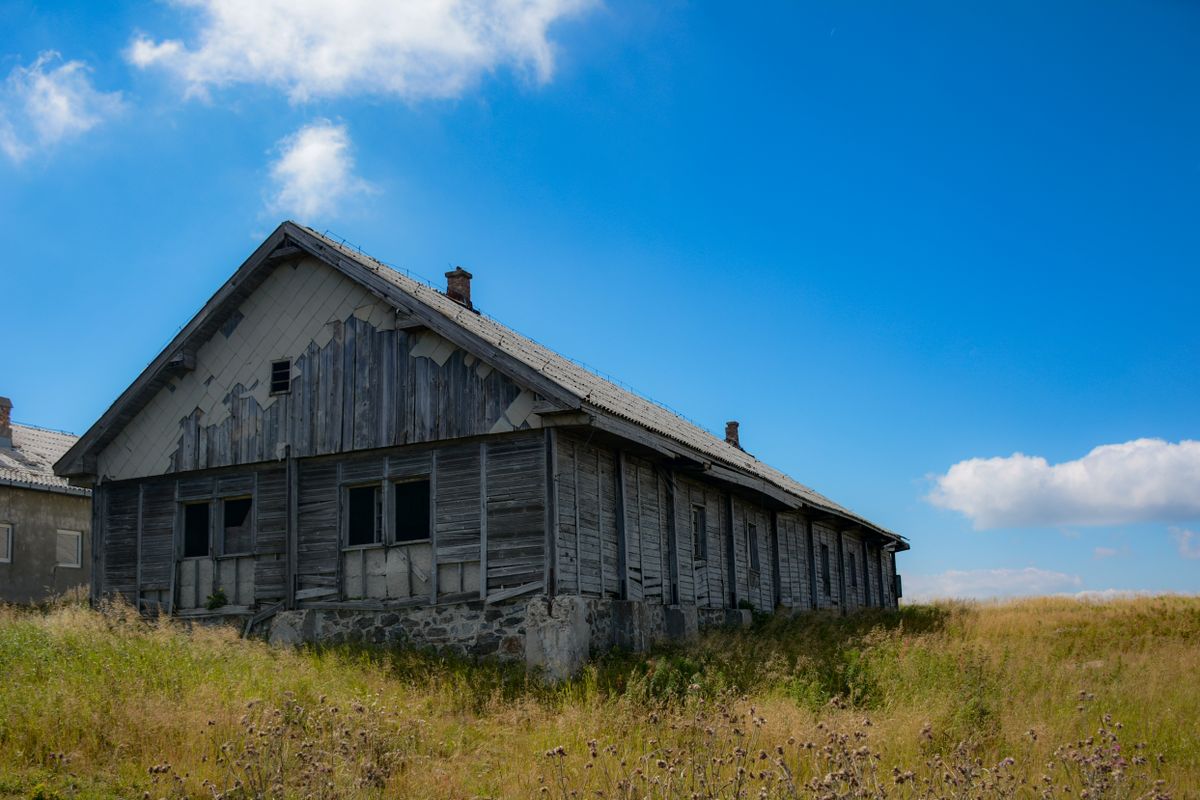
An old wooden house sagging in an empty field - The Unsteady Soul

The One Point

Foolishness creates instability — and instability is what opens the door to the storm.

Where This Sits in the Psalm

Psalm 107 has walked us through four groups of God’s own people who DRIFTED, and every one of them got there a little at a time . . . the wanderers stopped adding anything to their saving faith . . . and the prisoners simply ignored the watchman, and the watchman is the pastor God set inside the church, so they pushed His warnings aside and let the preaching go in one ear and out the other until the darkness closed in around them. Then the drifting heart, which is the quietest of them all — it does not argue with the correction, it just resists it. Preacher, I KNOW this is wrong, but . . . and that man is not in chains yet, but he is walking toward them with his eyes wide open.

Then come the fools. “Fools because of their transgression, and because of their iniquities, are afflicted” (Psalm 107:17). Transgression (doing the thing we were not supposed to do) is one act — but iniquity is what happens when we stack those transgressions one on top of another until they harden into a HABIT . . . and when a man habitually transgresses, the consequences are already on the horizon whether he sees them or not.

Sunday evening we take up the last group, the storm-tossed, who “reel to and fro, and stagger like a drunken man, and are at their wits’ end” (Psalm 107:27). But NOBODY goes from being a fool straight into a raging storm in one step . . . there is always a season in between — quiet, unassuming, and for that very reason overlooked by nearly everybody who is living in it — and that season is what I want us to look at tonight.

The House That Was Condemned

A few years back a family not far from here had their house condemned. No tornado ever hit it . . . it never flooded . . . the inspector came out over some smaller thing altogether and found that the foundation had been shifting and cracking for YEARS, and nobody had noticed a bit of it — because from the street everything looked absolutely normal, the paint was fresh, the lawn was mowed, the windows were clean.

But underneath, the part that was actually holding that house up had been quietly giving way — board by board and crack by crack — until one day the doors would not open right, and the floors began to bounce in the middle, and a crack ran up the living room wall clear to the ceiling . . . and by the time the problem was VISIBLE it had been growing invisibly for a long, long time.

Now NOTICE what got that house condemned. It was not one bad storm . . . that house had been made vulnerable to the first good wind that came along, because the structure that should have held it together had been compromised — and nobody was aware of it.

That is a description of the unsteady soul, seen from the outside — still showing up, still sitting in the pew, still saying all the right things . . . but underneath, the foundation has been WEAKENING — not gone, mind you, just weakening, quietly and slowly and almost invisibly — and that soul is now vulnerable to a storm it would have ridden out without any trouble at all a short time ago.

What James Calls It

James gives us the picture of what this looks like in a man’s spiritual life. He is describing somebody who keeps asking God for wisdom and never actually takes possession of what he asked for . . . and then he says it in seven words — “A double minded man is unstable in all his ways” (James 1:8).

Not unstable in SOME of his ways . . . in ALL of them. When a soul loses its spiritual footing the instability spreads — and it spreads EVERYWHERE . . . if I lose my balance I do not lose it only in this corner of the room and keep it over in that one, and if I am having trouble standing upright, I have that trouble over the whole room.

So foolishness and carelessness and living by impulse are not only a moral problem, though they are certainly that — they are a STRUCTURAL problem, and they weaken the framework that holds a believer’s life together.

The Quiet Signs

Not one of these is dramatic — that is exactly the danger in them. They edge their way in.

Convictions weaken. Things that once felt absolutely SETTLED — preacher, there is no way under the sun I would ever do that — begin to feel negotiable . . . and not because we stopped believing in right and wrong . . . but because carelessness dulls the edge of a conviction the same way it dulls the edge of a knife — that knife used to slice right through, and you dull the edge and it will not slice through ANYTHING anymore.

Priorities shift. The things that used to come FIRST get pushed back to second . . . then to third . . . and now they barely make the list at all.

Habits decay. Prayer, the Word, faithful attendance, owning it when we are wrong — not one of these collapses all at once . . . they SLIP, a little at a time.

Discernment goes. That is nothing but a fancy word for understanding that consequences are REAL, and what happens is that we begin to unplug our behavior from what our behavior costs . . . and that old spiritual instinct that used to say I cannot put my finger on what is wrong with that, but something about it is not right — we simply quit listening to it.

And the footing loosens. When I was younger I used to watch older folks who seemed always frightened of falling, and I could not understand it for the life of me — two or three little steps should be no big deal - just hop down and go on about your business. But you do not get to be EIGHTY overnight . . . and you do not lose that kind of steadiness overnight either. It is a little dab here and a little dab there.

The Gyroscope

I have never really understood how a gyroscope works. But you know what one is — a wheel spinning inside a little frame — and when it is spinning fast you can push on it, you can rotate it, you can do all manner of things to it, and it resists every bit of that and stays upright.

What happens when it slows down? It begins to WOBBLE . . . and eventually it falls over.

The spiritual disciplines are the SPIN. Prayer, the Word, worship, fellowship, obedience — these are what hold a soul upright when the world leans on it and tempts it to compromise . . . and if you take those five out of a life it is only a matter of time before the world pushes and we start to WOBBLE.

The fool is the man who let the spin slow down out of pure carelessness. The unsteady soul is the believer whose gyroscope has already slowed . . . and who does not yet realize how exposed all those small compromises have left him.

What Foolishness Does to the House We Build

“Every wise woman buildeth her house: but the foolish plucketh it down with her hands” (Proverbs 14:1). Now NOTICE that — she plucks it down with her OWN hands. She does not need any help from anybody, and it is not the work of some outside force. She does it herself.

The foolish man is his own demolition crew — and here is the thing about him, he is usually not swinging a sledgehammer at all . . . the damage works like a TERMITE.

Termites do not knock a house down in one visit — they move in quietly, they settle into the wood, and they eat a little here and a little there, every single day . . . you cannot hear them, you cannot see them from the outside, the paint is good and the gutters are clean and the lawn is fine . . . but inside the walls the wood that is supposed to hold everything together is being hollowed out, slowly and steadily and almost entirely invisibly. Then one day something shifts that is not supposed to shift — a door frame goes crooked, a floor sags, somebody leans on a wall and it gives more than it ought to — and the inspector finds that what looked like a solid house is being held together by almost nothing.

Foolishness is that termite. It does not destroy a believer’s life in one dramatic moment — it moves in through the neglected prayer and the skipped worship and the compromised conviction and the rationalized exception . . . and it hollows out the structure a little at a time . . . until the soul that looks perfectly fine on the outside is barely holding together on the inside.

Why the Storm Finds Them

Look again at how the psalm describes the storm-tossed. “They reel to and fro, and stagger like a drunken man, and are at their wits’ end” (Psalm 107:27).

What does that sound like to you? It sounds like somebody who was ALREADY unsteady before the storm ever hit him . . . a man who is rooted and grounded and spiritually balanced does not reel like a drunken man at the first wave — the storm SHAKES him, and the storm is difficult, no question about it — but he does not immediately lose all control of himself.

Two trees stand in the same field — same wind, same rain. One of them has deep roots, and it leans way over and the branches go everywhere, but the root system HOLDS, and when the storm passes that tree is still standing . . . the other one is just as tall and looks every bit as impressive, but its roots never had to go deep.

And there is the KEY to the whole thing. It is human nature not to do one bit more than we have to do — if there is surface water available, the roots stay right up there on the surface, and we will not force them downward until the water on top dries up . . . I used to be proud of the calluses on my hands, but I had a good many blisters before those calluses ever showed up.

The same storm hits the shallow tree and over it goes — and not because the storm was any worse for one tree than for the other, but because the foundation was not THERE . . . the storm is not what determines the outcome. The ROOTS are.

And when a soul is already unsteady, EVERYTHING about that storm gets worse. Temptations grow stronger, because there is less left to hold on to . . . emotions grow louder, because there is no anchor down there . . . decisions grow riskier, because the edge of the knife is dull and we have unplugged our behavior from the consequence . . . relationships grow strained, because a reeling man cannot hold steady connections with anybody . . . and the consequences grow heavier, because every step now falls on a shifting foundation.

The Storm Is Mercy

Somebody may be sitting here tonight looking at his own life and thinking, if God loved me He would not let a storm come. If God really loved me, why did He let me get cancer? That is MY own storm and yours is a different one — but the question comes out the same way . . . if God loves me, why did this happen?

I am not speaking down to a soul in this house. I have been in this exact place myself.

The storm is not the evidence that God has abandoned the unsteady soul. The storm is the evidence that God has NOT given up on the unsteady soul.

Think about a doctor. A patient comes in for a routine exam, and the doctor runs the tests and looks at the results and finds a serious condition — one that has been developing quietly for a good while with very few symptoms on the outside . . . like the termites.

That doctor has two choices in front of him. He can say nothing and send the patient home and let him go on living the way he has been living — feeling fine on the outside while the thing goes right on developing on the inside — and that is the COMFORTABLE choice for both of them . . . or he can sit that man down and tell him the truth — I need to show you something. This is serious. We have to deal with it now, because if we wait, some bad things are going to happen.

The second conversation is hard, and it is uncomfortable, and in the moment it can even feel CRUEL . . . doctor, I feel fine . . . preacher, I am doing fine . . . but inside you are NOT fine. Now which one of those doctors loved that patient more?

The storm is God telling the TRUTH. It is God sitting the unsteady soul down and saying, look at this . . . it is serious . . . something has been weakening in here, and I love you too much to let it go one step further. “For whom the Lord loveth he chasteneth, and scourgeth every son whom he receiveth” (Hebrews 12:6).

The storm strips away the illusions and silences the excuses and removes the distractions . . . and it brings the soul to the one place God has been trying to get it to - all along — honest, humble DEPENDENCE on Him. We are NOTHING if we are not dependent on God. And one of the things a storm does is show us that we have tried everything under the sun and we are still on that boat, still going up and down, still going back and forth . . . you cannot fix your own problems. Have you not learned that yet? All right — now that you are depending on Me, we can do something.

Without humility we never get to the point of depending on God at all.

The Mercy of Being Warned Early

Storms are merciful, but they are not PAINLESS. And here is the mercy in tonight’s lesson, and the reason I wanted us to stop on the unsteady soul before we ever move on to the storm-tossed.

If you are in this room this evening and your soul feels unsteady — if some of what I have described sounds uncomfortably familiar — then you are NOT in the storm yet. You are still in the season before it. You can see the clouds out there on the horizon and the wind is barely beginning to gust and the water is still fairly calm . . . but you know what is coming.

That means you still have a CHOICE. The drifting heart can stop drifting . . . the fool can quit being careless . . . the unsteady soul can get its balance back before the storm ever hits.

Is the tornado warning that wakes you at two in the morning a bad thing? It is a GIFT . . . you either ignore it and suffer the consequences, or you pay attention and go do what you already know good and well you ought to do. And He does not set that alarm off one time and quit — He sets it off over and over and over before He ever allows the storm to rise. He whispers through conviction . . . He speaks through His Word, which we far too often ignore . . . He calls through the fellowship of other believers . . . He warns through the conscience . . . He PLEADS through the watchman.

How many times have the sirens gone off before we finally paid attention?

The Way Back

Five returns, and they match the five disciplines.

Return to prayer — not every once in a while when it occurs to us, but DAILY, honest conversation with God . . . that is not asking too much of any of us.

Return to Scripture. Forget the television — open the Book and let the Holy Spirit speak to you exactly where you are . . . because God KNOWS where you are, and He knows how to speak to you right there.

Return to fellowship. The people of God are part of how God STEADIES us — so do not pull away from them.

Return to obedience — not when it happens to be convenient, but because He is Lord and Master and we owe Him that.

Return to wisdom. Quit living by impulse — start living in ORDER. “If any of you lack wisdom, let him ask of God, that giveth to all men liberally, and upbraideth not (without finding fault with us for asking); and it shall be given him” (James 1:5).

And do not try to fix all five at once — pick the ONE you are weakest in and start right there.

One Question

Sunday night I asked four questions. Tonight I only want to ask ONE, and I do not want it answered out loud — just between you and God — and I do not want it to slide right past unnoticed.

Is your soul steady right now?

Not your circumstances — your SOUL. Are you grounded and rooted . . . or have you been wobbling? And has that wobble been going on for a good while now?

If the honest answer is yes . . . you already know the path back.

The unsteady soul is not a HOPELESS soul — it is a soul God is still pursuing, still calling, still working to restore . . . so the question is not whether God is ready to steady you. The question is whether you are ready to let Him.

“He maketh the storm a calm, so that the waves thereof are still. Then are they glad because they be quiet; so he bringeth them unto their desired haven” (Psalm 107:29–30).

And NOTICE the last of it, which we will pick up in the next lesson. He does not merely make the storm go away . . . He does not only still the wind and calm the water and then leave us floating in a raft somewhere out in a quiet place — He bringeth them unto their DESIRED HAVEN, the place they were going to in the first place.

Think about that.

Scripture Used

Psalm 107:17 · Psalm 107:27 · Psalm 107:29–30 · Proverbs 14:1 · James 1:5 · James 1:8 · Hebrews 12:6 (all KJV)

Saturday, March 28, 2015

Knowledge - Wisdom - Understanding

Spectacles resting on an open book - Knowledge, Wisdom and Understanding

Ps 73:2 But as for me, my feet were almost gone; my steps had well nigh slipped. 3 For I was envious at the foolish, when I saw the prosperity of the wicked.

17 Until I went into the sanctuary of God; then understood I their end.

Wisdom is what allowed the Psalmist to see the difference between obedience and foolishness.

Knowledge of the consequences which are gained at the end of a foolish life – This is what the Psalmist gained in the sanctuary of God.

Faith and Confidence in the knowledge that he found in the sanctuary of God – is what brought “understanding” to the Psalmist . . .

‘faith and confidence in God’ – is literally what allowed ‘the warnings of living a foolish life’ to be viewed as a reality – even though it would not be fulfilled until later.

Wisdom – is ‘the ability’ to know the difference between right and wrong . .

And ‘knowledge’ is realizing the truth  - or becoming ‘aware’ of what the truth actually is . . . And Understanding is found in the wisdom of ‘APPLYING the truth’ to our lives - instead of simply ignoring it.

Wisdom is actually a talent that is possessed by some – and not others.

For instance -- Wisdom is “the ability” that we develop to know that dishonesty is wrong and should be avoided . . .While knowledge -- is learning from the Bible what God has said about dishonesty . . . That He tells us “do unto others as ye would have them do unto you” . . . thou shalt not steal – thou shalt not bear false witness (lie) . . .

Knowledge is becoming aware of God’s opinion.

And Understanding is found in the realization that – we do not want ‘others’ to be dishonest with us – so we “understand” that we should apply this knowledge to our lives and avoid dishonesty – if we are going to be what God wants us to be.

If we possess a dead faith – if we have knowledge of God’s opinion – but if we choose not to look for the ability to apply this knowledge to our lives – this proves that we lack understanding . . .
.
Wisdom – is the ability that God gives us - to be able to see the difference between right and wrong – good and evil . . . in this case honesty as opposed to dishonesty.

While knowledge is simply information that we learn concerning the truth – -- when we learn what God has said in the Bible – we then possess knowledge of the truth.

Now this is where religion stops – and Christianity begins – Religion is knowledge of what we should do – while Christianity is practicing what we should do or applying knowledge to our lives.

Acts 26:28 Then Agrippa said unto Paul, Almost thou persuadest me to be a Christian.

God’s gift to all men – is knowledge of His commandment to repent and to call out unto Jesus in faith for salvation . . .

King Agrippa had knowledge of what it meant to be a Christian – but he did not have the understanding – or the willingness - to APPLY this knowledge that he had learned to his life.

John 12:32 And I, if I be lifted up from the earth, will draw all men unto me.

Acts 17:30 And the times of this ignorance God winked at; but now commandeth all men every where to repent:

Today – you have received knowledge of God’s commandment to repent – and to call out unto Jesus in faith – for the salvation of your soul.

This is God’s gift to you – this is an example of God’s grace – or an example of His kindness toward you . . .

Romans 10:16 But they have not all obeyed the gospel. For Esaias saith, Lord, who hath believed our report?

God has given you the gift of knowledge – concerning His truth of salvation . . . God has also given you the wisdom to see the difference between belief and unbelief – the difference between repentance and rebellion – and the difference between salvation and condemnation.

John 3: 16 For God so loved the world, that he gave his only begotten Son, that whosoever believeth in him should not perish, but have everlasting life.

17 For God sent not his Son into the world to condemn the world; but that the world through him might be saved.
18 He that believeth on him is not condemned: but he that believeth not is condemned already, because he hath not believed in the name of the only begotten Son of God.

We receive an understanding of what these words really mean – when we repent or when we become sorry because we recognize that there is something wrong in our lives . . .

– and we regret our sin – and we regret our unbelief – so that we turn unto God believing that He will change us . . . we turn to God because we want Him to change us and make us clean – as He saves our soul.

So as we progress in knowledge – and as we become aware of what type of things should be avoided in life – as well as what should be ‘sought after’ in life . . . we can even be aware of what God has said concerning specific things in our lives . . .

But if this wisdom – and if this knowledge does not cause us to avoid what we know ‘should’ be avoided in our lives . . . then this

simply means that we lack the understanding to apply what  we “have” learned ‘to’ our lives . . . and as a result we will continue to associate with things which should be avoided – and we will suffer because of this.

Understanding – is related to the choices that we make as individuals . . .

We can know the difference between a right choice and a wrong choice . . . but that is no guarantee that we will make the right choice instead of the wrong one.

Heb 10:26 For if we sin wilfully after that we have received the knowledge of the truth, there remaineth no more sacrifice for sins, 

We can posses wisdom – but we can also refuse to apply wisdom to the choices that we make in life.

We can be fully aware of what God has said concerning a certain matter . . .

but if we are selfish - and if we lack faith because we have refused to commit ourselves unto God –

then we will lack the motivation to apply ‘to our lives’ the wisdom and the knowledge that we have gained – in a way that will change the “direction” of our lives.

If we are envious at the foolish . . . when we see the prosperity of the wicked . . . Then we are in deep trouble if we fail to understand their end.

Temptation to experience pleasure – is what draws us away from obedience.

We “believe” or we hope that pleasure will result in our lives – when we commit sin.

Eze 18:4 Behold, all souls are mine; as the soul of the father, so also the soul of the son is mine: the soul that sinneth, it shall die.

Heb 10:26-27
26 For if we sin wilfully(on purpose) after that we have received the knowledge of the truth, there remaineth no more sacrifice for sins,

27 But a certain fearful looking for of judgment and fiery indignation, which shall devour the adversaries.

Now we sin – because we actually hope to receive pleasure in exchange for disobedience . . . that is we have faith (or we believe) that our flesh will feel good because of our sin.

God tells us that the end of sin is death . . . so when we sin wilfully (on purpose) -- when we fail to apply the wisdom of choosing good over evil . .

 --  it is literally because we have more faith that our flesh will experience pleasure – that we do that our heart will be judged of God.

Pr 1:10 ¶ My son, if sinners entice thee, consent thou not.

Put your faith in God’s promise of punishment to the disobedient – do not put your faith in Satan’s promise of pleasure.

Eccl 12:1
1 ¶ Remember now thy Creator in the days of thy youth, while the evil days come not, nor the years draw nigh, when thou shalt say, I have no pleasure in them;

Gen 41:30 And there shall arise after them seven years of famine; and all the plenty shall be forgotten in the land of Egypt; and the famine shall consume the land;

The pleasures of disobedience – are like all of the years of plenty spoken of here in the land of Egypt – just before the famine.

Having an over abundance of food for seven years . . . remembering all of the good meals – remembering all of the good crops -- did not remove the hunger of the seven years of famine. 

And neither will the pleasures that are found in unrighteousness (disobedience/selfishness) – neither will these pleasures be able to supply what is needed to our souls – in the day of judgment.

Pr 2: 1 ¶ My son, if thou wilt receive my words, and hide my commandments with thee;

2 So that thou incline thine ear unto wisdom, and apply thine heart to understanding;

3 Yea, if thou criest after knowledge, and liftest up thy voice for understanding;

4 If thou seekest her as silver, and searchest for her as for hid treasures;

5 Then shalt thou understand the fear of the LORD, and find the knowledge of God.

What exactly does it mean – to understand the fear of the Lord – and to find the knowledge of God?

To understand the fear of the Lord – is to believe in judgment . . . .
To understand the fear of the Lord – is to have more confidence in the punishment of disobedience . . . than we have in the hope of finding pleasure as a result of sin.

To find the knowledge of God – is to simply allow the Holy Spirit of God to teach us.

We cannot find the knowledge of a God – that we are rebelling against in our lives.

Matt 6:24 No man can serve two masters: for either he will hate the one, and love the other; or else he will hold to the one, and despise the other. Ye cannot serve God and mammon.

If our God is found in humility – then we will be blind to Him - as long as we live in pride.

James 4:6 But he giveth more grace. Wherefore he saith, God resisteth the proud, but giveth grace unto the humble.

1Pe 5:5 ¶ Likewise, ye younger, submit yourselves unto the elder. Yea, all of you be subject one to another, and be clothed with humility: for God resisteth (opposes) the proud, and giveth grace (divine influence) to the humble.

God is able to influence the life of the humble.  If the God of heaven gives grace (kindness) to the humble – what do you suppose is left over for those of us who are so in love with ourselves

– that we refuse to humble our hearts to accept His Word . . . . and to sacrifice our lives . . . and to practice His will?

Romans 6:16 Know ye not, that to whom ye yield yourselves servants to obey, his servants ye are to whom ye obey; whether of sin unto death, or of obedience unto righteousness?

To yield is defined as no longer resisting – that is to give way – or to surrender to another.

We actually serve the Spirit that we have quit resisting.

Matthew 12:30 He that is not with me is against me; and he that gathereth not with me scattereth abroad.

Do we resist the truth? – if so - then we cannot be a servant of the truth . . .

Do we resist the conviction of the Holy Spirit in our heart – if so -- then understand – that we cannot follow a spirit that we will not surrender to.
If we are saved – then we cannot be useful unto God   if we no longer resist the spirit that leads us toward the pleasures of the world.

And if we are lost – then we cannot follow the Holy Spirit to that place of repentance and faith in Jesus . . . if we turn away from His conviction and refuse to surrender to His will in our heart.

Saturday, February 21, 2015

Wisdom "in depth"

This is a link to a site which provides a more "in depth" study of things for those who are interested in going into God's Word a little deeper.  Hope you enjoy your studies.  Please feel free to provide feedback.  I will welcome your comments good or bad.