Showing posts with label New Believers. Show all posts

Tuesday, September 1, 2026

What Does the Bible Say About Reading It Yourself? (Chapter 7)

📚 New here? Start at the beginning.
This is Chapter 7 of a free seven-chapter booklet, What Does the Bible Say? — A Simple Foundation for New Believers. You can start at Chapter 1 or see all seven chapters on The Basics page.

📘 CHAPTER SEVEN — What Does the Bible Say About Reading It Yourself?

Not one more answer — the tools to go find your own

⭐ Introduction

At the end of the last chapter I sent you off with four words: keep your Bible open.

That was easy for me to say . . . now let me be honest with you about something, because you have come six chapters with me and you have earned it.

Six times in this booklet you have read the same little sentence: Let us ask the Book. Six times I asked it . . . and SIX TIMES I handed you the answer — what the Bible says about salvation, about prayer, about worship, about the church, about Christian living. You took my word for it, and you were right to . . . because every answer came straight out of the text.

But here is the question I owe you before I let you go: HOW WOULD YOU KNOW IF I WERE WRONG?

Not because I am trying to be . . . but because one day I will NOT be standing there, and you will still have a Bible in your lap and a question in your heart. So there is one more thing left to ask the Book about . . . and it is the Book itself.

Let us ask the Book — one last time.

I. God Is Not Offended When You Check

Some new believers think it is disloyal to look something up behind the preacher . . . so watch what the Bible does with a group of people who did exactly that:

"These were more noble than those in Thessalonica, in that they received the word with all readiness of mind, and searched the scriptures daily, whether those things were so." — Acts 17:11

Read that slow, because it is remarkable. The man they were checking was the apostle PAUL . . . and Luke, writing it down, does not call them suspicious and he does not call them difficult — he calls them MORE NOBLE, and he says so right there in the Bible.

Notice they did TWO things at once, and you need both of them. They received the word with all readiness of mind — open, glad, and not looking for a fight . . . and they searched the scriptures daily, whether those things were so. Warm hearts and open Bibles . . . and that is not doubt at all — that is how an honest man listens.

And the Book asks the very same thing of you directly:

"Study to shew thyself approved unto God, a workman that needeth not to be ashamed, rightly dividing the word of truth." — 2 Timothy 2:15

A WORKMAN . . . and not an audience — somebody who handles the tool with his own hands.

Illustration — The Borrowed Lantern. A neighbor can walk you home through the dark with his lantern, and you will get there safe every time . . . but some night you will have to go somewhere he is not going. And you will stand out there at the edge of the yard, in the dark, waiting on a light that is NOT COMING. For six chapters now I have carried the lantern and you have walked along in the circle of it . . . and that was right for the walk we were on — but it is not enough for the rest of your life. You need a lantern of your OWN.

Simple truth: Checking is not doubting. The Bible calls a man more noble for it.

II. You Have Already Been Doing It

Here is the encouraging part of it . . . and I want you to feel it before you go one step further.

You are NOT starting from nothing. Four times in this booklet you watched a way of reading being used, and nobody ever told you it had a name . . . so look back with me.

In Chapter Five, we asked what the word church means . . . we did not point at a building and we did not wave at the sky . . . we let the New Testament's own word — ekklesia, a called-out assembly — say what it meant. And that way of reading has a name: let the Bible define its own words.

In Chapter Five, we asked what the Rock was . . . we did not settle it out of Matthew 16:18 all by itself . . . we looked over at verse 16, sitting right next door, where Peter says "Thou art the Christ, the Son of the living God" — and the Rock came CLEAR. That has a name: a verse has neighbors.

In Chapter Five, we made sure of it . . . we stood another verse right beside it — "other foundation can no man lay than that is laid, which is Jesus Christ" (1 Corinthians 3:11) — and the two AGREED. That has a name: the Bible agrees with itself.

In Chapter Six, we asked how a Christian actually lives . . . we did not hang it on one verse . . . we set "if any man be in Christ, he is a new creature" (2 Corinthians 5:17) beside "it is God which worketh in you both to will and to do" (Philippians 2:13), and we read them together. That has a name: weigh the whole counsel.

Four tools, used right in front of you, without a single label on any one of them . . . and you followed every last one of them without a bit of trouble.

Simple truth: You have been reading with tools already. The next course simply puts the names in your hand.

III. Why This Matters More Than It Sounds

The Bible warns about young believers who never learn to stand on their own feet:

"That we henceforth be no more children, tossed to and fro, and carried about with every wind of doctrine…" — Ephesians 4:14

Tossed to and fro. A child in a boat goes wherever the water takes him . . . and he is not wicked — he simply has no way of knowing which way is SHORE.

Now hear me carefully, because this one is EASY to twist. I am not telling you to walk into your own church looking for something wrong . . . that is a miserable way to live and it is not what this verse is after. Most of what you will hear from a faithful pastor is straight, and you ought to receive it gladly, the same way the Bereans did.

But you are going to hear this Book handled in a great many ways over the course of your life — on the radio, on a screen, at a family table, by people who mean well and by a few who do not . . . and the man who only has answers is at the mercy of whoever hands him the next one. The man who can turn there himself is NOT.

Illustration — The Grocery Sack and the Garden. A sack of groceries feeds you this week . . . a garden feeds you every week that you are willing to work it. These six chapters were a sack of groceries, and there is no shame in that at all — a hungry man needs a meal before he needs a hoe . . . but you are past that now, and it is time somebody showed you the GARDEN.

Simple truth: Learning to check is not distrust of your church. It is what keeps you steady.

⭐ What Comes Next

There is a second course waiting on you . . . and it was built for exactly the place where you are standing right now.

How to Read the Bible — thirteen short lessons, one every other Monday . . . and each one teaches a single tool, proves it on a single verse, studies one word from the original language, and then hands you a verse of your own to try it on. And the four tools you just met in this chapter are in there . . . with NINE MORE beside them.

It is not seminary . . . and it is not hard — it is the same plain way of asking the Book that you have already watched work six times over.

And here is what I would love for you to do when you finish it: come back to Chapter One of this booklet, and CHECK ME. Take every answer I gave you and go find it for yourself. If I have handled the Book straight, you will see it for yourself instead of taking my word for it — and what you see for YOURSELF is what you will still believe when the storm comes.

🕊️ Try It Before You Begin

You do not have to wait on the first lesson to get started . . . do this much this week:

Turn back to any chapter in this booklet and find one line marked Simple truth. Then go find the verse it came from — and read the WHOLE verse, plus the one just before it and the one just after it.

That is ALL . . . and when you have done it, you will have used two tools that you already own: read the whole verse, and a verse has neighbors.

⭐ Chapter Summary

For six chapters we asked the Book together and I handed you the answers . . . and that was the right way to begin . . . but it was never meant to be the end. God is NOT offended when you check — He calls the man who checks more noble. And you have already been reading well without even knowing it . . . you have let the Bible define its own words, read a verse's neighbors, let Scripture agree with Scripture, and weighed more than one verse before settling a matter. What comes next only NAMES those tools and adds to them, so that you are no longer carrying a borrowed lantern . . . keep your Bible OPEN — and now go learn to read it for YOURSELF.

This chapter is the door out of this booklet and into the next course. What Does the Bible Say? asked the question for you seven times over. How to Read the Bible teaches you to ask it yourself.

Friday, August 21, 2026

What Does the Bible Say About the Church? (Chapter 5)

📚 New here? Start at the beginning.
This is Chapter 5 of a free seven-chapter booklet, What Does the Bible Say? — A Simple Foundation for New Believers. You can start at Chapter 1 or see all seven chapters on The Basics page.
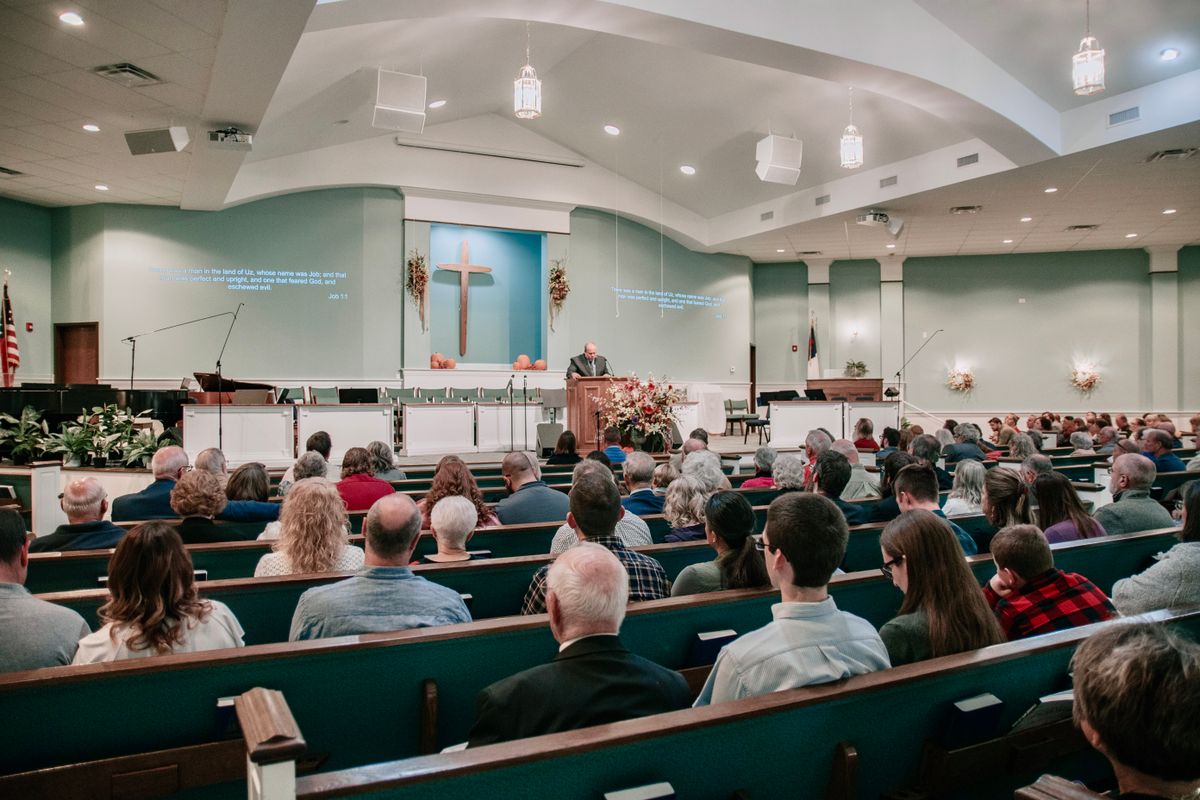
A congregation gathered together for worship - the church is people, not a building

📘 CHAPTER FIVE — What Does the Bible Say About the Church?

Not a building, not a vague idea — a called-out people Jesus built to last

⭐ Introduction

Chapter Four opened up worship, and one of the FIRST things worship does is bring us together — "not forsaking the assembling of ourselves together." That raises the next honest question a new believer carries: what exactly is this thing we assemble into? What is the church?

Ask most people and they point at a building with a steeple. Ask others and they wave a hand toward the sky and say, "the church is all believers everywhere." The Bible says something plainer and better than either one. The church is a people — a called-out people — that the Lord Jesus started with His own hands, that meets in a real place, and that He promised would NEVER die . . . you were not saved to walk alone . . . you were saved to belong.

Let us ask the Book.

I. The Church Is Not a Building — It Is a People

The word the New Testament uses for "church" NEVER meant a building . . . in the language it was written in, the word is ekklesia, and it means a called-out assembly — a group of people called out and gathered together. A building has no faith. A building cannot pray, cannot be baptized, cannot love a brother or carry his burden. People do those things.

So when the Bible says "church," do NOT picture bricks. Picture people — saved people, gathered.

Illustration — The Barn and the Herd. Out on a place, NOBODY points at the barn and calls it the cattle. The barn is just where the herd comes in out of the weather. The herd is the living thing. Burn the barn to the ground and you still have your cattle — they will gather under a tree. The building where a church meets is the barn. The called-out, blood-bought people are the herd . . . do not confuse the two.

Simple truth: The church is people, NOT a place — a called-out people, saved and gathered.

II. Jesus Built It Himself — and It Will Not Die

Listen to who started the church, and when:

"And I say also unto thee, That thou art Peter, and upon this rock I will build my church; and the gates of hell shall not prevail against it." — Matthew 16:18

Notice three things sitting in that one verse. First, "I will build" — Jesus is the builder. The church is not a club men dreamed up – it is a work of Christ, and He began building it in the days of His own ministry here on earth. Second, "my church" — it belongs to Him. Third, "the gates of hell shall not prevail against it" — it will NEVER be destroyed. From the day the Lord started building it, His church has never gone out of existence, and it never will. Kingdoms have risen and fallen . . . His church is still here.

And one word about that rock, because it trips people up. When Jesus said this, He and His disciples were up at Caesarea Philippi, standing before a huge wall of stone — a great rock cliff . . . He had just asked, "whom say ye that I am?" and Peter had answered, "Thou art the Christ, the Son of the living God" (Matthew 16:16). So when the Lord says, "thou art Peter" — and the name Peter means a stone, a little stone — "and upon this rock I will build my church," He is not building His church on little Peter . . . He points past Peter to the great Rock standing there: Himself, and the truth Peter had just confessed. The Bible names the foundation for us plainly: "other foundation can no man lay than that is laid, which is Jesus Christ" (1 Corinthians 3:11). Peter is a stone in the wall. The Rock the WHOLE church is built on is Christ.

That is a steadying thing for a new believer to know . . . you have joined something older and stronger than any government on earth — something with a lifetime guarantee, signed by the Lord Himself.

Simple truth: Jesus built the church, the church is His, and He promised it would NEVER die.

III. The Church Is Somewhere You Can Belong

Here is where a lot of people go wrong today . . . they say, "the church is just all Christians everywhere — invisible, scattered across the world. I don't need to join a local one." But watch how the Bible actually uses the word. Nearly EVERY time, "church" is a specific gathering you could walk into and count.

"Unto the church of God which is at Corinth..." — 1 Corinthians 1:2

There was a church at Corinth. A church at Ephesus. Churches in Galatia — REAL assemblies, in real towns, that met on the Lord's day, that a man could visit . . . when three thousand were saved at Pentecost, the Bible does not say they floated off as invisible members . . . it says:

"...the same day there were added unto them about three thousand souls." — Acts 2:41

Added — counted in, joined to a body you could see. The Lord even tells us, when a brother sins, to take it "unto the church" (Matthew 18:17). You cannot tell ANYTHING to an invisible cloud . . . you tell it to a church that meets, that has members, that can act. The church in the Bible is local and visible — a family you can be baptized into and belong to.

Simple truth: The church is a REAL, visible family — somewhere you can walk in, be counted, and belong.

IV. What the Church Is For

So what does this called-out people do? The Bible gives the church REAL work:

  • It worships and hears the Word. The church gathers to sing, to pray, and to sit under the preaching of the Book.
  • It keeps the two ordinances the Lord left it. Baptism — a believer buried in the water and raised again, a picture of the death, burial, and resurrection of the Lord (Romans 6:4). And the Lord's Supper — the bread and the cup, showing "the Lord's death till he come" (1 Corinthians 11:26). Both are pictures . . . neither ONE saves. (Chapter Four opened these, and The Ordinances page digs deeper.)
  • It carries the gospel. The Great Commission — go, teach, baptize — was handed to the church (Matthew 28:19-20).
  • It holds up the truth. Paul calls the church "the pillar and ground of the truth" (1 Timothy 3:15) — the place that props up and guards the Word in a dark world.
  • It cares for its OWN. The members watch over one another, bear one another's burdens, and gently set one another straight.

Illustration — The Stone in the Field and the Stone in the Wall. A stone lying alone in a field holds NOTHING up. The rain runs over it, and it just sits there . . . take that same stone and set it into a wall with others, and now it carries weight — it helps hold a roof over people's heads. A Christian on his own is a stone in the field. Set into a church, fitted with others, he becomes part of something that shelters souls. The Lord said, "I will build" — and He builds with living stones, one fitted to the next.

Simple truth: The church worships, keeps the ordinances, carries the gospel, guards the truth, and cares for its own — REAL work, given by the Lord.

V. The Church Has Two Offices — Pastors and Deacons

The Lord did not leave His church without order . . . He gave it two offices, and ONLY two.

The FIRST is the pastor — the Bible also calls him the bishop and the elder – they are three words for the one office . . . his work is to feed and to lead the flock: to preach the Word, watch over souls, and go before the people the way a shepherd goes before the sheep. Paul lays out what such a man must be:

"This is a true saying, If a man desire the office of a bishop, he desireth a good work. A bishop then must be blameless, the husband of one wife... apt to teach." — 1 Timothy 3:1-2

The second is the deacon — a servant-office – the word itself means servant. When the FIRST church grew and some of its people were being overlooked, men were set apart to serve the tables and carry the practical load, so the preachers could give themselves to the Word and to prayer (Acts 6:1-4). His qualifications are written down right beside the pastor's (1 Timothy 3:8-13). A deacon is not a little pastor . . . he is a servant who bears the load so the church runs in order and in love.

Simple truth: The Lord gave His church TWO offices — pastors to feed and lead, deacons to serve.

⭐ Let the Bible Explain the Bible — "Doesn't That Put Women Down?"

Read those qualifications again and you will notice something. The pastor is "the husband of one wife" (1 Timothy 3:2) — the office is filled by a man. And Paul says it plainly: "I suffer NOT a woman to teach, nor to usurp authority over the man" (1 Timothy 2:12). The pastor's chair is for a qualified man.

Now the honest question a kind heart asks: does that put women down? Let the Book answer — a CLEAR verse over a hard feeling.

First, worth. In the matter of salvation there is no higher and no lower: "There is neither... male nor female: for ye are all one in Christ Jesus" (Galatians 3:28). A woman is saved exactly as a man is — by grace — and kept exactly as securely . . . and when the Bible paints a godly woman, it does not paint her small: "Who can find a virtuous woman? for her price is far above rubies" (Proverbs 31:10). Far above rubies — that is God's OWN valuation of her.

Second, order. What the Book gives is not a ladder of worth – it is an order of places . . . we all have a God-ordained place. A private and his captain are equal men, and the one still salutes the other — not because he is worth less, but because an army with no order is ONLY a mob. A home, a church, an army: God sets each in order, and the order is a kindness, not an insult.

Third — and here is the honor most people walk right past — there is something a woman can do that no man on earth ever has or ever will. A woman brings life into the world. No man has ever carried a child or nursed one. And God reached for that very gift at the most important moment in all of history: when He sent His own Son into the world, He sent Him "made of a woman" (Galatians 4:4). No man carried the Christ. A woman did. Sit with that a moment. The office of pastor is a man's to fill — but the cradle of the Saviour was a woman's, and no man will ever take that place from her . . . EVERY one of us was carried and fed by a woman – not one of us by a man. The first hand that ever fed you was a mother's.

And NEVER think a woman's teaching counts for little. A mother and a grandmother planted the faith in young Timothy long before he ever preached a word (2 Timothy 1:5), and the Book tells the older women to teach the younger (Titus 2:3-5). The limit is one office of rule over the church — not a woman's voice, and never her worth.

Simple truth: The pastor's office is a qualified man's to fill – but a woman's price is far above rubies, and her place holds an honor no man can share — she brings life into the world, and through a woman God brought the Saviour Himself.

✨ A Word Worth Knowing — "Church"

The word behind church is ekklesia — built from two little words meaning "called" and "out." A called-out people. Called out of what? Out of the world, out of the crowd, out of walking alone — called out and gathered to the Lord and to one another . . . EVERY time you read "church" in your New Testament, hear that underneath it: not a building, not a headquarters — a called-out people . . . and you, if you are saved, are one of the called.

✍️ Author's Note

More than once a sincere person has told me, "I love the Lord — but I don't need to join a church. I can follow Jesus on my own." I understand the heart behind it. Sometimes real hurt hides in that sentence, and sometimes it is honest weariness with people. But let me ask it gently: on your own, where will you be baptized? Where will you sit at the Lord's table? Who will preach to you when your own heart is lying to you — and who will you carry when their load is too heavy to lift alone? The Lord did not hand His commission and His ordinances to lone rangers. He gave them to a body. To say "just me and Jesus" is, without meaning to, to turn down gifts He meant to give us through His people. We were not made to walk alone, and He knew it.

⭐ Let the Bible Explain the Bible — "The Church Is Just All Believers Everywhere"

This is the honest sticking point, so let the Book settle it — a clear verse over a vague idea . . . some say the church is ONLY the invisible total of all Christians, so joining a local one does not much matter . . . but look at what the Bible actually asks the church to do, and ask whether an invisible cloud could do any of it:

  • It meets — "not forsaking the assembling of ourselves together" (Hebrews 10:25). You CANNOT assemble something invisible.
  • It adds members you can count — "there were added unto them about THREE thousand souls" (Acts 2:41).
  • It can be told a thing, and can act — "tell it unto the church" (Matthew 18:17).
  • It has places — the church "at Corinth," the churches "of Galatia."
  • It has officers — pastors and deacons to lead and to serve (1 Timothy 3).

None of that fits a vague, invisible everybody . . . all of it fits a real, local, visible assembly — exactly the kind of church the Lord started and told us not to forsake . . . we do not have to argue the point . . . we ONLY have to read His words and let them draw the picture.

🕊️ Before You Leave This Chapter

So here is the plain application, and we put it to ourselves first . . . if the Lord saved us, He saved us into a family — and a family is meant to be together. Find a true church, one that holds to the Book. Follow the Lord in baptism . . . take your place among the people. Be there — not to earn ANYTHING, but because that is where the saved belong, and because the brother on the next pew needs us as much as we need him . . . we do not gather to become Christians . . . we gather because we already are.

⭐ Chapter Summary

The church is not a building, and it is not a vague idea floating in the sky . . . it is a called-out people — ekklesia — that the Lord Jesus built with His own hands during His time on earth, that meets in real places, and that He promised the gates of hell would NEVER overcome . . . it worships, keeps His two ordinances, carries His gospel, guards His truth, and cares for its own . . . it does not save anyone — Christ alone does that — but it is where the saved belong . . . you were not redeemed to lie alone in a field . . . you were saved to be set, like a living stone, into something the Lord is building to last forever.

Next — Chapter Six: What does the Bible say about Christian living?

What Does the Bible Say About Christian Living? (Chapter 6)

📚 New here? Start at the beginning.
This is Chapter 6 of a free seven-chapter booklet, What Does the Bible Say? — A Simple Foundation for New Believers. You can start at Chapter 1 or see all seven chapters on The Basics page.
A worn footpath leading on through the countryside - What Does the Bible Say About Christian Living?

📘 CHAPTER SIX — What Does the Bible Say About Christian Living?

Not trying to get saved — living because you already are

⭐ Introduction

Chapter Five brought us into the church — the called-out family you were saved to belong to. Now the LAST honest question a new believer carries: how do I actually live this? Monday morning comes, the church house sits empty till Sunday, and it is just you and an ordinary day . . . what does the Bible say about Christian living?

Here is the danger, and we need to name it right at the door. A new believer can turn the Christian life into a performance — a nervous scramble to be good enough for God, to earn what he has, to keep from losing it. That is NOT the Christian life . . . that is bondage wearing a Bible cover. The Book says something far better . . . you do not live the Christian life to GET saved, and you do not live it to STAY saved . . . you live it because you ARE saved — out of love, out of gratitude, with God Himself at work inside you. Salvation is the root. Christian living is the fruit.

Let us ask the Book.

I. It Starts on the Inside — a New Heart, Not Just New Rules

When God saves a man, He does NOT just hand him a longer list of rules . . . He gives him a new heart and a new life:

"Therefore if any man be in Christ, he is a new creature: old things are passed away; behold, all things are become new." — 2 Corinthians 5:17

A new creature . . . that is where Christian living begins — NOT with you gritting your teeth to be good, but with a new life the Lord planted in you . . . and you are not left to grow it alone:

"For it is God which worketh in you both to will and to do of his good pleasure." — Philippians 2:13

Read that slowly. God works in you BOTH to WANT to do right and to DO it. The wanting and the doing are both His work inside you . . . you are not shoving a dead engine up a hill . . . He put a new engine in.

Illustration — The Apple Tree. An apple tree does not strain and sweat to make apples . . . it does not lie awake worrying whether it will manage a crop this year . . . it makes apples because it is an apple tree — the fruit comes out of what it is. When God makes you new, obedience begins to grow the SAME way: out of what you now are . . . you will still have to tend the tree . . . but you are no longer a fence post trying to sprout apples by willpower . . . you are a tree, made to bear.

Simple truth: Christian living grows from the inside out — a new heart, NOT just new rules.

II. Love Is the Engine, Not Fear

So what moves a Christian to obey? Listen to how the Lord put it:

"If ye love me, keep my commandments." — John 14:15

Notice the order. Not "keep my commandments so I will love you." Not "obey, or I will throw you out." First love, then obedience. Obedience is love's answer, not fear's ransom . . . and where does the love come from? Not from us reaching up on our OWN:

"We love him, because he first loved us." — 1 John 4:19

He loved us first . . . we love back . . . and love, kept warm, does what love ALWAYS does — it wants to please the one it loves. A child who knows his father loves him does not obey in order to become his child . . . he obeys because he already is one, and he loves his dad . . . that is the whole difference between a slave and a son. A slave obeys to keep from being punished. A son obeys because he loves his father and belongs in the house.

Simple truth: we obey out of love, because we are already His — NOT to earn a place we already have.

III. You Will Still Sin — and Here Is What to Do About It

Let us be honest, because a new believer needs honesty here more than anywhere . . . you are going to sin. Not because your salvation failed, but because you still carry the old flesh around with you. The Bible does NOT pretend otherwise:

"If we say that we have no sin, we deceive ourselves, and the truth is not in us." — 1 John 1:8

So what do we do when we fall? The very next verse tells us:

"If we confess our sins, he is faithful and just to forgive us our sins, and to cleanse us from all unrighteousness." — 1 John 1:9

Confess it. Bring it to Him, name it, and come home . . . now hear this carefully, because it will guard your whole life: sin in a Christian breaks fellowship, NEVER sonship . . . when a child disobeys his father, he does not stop being the child — but the sweetness goes out of the day . . . there is a distance at the supper table until it is put right . . . that is what sin does to us: it does not cost us our place in the family – it costs us the nearness, the joy, the open face of God. Confession is not re-earning our salvation . . . it is a child running back into his Father's arms.

Simple truth: when we sin, we confess and come home — sin can cool our fellowship, but it can NEVER touch our sonship.

IV. It Shows Up in the Everyday Things

Christian living is NOT mainly a Sunday thing . . . it is a Monday thing — a kitchen-table, back-of-the-shop, how-you-treat-the-neighbor thing . . . when the Spirit is at work in a life, He grows a certain kind of crop:

"But the fruit of the Spirit is love, joy, peace, longsuffering, gentleness, goodness, faith, Meekness, temperance." — Galatians 5:22-23

Look at that list. Not one thing on it is religious performance . . . it is how you are to live with a wife, a child, a hard neighbor, a slow driver, a long week . . . that is where the Christian life is really tested — not in the pew, but in the pickup and the kitchen . . . and the Book pulls the WHOLE of it under one banner:

"Whether therefore ye eat, or drink, or whatsoever ye do, do all to the glory of God." — 1 Corinthians 10:31

Whatsoever ye do. The washing of the dishes, the doing of a day's work, the word held back or the word spoken kindly — ALL of it can be worship, done for Him.

Illustration — Two Men and the Same Chore. Two men can do the very SAME job — feed the stock before daylight, cold and half-awake . . . one does it grumbling, counting the minutes till he is done. The other does it as unto the Lord — thankful for the animals, thankful for the strength to work, humming a hymn in the cold. Same barn, same dark, same chore . . . for one it is drudgery – for the other it is worship. Christian living is often not about doing different things . . . it is about doing the same things with a different heart.

Simple truth: the Christian life is lived in the small, everyday things — the SAME old work, done to the glory of God.

V. Keep Walking — You Are Held to the End

Here is the last thing, and the most steadying. The Christian life is not a sprint you win or lose in a single day . . . it is a walk — steady steps, one after another, in one direction . . . you will have good days and low days . . . you will grow slowly, the way ANYTHING alive grows . . . do not measure yourself by one stumble, or by one good week . . . just keep walking, and keep growing:

"But grow in grace, and in the knowledge of our Lord and Saviour Jesus Christ." — 2 Peter 3:18

And when your own strength runs thin — and it will — rest the WHOLE weight of it on this:

"Being confident of this very thing, that he which hath begun a good work in you will perform it until the day of Jesus Christ." — Philippians 1:6

He began the work . . . He will finish it. Your salvation NEVER rested on the strength of your grip on Him – it rests on the strength of His grip on you — and He does not let go:

"...and they shall never perish, neither shall any man pluck them out of my hand." — John 10:28

Simple truth: keep walking, keep growing — and know that the One who began the work will finish it.

✨ A Word Worth Knowing — "Walk"

The Bible has a favorite word for the Christian life, and it is a plain one: walk. "Walk in the Spirit" (Galatians 5:16). "As ye have therefore received Christ Jesus the Lord, so walk ye in him" (Colossians 2:6). Not run, NOT sprint, not leap — walk. A walk is steady steps, one after another, in a direction, at a pace anybody can keep . . . you do not have to be an athlete to walk . . . you just have to keep taking the next step, and not quit . . . that is the Christian life: not a heroic dash, but a faithful walk — one step, then the next, with your hand in His.

✍️ Author's Note

If there is one fear I have watched trouble new believers more than any other, it is this one: "What if I mess it up? What if I am not living good enough — have I lost it?" Let me speak to that plainly, because I have felt it myself. You are a child now, not a hired hand. A hired hand can be let go; a child cannot be un-born. When a good father's boy does wrong, the father corrects him — but he does not disown him. The Book says the very same of God: "whom the Lord loveth he chasteneth" — He corrects His children because they are His children (Hebrews 12:6-8). So when you stumble, do not run from Him in fear like a slave waiting to be fired. Run to Him like a child who needs his Father. Your standing does not hang on the strength of your grip. It hangs on the strength of His.

⭐ Let the Bible Explain the Bible — "I Have to Be Good Enough to Keep My Salvation"

This is the misconception that steals more joy than any other, so let the Book settle it once and for all — a CLEAR verse over an anxious feeling.

Where did your salvation come from in the FIRST place? Not from your goodness:

"For by grace are ye saved through faith; and that not of yourselves: it is the gift of God: Not of works, lest any man should boast." — Ephesians 2:8-9

It was a gift, not a wage . . . and a gift you did not earn is not a gift you can un-earn . . . what holds you is not your grip on Him but His grip on you: you "shall NEVER perish," and no man — not even you yourself — can pluck you out of His hand (John 10:28). The very moment you believed, the Spirit Himself sealed you (Ephesians 1:13). So your obedience is not the PRICE of staying saved — it is the FRUIT of being saved . . . and chastening, when it comes, is a Father raising a son, never a judge condemning a criminal (Hebrews 12:6-8). Rest there . . . you are not working to get into the family . . . you are living as one who already belongs.

Simple truth: your good living is the fruit of being saved — NEVER the price of staying saved.

🕊️ Before You Leave — a Word for the Road

And this is the last of our six questions, so let it be a send-off, too . . . we have walked the WHOLE way together now — from the Bible, to salvation, to prayer, to worship, to the church, and now to the daily walk . . . here is the plain application, and we put it to ourselves first: go and walk it. Keep your Bible open . . . take your place in a good church. Talk to your Father every day . . . and when you stumble — and you will — do not quit – confess, get up, and take the next step . . . you will not walk it perfectly . . . you do not have to. You only have to keep walking, with your hand in the hand of the One who has promised to bring you all the way home.

⭐ Chapter Summary

Christian living is not how you get saved, and it is not how you stay saved . . . it is how a saved child lives — out of a new heart, moved by love and not fear, with God Himself at work in him . . . you will still sin – when you do, you confess and come home, for sin can cool your fellowship but NEVER touch your sonship. The life shows up in the everyday things — the same old work done to the glory of God. And it is a walk, not a sprint — steady steps, one after another — carried by the One who began the good work and has promised to finish it. Salvation is the root – this living is the fruit . . . now go and walk it, all the way home.

What Does the Bible Say? — six questions asked, and the same answer EVERY time: not our opinions, but His Word . . . keep it open . . . and when you are ready, there is one more chapter: Chapter Seven — on learning to ask the Book for yourself.

Friday, August 7, 2026

What Does the Bible Say About Worship? (Chapter 4)

📚 New here? Start at the beginning.
This is Chapter 4 of a free seven-chapter booklet, What Does the Bible Say? — A Simple Foundation for New Believers. You can start at Chapter 1 or see all seven chapters on The Basics page.
Sunlight through the windows of a church - What Does the Bible Say About Worship?

📘 CHAPTER FOUR — What Does the Bible Say About Worship?

More than a feeling — and more than Sunday morning

⭐ Introduction

Chapter Three answered the question EVERY new believer carries around: how do I talk to God? Prayer is a child talking to his Father — no performance required . . . now a second question moves to the front, and it is bigger than it sounds: what does the Bible say about worship?

Most people, when they hear "worship," picture the singing part of a church service — the songs before the preaching . . . and worship does include that . . . but if you ask the Bible what worship is, the answer stretches in EVERY direction: before Sunday, after Sunday, inside the building and out. A new believer who understands worship from the beginning will be ahead of people who have sat in church for twenty years without stopping to ask the question.

So, let's ask it plainly — and let the Bible answer.

I. Worship Is Bigger Than the Feeling

(What it actually is)

The clearest definition in the Bible came from Jesus Himself, talking to a Samaritan woman at a well. She had asked which mountain was the right one to worship on — their mountain or Jerusalem's. Jesus set both mountains aside and said something that changed the WHOLE conversation:

John 4:23–24 — "But the hour cometh, and now is, when the true worshippers shall worship the Father in spirit and in truth: for the Father seeketh such to worship him. God is a Spirit: and they that worship him must worship him in spirit and in truth."

Two words hold the WHOLE definition: spirit and truth. Not one or the other — but both.

Spirit means it must come from the inside . . . it is not a performance . . . you CANNOT fake it, no matter how well you go through the motions. God looks past the folded hands and the bowed head and sees straight to the heart — and what He is looking for is a heart genuinely turned toward Him.

Truth means it MUST line up with the Word of God. Sincerity alone is not enough. A man can be sincerely wrong. God has told us how He wants to be approached, and He means it. "Spirit and truth" are the two rails the train must run on — take either one away and it goes nowhere.

Illustration — The Piano and the Singer. A man can play "Amazing Grace" on a piano with perfect technique and not mean a single word of it. And a man can sing it with tears on his face and yet be singing words he has NEVER examined or believed. God is not satisfied with either one alone. The "spirit" without the "truth" is emotion chasing itself around the room — warm, maybe, but not worship. The "truth" without the "spirit" is a corpse in a suit . . . He wants the living man, the one who knows what he is singing and means every word of it.

Now here is where worship gets wide. Romans 12 opens the door to what it looks like when it leaves the church building and comes home with you:

Romans 12:1 — "I beseech you therefore, brethren, by the mercies of God, that ye present your bodies a living sacrifice, holy, acceptable unto God, which is your reasonable service."

That last phrase — "reasonable service" — is one word in the original Greek, and it is the word for worship. Paul is not talking about Sunday morning . . . he is talking about the WHOLE body, on every morning, laid down before God like an offering. Your daily life — your Monday, your Thursday, the way you treat your family and your neighbor and your employer — that is worship too. Or it is supposed to be.

Simple truth: Worship is a heart genuinely turned toward God, according to His Word — and it begins inside you long before the music starts.

II. The Bible Says Come Together

(Why the church is NOT optional)

One of the first things a new believer will hear from somebody is this: I don't have to go to church to be a Christian. I can worship God anywhere. And the first part of that is true — God is everywhere, and you can speak to Him anywhere . . . but the second part is a half-truth dressed up as the whole thing. The Bible NEVER says the assembly of believers is optional.

Hebrews 10:24–25 — "And let us consider one another to provoke unto love and to good works: Not forsaking the assembling of ourselves together, as the manner of some is; but exhorting one another: and so much the more, as ye see the day approaching."

Notice what "not forsaking" is paired with — provoking unto love and to good works and exhorting one another. You cannot do either of those things alone . . . you cannot encourage a brother you NEVER see . . . you cannot provoke a sister to good works across town. The assembly is not just about you getting something — it is about what you give when you show up, and what the brother sitting next to you needs you to give him.

And there is a promise attached to it. When the church gathers in His name, He shows up:

Matthew 18:20 — "For where two or three are gathered together in my name, there am I in the midst of them."

The very FIRST church — those who had seen the risen Lord, who had been in the upper room — what did they do? They assembled . . . and they did not stop:

Acts 2:42 — "And they continued stedfastly in the apostles' doctrine and fellowship, and in breaking of bread, and in prayers."

Four things: the Word, fellowship, the breaking of bread, and prayer . . . that is the blueprint of a church service, and it is as old as the church that Jesus established before Pentecost . . . and notice that word — stedfastly. Not occasionally. Not when the weather was good and they felt like it. Stedfastly.

Illustration — The Coal in the Fire. Pull a single burning coal out of a fire and set it on the hearth by itself. Within minutes it is cold and gray. Put it back in with the others, and it glows again . . . there is NOTHING wrong with that one coal — the same fire that burns in the pile burns in it. But a coal does not stay lit alone . . . and neither do we.

Psalm 122:1 — "I was glad when they said unto e, Let us go into the house of the LORD."

That is NOT a reluctant command . . . that is a man who learned to want it. That gladness is what grows in a believer who stays faithful — and it grows in the going, not the sitting home.

Simple truth: God commands the assembly — and a believer who stays away cuts himself off from the very body he was born into.

III. The Two Signs Jesus Left His Church

(Baptism and the Lord's Supper)

When Jesus left the earth, He left two things in the keeping of His church — two acts of worship that point, in two different directions, to the SAME gospel. The Bible calls them ordinances — things He ordained, things He commanded His church to observe until He returns.

Baptism is the FIRST step of obedience after salvation . . . it is not what saves you — the thief on the cross went straight to paradise without ever being baptized (Luke 23:43). What saves you is the faith of the heart, the settled trust in Christ and His blood alone . . . but baptism is the picture of what happened to you the moment you were saved. Paul explains it:

Romans 6:3–4 — "Know ye not, that so many of us as were baptized into Jesus Christ were baptized into his death? Therefore we are buried with him by baptism into death: that like as Christ was raised up from the dead by the glory of the Father, even so we also should walk in newness of life."

Going under the water pictures the old man — the person you were before Christ — buried. Coming up out of the water pictures the resurrection — the new life you now have in Him. It is a sermon preached in THREE seconds, without a word spoken . . . it tells everyone watching: I was dead in my sins, Christ died for me, and I am raised to walk in newness of life.

The Ethiopian treasurer understood it the moment Philip preached Christ to him — and his response was immediate:

Acts 8:36–37 — "And as they went on their way, they came unto a certain water: and the eunuch said, See, here is water; what doth hinder me to be baptized? And Philip said, If thou believest with all thine heart, thou mayest. And he answered and said, I believe that Jesus Christ is the Son of God."

If you have believed with your whole heart, NOTHING hinders you either. Baptism is not a condition of salvation — it is the natural first step of a saved person who wants to obey.

The Lord's Supper looks in a different direction . . . where baptism looks back to your beginning — the moment you trusted Christ — the Lord's Supper looks back to His sacrifice, and forward to His return.

1 Corinthians 11:23–26 — "For I have received of the Lord that which also I delivered unto you, That the Lord Jesus the same night in which he was betrayed took bread: And when he had given thanks, he brake it, and said, Take, eat: this is my body, which is broken for you: this do in remembrance of me. After the same manner also he took the cup, when he had supped, saying, This cup is the new testament in my blood: this do ye, as oft as ye drink it, in remembrance of me. For as often as ye eat this bread, and drink this cup, ye do shew the Lord's death till he come."

The bread and the cup are not a sacrament that saves you, and they do not turn into ANYTHING — they are symbols, kept as memorials, just as He commanded . . . what they picture is the body broken and the blood shed for sin . . . every time the church comes to the table it is saying together: He died . . . He paid the price. And He is coming back.

Come to these two ordinances with reverence . . . they are NOT customs — they belong to Him. He said to do them, and the church that honors His Word does them with care, as He left them.

Simple truth: Baptism is the picture of your new life – the Lord's Supper is the memorial of His sacrifice — and BOTH were left by Jesus as acts of worship for His church.

IV. Worship That Doesn't Stop at the Door

(Monday through Saturday counts)

One more thing — and it may be the most practical of all. Worship does not begin at eleven on Sunday morning and end at noon. The Bible points past the church service to the WHOLE week:

Colossians 3:17 — "And whatsoever ye do in word or deed, do all in the name of the Lord Jesus, giving thanks to God and the Father by him."

Whatsoever ye do. Not "whatsoever you do in church" or "whatsoever you sing on Sunday." Everything. The way you treat your husband. The way you speak to your children. The honest work you put in for your employer when no one is watching. The patience you show when you are tired and the line is long . . . all of it is worship — or all of it ought to be — because all of it is done under the eye of a God who is ALWAYS watching and always worthy of honor.

This is what Paul meant by "a living sacrifice." A sacrifice in the Old Testament was laid on the altar and left there — that was the WHOLE point – it was given fully and did not climb back down. Paul says your sacrifice is a living one, which means it goes back out into the world after Sunday and keeps worshipping. The dedication you bring to the altar is supposed to stay on you when you leave the building.

A Word Worth Knowing — "Glorify." One of the great Bible words for worship is glorify — to give God the honor and weight His name deserves . . . some of the oldest teaching in the church asks the question: "What is the chief end of man?" And the answer: "To glorify God and enjoy Him forever." That question was not written for preachers and scholars . . . it was written for plain people — for you . . . every person ever born into this world was made to glorify God, and the new believer who understands that early has a compass that will guide every decision he makes for the rest of his life . . . when the question is "should I do this?" — the deeper question is ALWAYS: does this glorify God?

Author's Note — "More than one person has told me they feel closer to God driving down a country road than they ever do in church — and I understand that feeling. God is in that country road. But I want to ask an honest question: close to God doing what? If the answer is 'thinking about Him and enjoying His creation,' that is real and it is good. But baptism doesn't happen on a country road. The Lord's Supper doesn't happen on a country road. The brother who needs to hear 'I'm praying for you' is not on that road. And the child watching to see if the faith is real enough to make a grown man get up and go — that child is not there either. The road is a blessing. But it is not a substitute." — C.T.

Simple truth: Worship is a WHOLE-life posture, not a Sunday hour — but the Sunday hour matters too, and the Bible says so plainly.

⭐ Let the Bible Explain the Bible — "I Can Worship God Anywhere"

That sentence is true as far as it goes — and then it stops too soon. God is everywhere, and you can speak to Him anywhere . . . but the same Bible that says "God is a Spirit" also says "not forsaking the assembling." The same Lord who hears a prayer in a cornfield also commanded His church to break bread together. The "anywhere" truth was NEVER meant to replace the "assembled together" truth — it was meant to comfort a soldier on a battlefield or a prisoner in a cell who cannot get to a church . . . when it becomes the reason a healthy believer stops showing up, it has traveled past the Bible and kept on going.

⭐ Before You Leave This Chapter

Let me ask you a plain question, friend: if someone watched your WHOLE week — all of it, Monday through Saturday and then Sunday morning — could they see the worship? Not just in the pew, but in the car and at the table and at work and in the way you talk about God to somebody who doesn't know Him yet?

Worship is the turning of a whole person toward a God who is worthy . . . it is spirit and truth together — genuine heart and the right Word . . . it is the assembly you keep, the ordinances you honor, the name you lift in EVERYTHING you do. And here is the sweetest part: it is not something you have to manufacture . . . it is the natural overflow of a soul that has seen who God is and what He did . . . when the salvation of Chapter One is real, and the security of Chapter Two is settled, and the prayer life of Chapter Three is going — worship follows as naturally as singing follows joy.

If it has not come naturally yet, that is ALL right . . . you are new . . . but here is where you start: show up. Come to the assembly. Sit with the people of God. Let the Word be preached. Come to the table when it is spread . . . and watch what happens to a heart that keeps showing up — it begins to want to come.

Psalm 84:10 — "For a day in thy courts is better than a thousand. I had rather be a doorkeeper in the house of my God, than to dwell in the tents of wickedness."

⭐ Chapter Summary

  • Worship is "spirit and truth" together — genuine heart and God's Word, NOT one without the other (John 4:24).
  • The WHOLE life is an act of worship — Romans 12:1 calls it "your reasonable service."
  • God commands the assembly — Hebrews 10:25 says "NOT forsaking," and means it.
  • Where believers gather in His name, He is there — Matthew 18:20.
  • The early church pattern was Word, fellowship, Lord's Supper, and prayer — stedfastly (Acts 2:42).
  • Jesus left TWO ordinances: baptism (the picture of your new life in Him) and the Lord's Supper (the memorial of His sacrifice, pointing to His return).
  • Baptism is not what saves you — it is the FIRST step of obedience for one who is already saved.
  • Worship does not clock out — "whatsoever ye do in word or deed, do ALL in the name of the Lord Jesus" (Colossians 3:17).

Next — Chapter Five: What does the Bible say about the church?

Saturday, August 1, 2026

What Does the Bible Say About Prayer? (Chapter 3)

📚 New here? Start at the beginning.

This is Chapter 3 of a free seven-chapter booklet, What Does the Bible Say? — A Simple Foundation for New Believers. You can start at Chapter 1 or see all seven chapters on The Basics page.
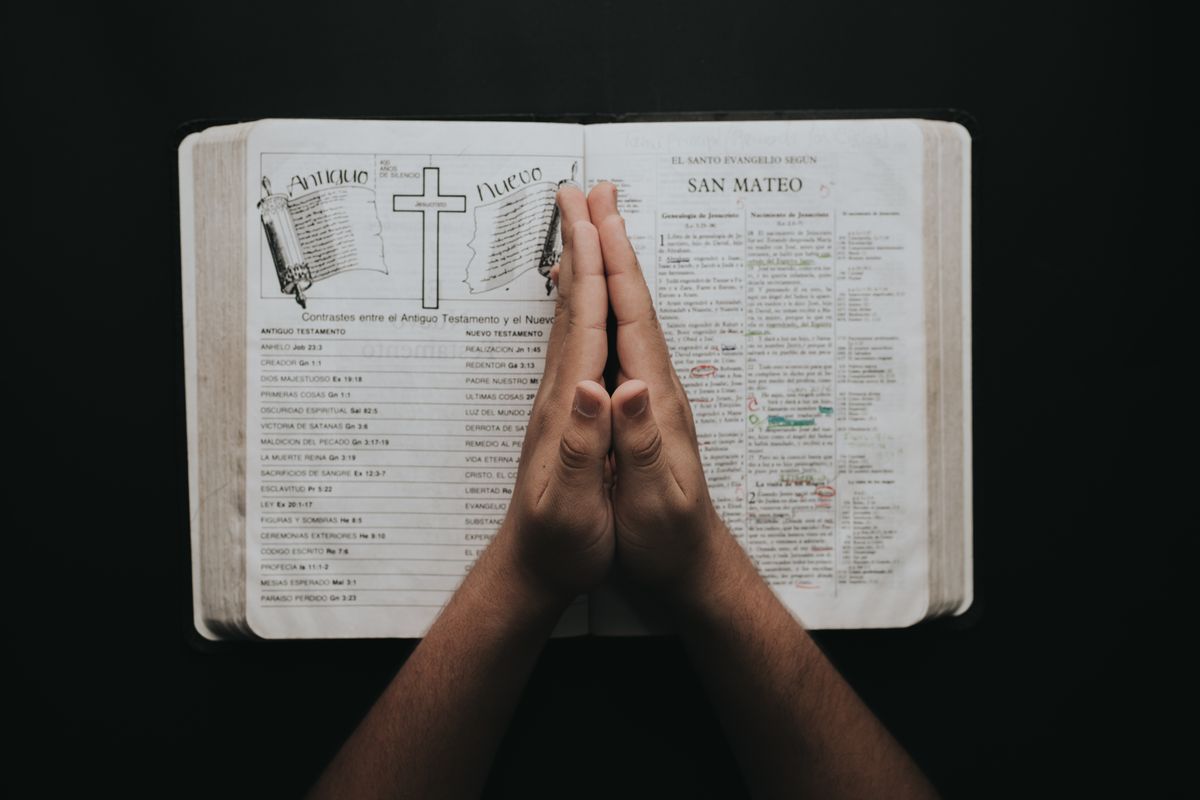
Hands clasped in prayer resting on an open Bible

📘 CHAPTER THREE — What Does the Bible Say About Prayer?

Learning to talk with your Father


⭐ Introduction

Chapter Two settled the biggest question there is — you are saved, and you are safe in two hands that will not let go. Now here comes a question that will fill up the REST OF YOUR LIFE . . . how do you talk to the God who saved you?

Every new believer wonders about it, even the ones who are afraid to say it out loud. Do I have to use special words . . . do I have to sound like the preacher . . . what about it when my mind wanders off, or when I fall asleep before I ever get finished? And notice we are not asking what a ritual says about it, and we are not asking about something we saw somebody do on television — we are asking the very same thing we asked about salvation: what does the Bible say?

And the Bible’s answer is a good deal simpler, and a good deal kinder, than most of us would expect.

I. Prayer Is Simply Talking to God

Prayer is not a performance, and it is not a magic spell where the right words open the door and the wrong words leave it shut . . . prayer is a child talking to his Father . . . listen to how the Lord Jesus taught us to start out:

“After this manner therefore pray ye: Our Father which art in heaven, Hallowed be thy name.” — Matthew 6:9

Before we ask for one single thing, Jesus hands us the first two words — OUR FATHER. And remember what Chapter Two said . . . the minute we were saved we became God’s CHILDREN. So when we pray we are not some stranger out knocking at a rich man’s gate and hoping he answers — we are a child walking into his own Father’s house. That ONE truth changes about everything there is to change about how praying feels.

And a child does not make an appointment to go talk to his daddy . . . he does not rehearse a speech and he does not reach around for fancy words — he just climbs up and starts talking. God is NOT sitting up there grading our grammar:

“But when ye pray, use not vain repetitions (saying the same thing over and over without meaning it), as the heathen do: for they think that they shall be heard for their much speaking. Be not ye therefore like unto them: for your Father knoweth what things ye have need of, before ye ask him.” — Matthew 6:7–8

Read that last line again slow . . . our Father ALREADY KNOWS what we need before we ever open our mouth . . . so praying is not us bringing God news that He has not heard yet. It is a child telling his Father what is on his heart — because that is what children do, and because the Father loves to hear it.

Who do we pray to? New believers ask that one plainly, so let us let the Bible answer it plainly. We pray to the Father — “Our Father which art in heaven” — and we come in the name of Jesus, because He is the One who opened the door:

“…Verily, verily, I say unto you, Whatsoever ye shall ask the Father in my name, he will give it you.” — John 16:23

To the Father, in the name of the Son — and that is the pattern all the way through the Book. We do not need any middle-man down here on this earth . . . and we do not pray to anybody else. The way is open and it has our Savior’s name over the door.

Simple truth: Prayer is a child talking to his Father — not a speech delivered to a stranger.

II. Prayer Is Learned — Even His Own Men Had to Ask

If praying feels awkward to us at first, then let us take heart, because we are in good company. Grown men who walked with Jesus every day of the week, who watched Him pray of a morning and again at night, came to Him with a request:

“And it came to pass, that, as he was praying in a certain place, when he ceased, one of his disciples said unto him, Lord, teach us to pray, as John also taught his disciples.” — Luke 11:1

Now notice they did not say teach us to preach . . . and they did not say teach us to do miracles. They said TEACH US TO PRAY. And these men were not beginners at religion — and still they had to be taught. So if we feel like a beginner at it, we are standing in the exact spot where the very first disciples stood . . . praying is a learned thing, and the Lord Himself is PATIENT with learners.

And look at what He handed them when they asked. Not a feeling — and not “just let it flow” — He gave them a pattern to walk through:

“After this manner therefore pray ye: Our Father which art in heaven, Hallowed be thy name. Thy kingdom come. Thy will be done in earth, as it is in heaven. Give us this day our daily bread. And forgive us our debts, as we forgive our debtors. And lead us not into temptation, but deliver us from evil: For thine is the kingdom, and the power, and the glory, for ever. Amen.” — Matthew 6:9–13

Now mark this carefully, because it is EASY to get wrong. Jesus said “after this manner” — and that means pray along these lines, and it does not mean recite these exact words and nothing else . . . because remember He had just finished warning us about vain repetitions. The model prayer was never meant to be a paragraph said by memory without thinking about it — it is an outline to walk down, a set of doors to open, one at a time.

His name honored . . . then His kingdom and His will put first . . . then our daily needs . . . then forgiveness, asked for and given out . . . then help against temptation. So when our mind goes blank we are never stuck, because we have got doors to walk through and the Lord Himself drew us the map.

Illustration — The Trellis. A tomato vine left to itself will sprawl out in the dirt and the fruit will rot on the ground. Now give that same vine a trellis — a few plain stakes and some string — and it climbs, and it bears, and a man can find the fruit when he goes looking for it. That vine is not one bit less alive for having something to climb on . . . it is more fruitful . . . and the model prayer is a trellis for a wandering mind. It does NOT make our praying stiff — it gives it something to climb.

A Word Worth Knowing — “Watch and Pray.” On His last night the Lord told His men to “watch and pray” (Matthew 26:41). In the original language both of those words carry the sense of KEEP ON — keep watching, keep praying. He was not telling them to say one prayer and then be done with it . . . He was describing a life kept turned toward God, the way a sunflower holds its face to the sun all day long. And that is how the Bible can turn around and say “Pray without ceasing” (1 Thessalonians 5:17) — which does not mean never stop talking. It means never TURN AWAY.

Simple truth: NOBODY is born knowing how to pray — and the Lord who taught His first men to pray is teaching us now.

III. Does God Really Hear Me?

Here is the fear that hides down underneath a new believer’s prayers . . . maybe the ceiling is as high as it goes . . . maybe there is NOBODY listening. And the Bible speaks straight at that fear, because God hears His children and He says so plainly:

“Evening, and morning, and at noon, will I pray, and cry aloud: and he shall hear my voice.” — Psalm 55:17
“For the eyes of the Lord are over the righteous, and his ears are open unto their prayers…” — 1 Peter 3:12

His ears are OPEN to His own . . . not cracked open on our good days and shut on our bad ones — but open.

Now somebody is going to honestly ask it: then what about the times my prayers feel like they hit the ceiling and bounce back down? And the Bible is honest about that too, because it names ONE thing that will cloud up the line:

“If I regard iniquity in my heart, the Lord will not hear me.” — Psalm 66:18

Read it slow, because it is gentler than it sounds the first time through. It does not say “if I ever sin” . . . it says if I REGARD iniquity — if I cherish it, hold on to it, hide it down in my heart and refuse to turn it loose. That is not God turning His back on a stumbling child . . . that is the very thing Chapter Two taught us about being His child and having fellowship with Him: sin in a believer’s life clouds up the closeness, and it NEVER touches whether we are His. Our Father is STILL our Father. And there is a one-verse remedy for it, and it is ALWAYS standing open:

“If we confess our sins, he is faithful and just to forgive us our sins, and to cleanse us from all unrighteousness.” — 1 John 1:9

We never have to clean ourselves up before we come . . . we just come HONEST. Tell Him what He already knows, and the closeness is put back that VERY MINUTE.

A Word Worth Knowing — “The Working Prayer.” James makes a promise here that ought to put some steel in a new believer’s spine:

“…The effectual fervent prayer of a righteous man availeth much.” — James 5:16

“Effectual fervent” is two English words carrying one word out of the original — and our own word energy is hiding inside of it. It means THE WORKING PRAYER . . . prayer with its sleeves rolled up, prayer that is ACTUALLY DOING SOMETHING, instead of words left idling with the engine off.

And “a righteous man” — now do not read right on past that and think to yourself, well, that leaves me out. Because the righteous man here is simply a SAVED man. Chapter Two settled that one: his righteousness is a gift put to his account, and it is not something he earned. This promise was never written for the spiritual giants . . . it was written for US.

Illustration — The Clean Pipe. Water runs through a pipe not because the pipe is strong but because the pipe is open. Let rust and gunk fill that pipe up and the water will only trickle out the end of it. The power was NEVER in the pipe at all — it was in the water, and in the pressure behind the water. And confession is what keeps our pipe clean and open . . . so that all the strength of God can run right through the prayer of a weak man. The might is NOT in us . . . it is in the One who is receiving the prayer.

Simple truth: God’s ear is open to His children — and honest confession is what keeps the line CLEAR.

IV. When the Answer Comes

Jesus told a whole parable for one reason, and Luke wrote the reason down for us — so that we would keep on praying and not give up:

“And he spake a parable unto them to this end, that men ought always to pray, and not to faint (not to give up and quit).” — Luke 18:1

To “faint” is to QUIT . . . to let the arms drop down. And sometimes we quit because the answer has not come yet and we go on and decide that God must not be listening — but a delay is NOT a DENIAL. The Bible teaches us to KEEP ON coming, like a child who is not one bit afraid to ask his father twice.

Now here is the part a new believer needs to get settled early on: God answers every prayer His children pray — He just does not always answer YES. And no good father does. Even the apostle Paul asked three times for one thing, and God’s answer to him was no:

“For this thing I besought the Lord thrice, that it might depart from me. And he said unto me, My grace is sufficient for thee: for my strength is made perfect in weakness…” — 2 Corinthians 12:8–9

Paul begged for that thorn to be taken away . . . and God said no — and then God turned around and told him why: something better than relief was coming, and it was only going to come through the very weakness Paul wanted gone. That “no” was not God ignoring Paul . . . that was God loving Paul too much to hand him the smaller thing he was asking for.

Illustration — Three Answers, One Good Father. Any parent in here knows there are three honest answers to a child’s request — yes . . . not yet . . . and no, because I love you. The child who reaches up for the carving knife on the counter is not being rejected when his mother tells him no — he is being PROTECTED. And some of the kindest things our Father ever does for us, He does by telling us no about the very thing we were DEAD SURE we needed. We will understand it later on . . . for right now we trust the One who is doing the answering.

⭐ Let the Bible Explain the Bible — “Ask Anything?”

New believers will trip over a verse like “ask, and ye shall receive” (John 16:24) and take it to mean that God is some kind of vending machine — put in the prayer and out drops the thing. So let us let Scripture explain Scripture, because the same Bible says two things that stand guard over that promise. First: “ye ask, and receive not, because ye ask amiss” (James 4:3) — and that means some of what we ask for is simply the WRONG thing to be asking for. And second: “if we ask any thing according to his will, he heareth us” (1 John 5:14). So the promise is real . . . but it runs through God’s good will and not around it. That is not a loop-hole . . . that is a mercy. Would any one of us really want a God who handed us every single request, including the ones we would be weeping over a year from now? “Thy will be done” is the SAFEST prayer we will ever pray.

Simple truth: God answers every prayer His children pray — sometimes yes, sometimes not yet, and sometimes a “no” that is pure love.

V. But I Keep Falling Asleep

Maybe this is the most honest question of the whole bunch . . . what about the nights I mean to pray, and my mind wanders off somewhere, or I fall asleep before I ever finish? Well the Bible has a scene in it for exactly that — and it is one of the tenderest scenes in the whole Book.

On the night before the cross, Jesus took His three closest men out into a garden to pray and asked them to watch with Him. And He came back and found them asleep:

“And he cometh unto the disciples, and findeth them asleep, and saith unto Peter, What, could ye not watch with me one hour? Watch and pray, that ye enter not into temptation: the spirit indeed is willing, but the flesh is weak.” — Matthew 26:40–41

Now look at who it was that went to sleep . . . NOT the weak ones — His three best. And then look at what Jesus did not do . . . He did not disown them, and He did not call them lazy . . . He said the kindest thing He could have said: “the spirit indeed is willing, but the flesh is weak.” He was telling them I know your heart wanted to . . . I know your body had nothing left in it. Their spirit was eager and their flesh was worn out — and so is ours, because that very same weakness lives in EVERY LAST ONE of us.

So the Bible does not scold weak pray-ers . . . it HELPS them. Here are five plain helps, and let us hear them as permissions and not as one more burden, because every one of them comes straight out of the Book:

Pray on your feet. Isaac “went out to meditate in the field at the eventide” (Genesis 24:63). There is nothing in the Bible anywhere that requires a chair or a bowed head . . . and a body in motion does NOT doze off — so if the kneeling hour keeps putting us to sleep, then get up and walk and pray.

Pray out loud. David prayed “…and cry aloud: and he shall hear my voice” (Psalm 55:17). Silent prayer is where the mind slips off the road, and the voice is what holds it on . . . because it is HARD to fall asleep while we are talking.

Pray with a list. Paul kept names — “always in every prayer of mine for you all” (Philippians 1:4). There is NO shame at all in a written list of folks to pray for . . . a wandering mind is glad of a fence.

Pray with the Book open. When our own words run out, God’s have not. Read a psalm out loud and pray it back to Him. Psalm 1 is only six verses — read it slow, and ask God to make us like that tree planted by the rivers of water.

Give God a good hour. If the sleepy tail-end of the day keeps swallowing our prayers, then move the hour and give Him one when we are awake. The Bible commands the habit of prayer and it does not command a particular time on the clock . . . Jesus prayed before daylight (Mark 1:35) and Jesus prayed all night long (Luke 6:12) — so the hour changed and the habit NEVER did. It is the same principle as the firstfruits — “Honour the LORD… with the firstfruits” (Proverbs 3:9) — God is worth the best of our day, and not the leftover minutes when we are already half asleep.

Author’s Note — “New believer, let me tell on myself. There are nights I lie down to say my prayers worn out, and I catch myself drifting off right in the middle of them. I have two choices. I can give up and go to sleep — or I can show God that prayer matters to me by trying one more thing, and start praying out loud. It is hard to sleep while you are talking. Like Peter, James, and John, my spirit is willing too — and my flesh is every bit as weak. If it happens to you, do not think God is disgusted with you. He knows exactly what we are made of, and He is kind about it.” — C.T.

Simple truth: The flesh is weak in all of us — and the Lord meets tired, wandering pray-ers with help instead of a scolding.

🕊️ Before You Leave This Chapter

Let me ask you something, friend — and not “do you know how to pray,” but this: have you talked to your Father today? Not a speech . . . not the right words . . . just talked to Him.

If prayer has felt like a closed door, then hear the whole chapter at one time. You are His child, so the door is OPEN . . . He already knows what you need . . . He is patient while you are learning . . . His ear is open, and confession keeps the line clear . . . He answers every single time, whether it is yes, or not yet, or a loving no. And when you are weak and sleepy and your mind wanders off, He is not disgusted with you — He understands it, and He helps.

So do not go waiting around until you can do it well . . . put this booklet down for a minute and go talk to Him — on your feet if you like, out loud if it helps. Tell Him where you are . . . that is PRAYER. You just PRAYED.

And here is the sweetest part of the whole thing — while you are still learning to pray for yourself, Somebody is already praying for you:

“…he ever liveth to make intercession for them.” — Hebrews 7:25

The Lord who once asked Peter for one hour has NEVER one time stopped giving us His. On our best day and on our sleepiest one — Jesus is praying FOR US.

⭐ Chapter Summary

  • Prayer is simply a child talking to his Father — no fancy words and no performance.
  • We pray to the Father, in the name of Jesus — and He already knows what we need.
  • Praying is learned, and even His own men had to ask — and the model prayer is a trellis and not a chant.
  • God’s ear is open to His children . . . and confession (1 John 1:9) keeps the line clear.
  • God answers every prayer — yes, not yet, or a “no” that is love — always according to His good will.
  • The flesh is weak in all of us — so pray on your feet, out loud, with a list, with the Book open, at your best hour.
  • And all the while, Jesus Himself is praying for us.

Next — Chapter Four: What does the Bible say about worship?

Thursday, July 16, 2026

What Does the Bible Say About Salvation? (Chapter 2)

📚 New here? Start at the beginning.
This is Chapter 2 of a free seven-chapter booklet, What Does the Bible Say? — A Simple Foundation for New Believers. You can start at Chapter 1 or see all seven chapters on The Basics page.
A gift held out in open hands

📘 CHAPTER TWO — What Does the Bible Say About Salvation?

The most important question we will ever settle

⭐ Introduction

Chapter One settled why we trust the Bible . . . now we ask the Bible the biggest question there is: how is a person saved? Notice we are NOT asking what a church says, what a family tradition says, or what "most people think." We are asking: what does the Bible say?

Everything else in this booklet — prayer, worship, the church, Christian living — sits on top of this chapter. Get this ONE settled, and the rest have somewhere to stand.

I. Everyone Needs to Be Saved

(The problem)

Romans 3:23 — "For all have sinned, and come short of the glory of God."

The verse says ALL have sinned — and "come short" is an archer's picture: the arrow falling short of the target. Sin simply means missing God's mark — and EVERY one of us has missed it.

A Word Worth Knowing — "Sin." The main New Testament word for sin is the Greek word hamartia (hah-mar-TEE-ah). It was an archer's term long before it was a church word — it means to miss the mark. Not necessarily to shoot in the opposite direction . . . just to miss.

That matters, because it means sin is not only the crimes that make the news. Sin is EVERY arrow that lands anywhere short of the glory of God — the unkind word, the proud thought, the good thing left undone . . . some arrows land closer than others. None of them land on the mark.

Illustration — The Canyon. Suppose the WHOLE county gathered at the rim of the Grand Canyon for a jumping contest — the object being to jump across . . . some would barely clear the rail. A young athlete might jump twenty feet out. The difference between the two jumps might impress the crowd — but it would not matter one bit to the outcome. The canyon is a mile wide . . . everybody comes short.

That is Romans 3:23. Compared with each other, some of us look pretty good. Compared with the glory of God, EVERY one of us is at the bottom of the canyon.

Romans 6:23 — "For the wages of sin is death; but the gift of God is eternal life through Jesus Christ our Lord."

Wages are what we earn. Sin pays a wage, and the wage is death — separation from God. Notice the same verse also names the alternative, and notice what it calls it: not a wage, but a gift. Hold onto that word . . . it is about to become the hinge of the WHOLE chapter.

Isaiah 53:6 — "All we like sheep have gone astray; we have turned every one to his own way; and the LORD hath laid on him the iniquity of us all."

Let the Bible explain the Bible: Isaiah says the same thing Romans says — ALL of us, EVERY one — and then adds where the iniquity went: the LORD laid it on HIM. Keep that in mind for Section III.

  • Sin is NOT just what "bad people" do — it is what ALL people have done.
  • Nobody is so good he does not need saving, and NOBODY is so bad he cannot be saved.

Author's Note — "Notice I did not write 'everyone but the preacher.' When Romans says all, it includes the man writing this booklet. We are all in the same canyon, and we all needed the same rescue." — C.T.

Simple truth: Salvation is not for good people or bad people — it is for lost people, and that is all of us.

II. We Cannot Save Ourselves

(Why our best is not enough)

Ephesians 2:8–9 — "For by grace are ye saved through faith; and that not of yourselves: it is the gift of God: Not of works, lest any man should boast."

The verses say salvation is BY grace, THROUGH faith, NOT of yourselves, NOT of works — it is a GIFT.

A Word Worth Knowing — "Grace." The Greek word is charis (KHAR-ece). It means favor that is not earned, not deserved, and not owed . . . if you worked for it, it is a paycheck . . . if you deserved it, it is a prize. Grace is neither — grace is what God gives because of who HE is, not because of what we are.

Titus 3:5 — "Not by works of righteousness which we have done, but according to his mercy he saved us…"

And in case we are tempted to think our better deeds might tip the scale, the Bible closes that door plainly:

Isaiah 64:6 — "But we are all as an unclean thing, and all our righteousnesses are as filthy rags…"

Read that carefully . . . it is not our sins that are called filthy rags — it is our righteousnesses. Our best days . . . our finest moments. Measured against the glory of God, even the good we do cannot pay for the wrong we have done.

Illustration — The Gift. A gift you pay for is not a gift — it is a purchase. A gift you earn is not a gift — it is a wage. The only thing anyone can do with a real gift is receive it or refuse it. The Bible calls salvation a gift… which tells you exactly what your part is.

Simple truth: If salvation could be earned, Jesus did not need to die . . . it cannot — and He did.

III. Jesus Did the Saving Work

(What God did about our problem)

1 Corinthians 15:3–4 — "…Christ died for our sins according to the scriptures; and that he was buried, and that he rose again the third day according to the scriptures."

That is the gospel in one sentence: He died FOR OUR SINS — in our place — was buried, and rose again.

1 Peter 3:18 — "For Christ also hath once suffered for sins, the just for the unjust, that he might bring us to God…"

The just One suffered for the unjust ones . . . that exchange is the heart of salvation. Remember Isaiah 53:6 from Section I — "the LORD hath laid on him the iniquity of us all." The arrows we shot short — He took them.

Illustration — The Judge Who Paid the Fine. Picture a courtroom. The defendant is guilty and everyone knows it. The judge — because he is a just judge — pronounces the full fine. The law is satisfied – the debt is real . . . and then the judge stands up, takes off his robe, walks around the bench, and pays the fine out of his own pocket . . . that is Calvary. God did not wave our sin away as though it did not matter — the wage of sin really is death, and the sentence really was pronounced . . . and then the Judge Himself came down — God, in His own Son — and paid it.

A Word Worth Knowing — "It Is Finished." On the cross, Jesus said, "It is finished" (John 19:30). In the Greek this is one word — tetelestai (teh-TEL-es-tie) — and it was a word used in everyday business for a bill that had been PAID IN FULL. Merchants wrote it across a receipt. Jesus was not saying "I am finished." He was saying the DEBT is finished — paid, complete, nothing owing.

A Word Worth Knowing — "Propitiation."

1 John 2:2 — "And he is the propitiation for our sins: and not for ours only, but also for the sins of the whole world."

Propitiation is a big word with a plain meaning: the payment that settles the account. Not a payment that reduces the debt. Not a payment plan. A settlement — the account closed, the demand satisfied . . . our sin was not excused – it was settled . . . there is a difference, and the difference is the cross.

Simple truth: Salvation is not spelled D-O. It is spelled D-O-N-E.

IV. Salvation Is Received by Repentance and Faith

(How the gift becomes yours)

Acts 20:21 — "…repentance toward God, and faith toward our Lord Jesus Christ."

Two words — one turning.

A Word Worth Knowing — "Repentance." The Greek word is metanoia (met-AH-noy-ah) — literally a change of mind. Not merely feeling sorry, and not cleaning yourself up first (you cannot). It is the change of mind that turns the whole man around — turning FROM sin and self, TOWARD God.

A man plowing a field looks back and sees his row running crooked. Repentance is not standing there feeling bad about the row. Repentance is turning the plow.

Faith is trust — leaning your whole weight on Jesus. John 3:16 says, "…that whosoever BELIEVETH in him should not perish, but have everlasting life."

Illustration — The Chair. You can believe a chair is sturdy, say fine things about the chair, even recommend the chair to friends — and still be standing. Faith is sitting down: putting your full weight on Christ alone to hold you . . . nothing in your hands — all your weight on Him.

Romans 10:13 — "For whosoever shall call upon the name of the Lord shall be saved."

Whosoever. The invitation is as wide as the world, and it has your name in it.

⭐ Let the Bible Explain the Bible — "Faith Without Works"

James 2:20 says "faith without works is dead" — and some read that to mean works help save us. But we learned our rule in Chapter One: Scripture never contradicts Scripture. Ephesians 2:8–9 is crystal clear — NOT of works . . . so what is James saying? Read Ephesians 2:10: we are "created in Christ Jesus UNTO good works." Works are the FRUIT of salvation, never the ROOT of it. A fruit tree is not alive because it bears fruit — it bears fruit because it is alive. James is not telling you how to be saved – he is telling you how to recognize a living faith.

⭐ Let the Bible Explain the Bible — "What About Baptism?"

New believers often ask: do I have to be baptized to be saved? Let a clear passage answer. When Jesus hung on the cross, a dying thief beside Him believed and said, "Lord, remember me when thou comest into thy kingdom." And Jesus answered, "Verily I say unto thee, To day shalt thou be with me in paradise" (Luke 23:42–43).

That man was never baptized . . . he never joined a church, never took the Lord's Supper, never did one good work — he could not – his hands were nailed down. And Jesus Himself declared him saved that very day. Salvation came by repentance and faith alone.

Then what is baptism for? Hold that question — Chapter Five answers it from Scripture . . . for now, mark this: baptism is a PICTURE of the salvation you already have, not the power that gives it. First the believing, then the picture — always in that order in the Book.

Simple truth: Turn from sin, trust in Jesus — the gift becomes yours the moment you receive it.

V. The Saved Are Safe Forever

(Why we can know, and rest)

John 10:28–29 — "And I give unto them eternal life; and they shall never perish, neither shall any man pluck them out of my hand. My Father, which gave them me, is greater than all; and no man is able to pluck them out of my Father's hand."

Read the promise slowly, and count the securities in it:

  • The life He gives is ETERNAL — and eternal life that could be lost was never eternal.
  • He says they shall NEVER perish . . . never is a long word, and Jesus chose it.
  • No man can pluck them out of His hand — and verse 29 closes the Father's hand around His. The believer rests inside two hands, and the Bible says nothing about him wiggling out from the inside either.
John 3:36 — "He that believeth on the Son HATH everlasting life…"

Hath means possession — right now, not someday, not hopefully, not if we hold on well enough.

1 John 5:13 — "These things have I written unto you… that ye may KNOW that ye have eternal life."

Not hope so. Not think so on good days. Know so — because God put it in writing.

Now, someone will ask: then what happens when a believer sins? Does he lose it? Here the Bible makes a distinction worth learning early: the difference between SONSHIP and FELLOWSHIP. When you were saved you became God's child — and a birth cannot be un-happened . . . but a child who disobeys clouds the warmth of the household without ever changing his birth certificate. Sin in a believer's life breaks the closeness, not the relationship — and confession restores the closeness (1 John 1:9). Chapter Six walks through this fully.

Author's Note — "New believer, settle this early: your salvation rests on what Jesus did, not on how you perform. On your worst day you are just as saved as on your best day, because the paid-in-full receipt was signed at the cross, not at your good behavior. Assurance is not pride — it is taking God at His word." — C.T.

Simple truth: Salvation kept by us would be lost by Tuesday. Salvation kept by Him is safe forever.

⭐ Before You Leave This Chapter

May I ask you the chapter's question personally? Not "do you go to church" — not "were you raised right" — but this: have you ever, as one lost person, turned from your sin and put your whole weight on Jesus Christ alone?

If the answer is no, or if you are not sure — the invitation of Romans 10:13 is open this very minute: "whosoever shall call upon the name of the Lord shall be saved." Tell Him you have missed the mark. Tell Him you are done trusting yourself. Ask Him to save you — and He will, because He said He would.

And if the answer is yes — then read John 10:28 once more, slowly, and rest . . . you are in the two hands.

⭐ Chapter Summary

  • Everyone has sinned and needs saving — every arrow lands short.
  • Nobody can save himself — even our righteousnesses are filthy rags. Salvation is a gift.
  • Jesus paid the full debt: died, buried, risen. Tetelestai — paid in full. Propitiation — the account settled.
  • The gift is received by repentance (the turned plow) and faith (the full weight on the chair).
  • Works are the fruit of salvation, never the root. Baptism is the picture, never the power.
  • The saved are safe in two hands forever — and God wrote it down so we can know it.

Next — Chapter Three: What does the Bible say about prayer?

Wednesday, July 8, 2026

What Does the Bible Say About the Bible? (Chapter 1)

📚 Welcome — this is the beginning.
This is the first part of a free seven-chapter booklet, What Does the Bible Say? — A Simple Foundation for New Believers. Read straight on, or see all seven chapters on The Basics page.

📘 WHAT DOES THE BIBLE SAY?

A Simple Foundation for New Believers

Six Chapters • Straight from Scripture • King James Version

Written by CHUCK TRUSTY
Pastor | Dardanelle, Arkansas


How to Use This Booklet

Welcome to the family of God! This booklet was written for you — the new believer — and for any believer who wants the foundations laid plainly . . . it asks one question six times, about six subjects, and answers each time the SAME way: not with opinions, but with Scripture.

  • Chapter 1 — What does the Bible say about the Bible?
  • Chapter 2 — What does the Bible say about salvation?
  • Chapter 3 — What does the Bible say about prayer?
  • Chapter 4 — What does the Bible say about worship?
  • Chapter 5 — What does the Bible say about the church?
  • Chapter 6 — What does the Bible say about Christian living?

Read one chapter a week with your Bible open, look up EVERY verse for yourself, and mark the "Simple truth" lines — they are the handles to carry each lesson by. All quotations are from the King James Bible, and every chapter uses the same rule you will learn in Chapter One: let the Bible explain the Bible.

Author's Note — "I have made every effort to avoid injecting my own brand of theology into these lessons. These pages are not intended to explain what I say, but what the Bible says. My goal is simple: to let God's Word speak in its own words, in its own context." — C.T.


📘 CHAPTER ONE — What Does the Bible Say About the Bible?

⭐ Introduction

Every believer needs ONE unshakable foundation upon which to build their lives: What does the Bible say about the Bible?

Before we talk about salvation, prayer, worship, the church, or Christian living, we MUST settle this one truth:

Why do we trust the Bible? Why do we believe it? Why do we build our lives on it?

This chapter gives simple, bullet-proof answers — straight from Scripture, supported by original language, and grounded in REAL history.

I. The Bible Claims to Be God's Word

(What we believe)

2 Timothy 3:16 — "All scripture is given by inspiration of God… and is profitable for doctrine, for reproof, for correction, for instruction in righteousness:"

After the FIRST phrase telling us where the Bible comes from, the rest of the verse explains that Scripture teaches us, corrects us, and trains us.

The key word in this verse is inspiration — the Greek word theopneustos, meaning God-breathed: breathed out by God Himself.

The Bible is God's breath in written form . . . it is NOT possible to speak without breathing out (exhaling). This is the idea behind "God-breathed" — God actually spoke the words of Scripture, and holy men wrote down what God breathed out as He spoke.

This is exactly what the word theopneustos means: Theo = God – pneō = to breathe out.

This is not a theological argument — it is simply a factual explanation of the word itself . . . when a person speaks, they MUST breathe out. When God "breathed out" Scripture, He was speaking. The Bible is God's spoken words, written down by men He guided.

Simple truth: If God breathed it, we can trust it.

II. The Bible Was Written in Real History

(Why context matters)

The Bible was written by REAL men, in real places, facing real situations, during real historical events . . . it was written over 1,500 years, in three languages (Hebrew, Aramaic, Greek), across three continents.

This matters because the Bible is NOT myth . . . it is rooted in culture, customs, geography, and history — and understanding the culture helps us understand the meaning.

Illustration — The Owner's Manual. The Bible is like the owner's manual for life . . . when you buy a phone, the manual tells you how it works, how to set it up, and how to take care of it. If a store clerk gives you instructions that contradict the manual, then you have a foundation for your disagreement — the manual is the authority . . . in the SAME way, the Bible is our authority . . . it tells us who God is, who we are, how life works, and what God expects . . . when someone's opinion contradicts Scripture, we go with the Owner's Manual . . . that is why context matters — we want to know what the Author actually said, not what someone else thinks He said.

Simple truth: The Bible is anchored in REAL history, not imagination.

III. The Bible Interprets Itself

(Why we believe it)

Isaiah 28:10 — "For precept must be upon precept, precept upon precept; line upon line, line upon line; here a little, and there a little:"

God teaches truth by comparing Scripture with Scripture . . . this means hard verses are explained by clear verses, the Bible is its own commentary, and the Bible NEVER contradicts itself.

Author's Note — "Commentaries can be helpful, but they are NOT Scripture. A commentary is simply a scholar's interpretation of what he thinks a passage means. Because of that, we must always remember that human explanations — no matter how educated — can still be influenced by opinion. Proverbs reminds us that 'there is a way that seemeth right unto a man.' What seems right to a person is not the same as what God has said. This is why we let the Bible explain the Bible. Scripture is the final authority — not commentaries, not opinions, and not personal interpretations."

Example — "Work Out Your Own Salvation"

Philippians 2:12 — "Wherefore, my beloved, as ye have always obeyed, not as in my presence only, but now much more in my absence, work out your own salvation with fear and trembling."

Some misunderstand this to mean "earn your OWN salvation," "work for your salvation," or "save yourself." But is that what Paul really meant?

Author's Note — "I want to avoid inserting my own theology here, so let me simply point out the two opposing views people often bring to this verse: (1) that a person must work in order to earn salvation, and (2) that salvation is God's gift and cannot be earned by human effort. Instead of choosing a side based on opinion, we will apply our rule: use a clear verse to explain a complex verse. Let's see what God has said about these two ideas by comparing Scripture with Scripture."

So, we apply our rule: if you don't understand a verse, look for another verse that says the SAME thing more simply. And the Bible gives us the perfect simple verse:

Ephesians 2:8–9 — "For by grace are ye saved through faith; and that not of yourselves: it is the gift of God: Not of works, lest any man should boast."

The simple verse explains the harder verse. "Work out" means to live out the salvation you already have — it does not mean to earn it. At first glance, Philippians 2:12 seems to contradict Ephesians 2:8–9, but Scripture NEVER contradicts Scripture . . . since salvation is a gift and cannot be earned, Philippians 2:12 cannot mean "work for salvation." It means to live out the salvation God has already placed within you . . . we do not work to be saved – we work because we are saved.

⭐ What We Learn From Comparing Them

"Work out" = bring to the surface what God has already put inside you . . . just like you "work out" a math problem (you don't create the answer — you reveal it), or you "work out" a muscle (you don't create the muscle — you strengthen it).

This concept teaches us not to panic when a verse seems confusing, not to jump to conclusions, and not to build doctrine on ONLY one verse. Let the Bible explain the Bible. It reinforces our booklet's theme: "What does the Bible say?" — not "What do people say the Bible says?"

  • It protects believers from doubt. When someone hits a confusing verse, the enemy whispers: "See? The Bible contradicts itself . . . maybe it's not TRUE." This simple truth shuts that down immediately.
  • It teaches humility. Understanding Scripture is a growth process, not a one-time download. It's OK not to know EVERYTHING yet — keep reading, keep growing, keep comparing Scripture with Scripture.
  • It reinforces the authority of Scripture. The Bible is right — even when I don't understand it yet. That's foundational.
  • It gives a natural pattern: hard verse → simple verse → comparison → clarity → reassurance.

⭐ Second Example

John 1:18 — "No man hath seen God at any time; the only begotten Son, which is in the bosom of the Father, he hath declared him."

But another verse says:

Exodus 33:11 — "And the LORD spake unto Moses face to face, as a man speaketh unto his friend…"

The simple explanation comes from comparing Scripture: John is speaking of God in His full glory – Exodus is speaking of God revealing Himself in a veiled, human-friendly form. The simple verse clarifies the harder ONE.

And if there is something we don't yet understand, that does NOT mean there is something wrong with the Bible — it simply means our understanding is still growing. God's Word is perfect . . . our understanding is in progress.

Simple truth: The Bible explains the Bible.

IV. The Bible Is Preserved by God

(Why we trust the KJV)

Psalm 12:6–7 — "The words of the LORD are pure words: as silver tried in a furnace of earth, purified seven times. Thou shalt keep them, O LORD, thou shalt preserve them from this generation for ever."

Preservation means God didn't just give His Word — He kept His Word.

Simple truth: If God gave His Word, He also kept His Word.

⭐ A Quick Word About Bible Versions

New believers often ask, "Which Bible should I use?" This is an important question, and the answer does NOT need to be complicated.

The King James Bible is a translation — NOT an interpretation. The translators took each word from the original Hebrew, Aramaic, and Greek and gave its closest meaning in English . . . they translated words, not ideas. They were not giving commentary or opinion — they were defining in English what God originally said.

Transliteration. Sometimes the translators used transliteration, which means carrying the sound of a word into English when no single English word fully expressed its meaning. Examples include baptize, Christ, Satan, and amen.

The Greek word baptizō literally means "to dip" or "to immerse," but no English word carried the full meaning without adding or removing something from the definition. So, instead of choosing a word that might limit or distort the actual meaning, the translators preserved the original sound and allowed the Bible itself to define the word.

Why did English Bibles transliterate it? The word baptize was already used in English Bibles long before 1611 (Wycliffe, Tyndale, Geneva), so the KJV translators simply continued the established English usage . . . and because no single English word carried the full meaning of baptizō: "dip" is too narrow, "immerse" is correct but incomplete, "wash" is too broad, "cleanse" is NOT specific, and "submerge" is too mechanical.

Transliteration preserved the sound of the original word so that preachers could teach the meaning, the word carried its full theological weight, and no English word distorted or limited the meaning. Translation gives the meaning – transliteration gives the sound.

Modern Versions. Many modern versions use a "thought-for-thought" method . . . instead of translating the words, they translate what they believe the idea means . . . this can change doctrine. Examples: Mary called a "young woman" instead of a "virgin" – "hell" replaced with "the grave" – references to the blood of Christ softened or removed completely . . . these are NOT small differences.

The KJV preserves the exact words God gave — NOT someone's interpretation of those words. That is why the KJV is the safest and most trustworthy Bible for a new believer.

V. The Bible Is Understandable

(Why new believers can read it confidently)

Psalm 119:130 — "The entrance of thy words giveth light; it giveth understanding unto the simple."

This means you do NOT need a degree, a commentary, or a scholar — and you don't need to be a scholar . . . to understand the Bible, you need the Bible, the Holy Spirit, a humble heart, and a willingness to learn.

⭐ Koine Greek — The Language of the Common Man

The New Testament was written in Koine Greek, which means "common Greek." It was the everyday street language spoken by fishermen, farmers, soldiers, and ordinary people. God did NOT choose the scholarly Classical Greek . . . He chose the simplest, most universal form of Greek so everyone could understand His Word.

This shows us that God wanted the New Testament written for ordinary people, that the Bible is NOT an academic book — it is a people's book — and that God chose the simplest language available to communicate the greatest message ever given.

What other Greek forms existed?

  • Classical Greek — formal, literary Greek used by philosophers (Plato, Aristotle) – complex grammar and vocabulary – NOT used by common people – not used in the New Testament.
  • Koine Greek — simplified, everyday Greek spread by Alexander the Great – used from 300 BC to AD 300 – the language of the New Testament – easy to read and understand.
  • Septuagint / Liturgical Greek — the Greek translation of the Old Testament – still Koine, but with Hebrew influence – used in synagogues – familiar to Greek-speaking Jews.

So the New Testament writers used the simplest, clearest, most universal form of Greek available . . . that was NOT an accident — that was God's design.

Simple truth: God wrote the Bible for people — NOT for professors.

VI. The Bible Is the Final Authority for the Believer

(Why we build our lives on it)

Matthew 4:4 — "But he answered and said, It is written, Man shall not live by bread alone, but by every word that proceedeth out of the mouth of God."

This means our lives should NOT be built upon feelings, culture, tradition, opinions, or experiences — but upon EVERY word of Scripture, which is our authority.

Proverbs 16:25 — "There is a way that seemeth right unto a man, but the end thereof are the ways of death."

This principle was true long before the FIRST word of the Bible was written . . . without the guidance of God's Word, we would naturally choose a path that feels right — but ends in spiritual ruin.

⭐ Why This Explanation About the Authority of Scripture Is Strong

Author's Note — "We want to avoid inserting any brand of theology. As a new believer, I want you to consider the actual meaning of Matthew 4:4 and Proverbs 16:25. If left to our own logic, mankind could never determine truth. And even with the Bible — which is without question God's Word — without the Holy Spirit guiding a willing heart, all the education in the world would not be enough to lead us into God's truth."

  • It connects the doctrine to a Scripture principle. Proverbs 16:25 warns that the end of the "seems right" path is destruction . . . we are using this truth to show: human instinct is NOT reliable — but God's Word is.
  • It shows the timelessness of the principle. Even before the Bible existed: God's way was right in the Garden of Eden – man's way seemed right in the Garden of Eden – man's way led to death in the Garden of Eden. The Bible simply reveals what has ALWAYS been true.
  • It reinforces the need for Scripture. Without the guidance of the Bible, we would live and die in a way that seemed right — but ended in spiritual death. It's simple. It's CLEAR. It's bullet-proof.

Simple truth: If the Bible says it — that settles it.

VII. The Bible Is Profitable for Daily Living

(Why we obey it)

2 Timothy 3:16 — "All scripture is given by inspiration of God, and is profitable for doctrine, for reproof, for correction, for instruction in righteousness:"

Scripture teaches us what is right (doctrine), shows us what is wrong (reproof), shows us how to get right (correction), and shows us how to stay right (instruction).

Discernment — Learn Truth, Not Error. Many people make the mistake of trying to learn EVERYTHING they can about false religion . . . but the safest way to recognize what is wrong is to become firmly grounded in what is right . . . our journey through life is not to be viewed as a giant list of every possible belief where we cross out what is wrong and accept whatever is left. God never intended us to study error in order to avoid it — He intended us to know the truth so clearly that error becomes obvious.

John 8:32 — "And ye shall know the truth, and the truth shall make you free."

Truth frees us. Error loses its power when truth is known. The Bible does not tell us to study every error — it tells us to know the truth so well that error CANNOT deceive us.

Simple truth: The Bible is not just TRUE — it is useful.

VIII. The Bible Reveals Jesus Christ

(Why the Bible matters most)

John 5:39 — "Search the scriptures; for in them ye think ye have eternal life: and they are they which testify of me."

Hebrews 11 is often called "the faith chapter," and for good reason . . . over and over it uses the phrase "by faith" or "through faith." This teaches us something essential: faith is how we see what God has said.

Hebrews 11:1 explains that faith is the "evidence" of things we CANNOT see with our eyes. Hebrews 11:6 says that without faith it is impossible to please God. This means: without faith, we cannot see God's hand in Scripture – without faith, we cannot understand spiritual truth – without faith, the Bible remains a closed book – without faith, we cannot recognize Jesus in the pages of Scripture.

But WITH faith — even a small amount — the entire Bible opens up. Faith is the key that unlocks EVERYTHING God has revealed. Faith is how we connect to God. Faith is how we recognize Jesus Christ in the Scriptures . . . this is exactly what Jesus meant in John 5:39 when He said the Scriptures "testify of Me."

From Genesis to Revelation, the Bible points to His coming, His sacrifice, His resurrection, His kingdom, and His return. Faith allows us to see Him there.

Author's Note — "Understanding the Bible ultimately requires faith. There is plenty of evidence that Scripture is trustworthy, but accepting it as God's Word is a spiritual matter. Faith is how mankind connects to God. Without faith, a person cannot fully receive the Bible as God's Word or as the final authority for life. As a new believer, I encourage you to prayerfully read Hebrews 11 — the 'faith chapter.' Notice how often the phrase 'by faith' or 'through faith' appears. Everything God's people understood, obeyed, and accomplished began with faith."

Simple truth: The Bible is NOT just a book — it is a revelation of a Person.


⭐ Chapter Summary

  • The Bible is God-breathed.
  • The Bible was written in REAL history.
  • The Bible interprets itself.
  • The Bible is preserved.
  • The Bible is trustworthy.
  • The Bible is understandable.
  • The Bible is our final authority.
  • The Bible is profitable.
  • The Bible reveals Jesus.

Next — Chapter Two: What does the Bible say about salvation?