Dardanelle Missionary Baptist Church — Dardanelle, Arkansas
Pastor Chuck Trusty — Sunday morning service, October 11, 2026 Give Thanks · Lesson 1 of 7 · Psalm 100
► Watch this lesson on video (36:38)
Thankfulness Is Worship’s Front Door
This is the lesson the way it was preached on Sunday morning - near word for word. The “uh”s and the starts-over are taken out; the sentences are left the way they were said. Bible verses are printed exactly as they read in the King James. Anything marked GOING DEEPER was NOT preached on Sunday morning - it is extra study for anyone who wants to dig further.
Well, it is good to see each of you in our services this morning . . . and we are going to talk this morning about how important it is to be THANKFUL. I want to start with a verse that shows us just how important being thankful to God actually is.
“Because that, when they knew God, they glorified him not as God, neither were thankful; but became vain in their imaginations, and their foolish heart was darkened.” - Romans 1:21 (KJV)
Now it is interesting to note that one of the very first things Jesus named, when a people drifted away or turned their back on God . . . was how that people became UNTHANKFUL. We have all heard about that house built upon the sand in Matthew chapter seven - well, the idea here this morning is that thankfulness is pretty much the FOUNDATION that is holding our lives together. Our life is either built upon the sand - we understand the metaphor there - or our house is built upon the rock. A house built upon the sand will collapse when things get stormy . . . a house built upon the rock will stand. And if we are thankful to God in our lives, well, it goes a long, long way in strengthening the very foundation of our lives.
Notice the One Hundredth Psalm, verses one through five.
“Make a joyful noise unto the LORD, all ye lands. Serve the LORD with gladness: come before his presence with singing. Know ye that the LORD he is God: it is he that hath made us, and not we ourselves; we are his people, and the sheep of his pasture. Enter into his gates with thanksgiving, and into his courts with praise: be thankful unto him, and bless his name. For the LORD is good; his mercy is everlasting; and his truth endureth to all generations.” - Psalm 100:1-5 (KJV)
Now we see five verses that we just read, and there are SEVEN commandments in these five verses . . . and right smack dab in the middle of those commandments is the commandment to enter into His gates. How? With THANKSGIVING. So the one point of our lesson this morning is this:
Thanksgiving is the way into the front door of all worship.
The point there is that we cannot worship with an unthankful heart.
The Gate Is What Comes First
Now you will notice here in the scripture that the gate is what comes FIRST. Look at verse four.
“Enter into his gates with thanksgiving, and into his courts with praise: be thankful unto him, and bless his name.” - Psalm 100:4 (KJV)
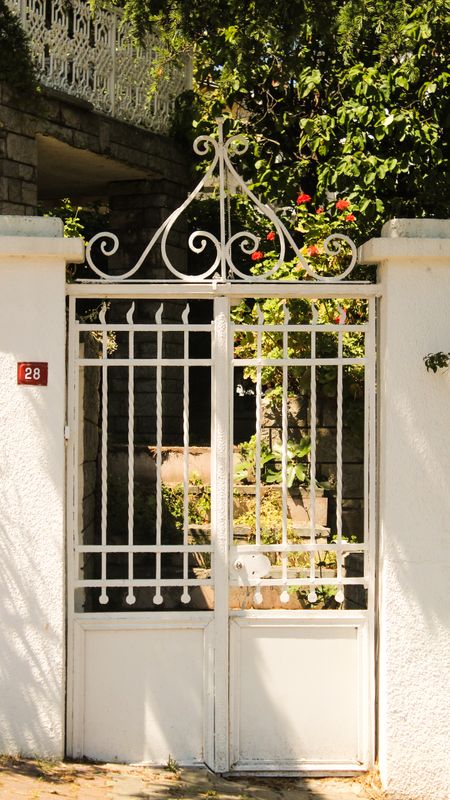
Enter into His gates - not empty-handed. This sets up a picture of the way they worshipped back yonder in the Old Testament. The Jews went to the temple, and the first thing they encountered was the GATE. Well, when we come to worship God on Sundays and Wednesdays, what is the first thing we encounter after we get out of the parking lot? It is the front door. So I want you to picture the gate as pretty much the same thing as our front door - and they entered the gate of the Old Testament temple not empty-handed, but carrying thanksgiving.
And when we walk through the door of this church house, do we walk in empty-handed? Typically we are carrying our Bibles with us when we walk through that door. So that is a picture I want you to put in your head: the Old Testament saints went through the gates of the temple carrying thanksgiving . . . just like we walk through that back door, hopefully carrying our Bibles. And after we walk through that door carrying our Bibles, where is the next place we go? We carry our Bible into the auditorium, where we offer worship to God - where we praise God as opposed to praising one another. In the Old Testament they did it the same way every single time, and they did not deviate from it, just like we do. In order to get into the auditorium to offer worship, you have to go through the door.
Well, the idea is that the worshipper is supposed to carry something into the worship service. He is supposed to carry a thankful HEART . . . and he is supposed to carry an attitude of praise. You see, thanksgiving is equal to a thank offering - or at least it was, back in the Old Testament temple worshiping days. It was a gift to tell God, “Thank you, God.” And that is the idea behind the phrase, “enter into his gates with thanksgiving.” Do not come empty-handed. Do not come to this church house with a blank mind - “Well, what has God ever done for me? What in the world do I have to be thankful for?” When you go through that door, go through it with an attitude that you have already begun to count your blessings . . . “I am coming here to worship a God who has already blessed me this way, and this way, and this way, and this way.”
If we enter this church house with that attitude, I guarantee you our worship will go a great deal better . . . our worship will be a great deal more pleasing to God than if we come through those doors not carrying thanksgiving, but carrying a LIST of stuff that we want God to give us. You see the difference in attitude? Come through the gates of the house of worship carrying a thankful attitude - not just a wish list.
Notice the Order
Now I want you to notice the order here. Let’s look at verses seventeen, eighteen, and nineteen of the One Hundred Sixteenth Psalm.
“I will offer to thee the sacrifice of thanksgiving, and will call upon the name of the LORD. I will pay my vows unto the LORD now in the presence of all his people, In the courts of the LORD’s house, in the midst of thee, O Jerusalem. Praise ye the LORD.” - Psalm 116:17-19 (KJV)
You will notice the way that is worded - he OFFERS thanksgiving. And once again, the idea of thanksgiving is a thank offering. You know, we pass the plate and you put a dollar or whatever it is in the offering plate, and we always think, “Well, that is the offering.” But in the days of the Old Testament they actually brought SACRIFICES . . . and the first sacrifice they gave was an offering that represented their thankfulness to God. So picture that. And notice the order: “I will offer to thee the sacrifice of thanksgiving, and will call upon the name of the LORD.” I am going to tell You how thankful I am before I even start praying. I am going to tell You how thankful I am before I start pointing to my wish list.
So I simply want to reinforce the concept here that before one request was ever made to God in prayer, the worshipper entered into the door of a house of worship with an attitude - in this case, with a literal offering of thankfulness - and THEN he went into the auditorium to offer praise unto God.
GOING DEEPER · THE WORD BEHIND “THANKSGIVING”
Not preached on Sunday morning - extra study.
The word the psalmist uses for “thanksgiving” in verse four is the Hebrew word for the THANK OFFERING. It is the same word the Law uses for the offering a worshipper carried up the hill in his own two hands - a gift that said one thing and one thing only, “Thank You for what You have already done.” And the little heading above the psalm - “A Psalm of praise” - reads in the Hebrew “a psalm for the thank offering.” So when we read “enter into his gates with thanksgiving,” we are not reading about a feeling . . . we are reading about something carried through the door.
“Let us come before his presence with thanksgiving, and make a joyful noise unto him with psalms.” - Psalm 95:2 (KJV)
The Back Door to the Want List
Now, most of our praying - and I am just being honest, I am looking at it from my own perspective - most of our praying comes through what I am going to call the BACK door . . . straight to the want list. What I mean by that is that we skip the front part, the thanksgiving part. Notice Philippians chapter four and verse six, and we are going to go back to the Eighty-ninth Psalm in just a second, so you might want to put a finger in the Psalms.
“Be careful (full of worry) for nothing; but in every thing by prayer and supplication with thanksgiving let your requests be made known unto God.” - Philippians 4:6 (KJV)
Be careful for nothing - now that means do not be full of worry, do not be anxious about anything. And the thing that is intended to take that anxious attitude away is this: “but in every thing by prayer and supplication WITH THANKSGIVING” - thanksgiving for what we have already been blessed with - “let your requests be made known unto God.”
I always try to come up with examples that are everyday relatable. We do not do horseback rides anymore, but we all know what that means and we see it on TV all the time. Well, picture my want list to God in prayer being carried on the back of a horse . . . and what do you think that horse is? The horse is the attitude of THANKFULNESS. If thankfulness is not there, my wish list to God has nothing to carry it. Can you think of it that way?
Here is another way. If you spend any time over in Russellville you are going to get stopped at the train tracks - and what is typically at the front of the train? The ENGINE. Well, thankfulness should typically be at the front of our prayers. And what is at the back end of a train? The caboose. Oftentimes we get the two reversed and we want our wish list to pull everything . . . and if we have time, and if we are having a good day, “Oh, well, thank you, God, for my good day.” Does that mean we are not supposed to be thankful when our day is not good? Last time I checked, the Bible says that all things work together for good to them that love God, to them who are the called according to His purpose - now, there are some conditions in there, and I am doing that from memory, but that is close. The idea is that if we have a good day, well, yes, God has a hand in that . . . but if we have a bad day, God also has a hand in that. You remember the song - I am not going to go there - but it makes a valid point: the God on the mountain is the same God that is in the battle.
God’s Front Porch
We live in a rural community - say “rural” three times, that is one of the most difficult words there is to say - and if you go to a neighbor’s house you go up on the porch and say, “Hey, how you doing?” You have some little small talk, and THEN you get down to what you really went over there to visit with your neighbor about. Nobody who expects to get what they are needing just jumps up on the front porch, throws the door of the neighbor’s house open, goes inside, and says, “Kenneth, now this is what I want you to do.” That is just not the way it is done. If we ever did something like that, it would show that I did not have a whole lot of respect for Kenneth . . . I was not concerned about being courteous, and this is Kenneth’s house, and I am not honoring him at all - I am just barging in there making demands.
GOING DEEPER · RESPECT SHOWS UP AT THE DOOR
Not preached on Sunday morning - extra study.
Respect for God does not wait until we have found our seat - it shows up right at the door. Psalm 89:7 - “God is greatly to be feared in the assembly of the saints, and to be had in reverence of all them that are about him.” The fear of the LORD we stood on last Sunday morning - that deep respect for who God is - is the very thing that makes a man stop at the porch and say hello before he asks for a single thing.
Notice the One Hundredth Psalm again, verse four. Enter into His gates with WHAT? Thanksgiving, and into His courts with praise - be thankful unto Him, and bless His name. Well, the idea of our example about barging in the front door and making demands is this: verse four is describing God’s FRONT PORCH. And thanksgiving is the greeting we are taught here to give to God out on the front porch, before we ever enter the door of His church house.
Now, is that the way we approach worship? Let’s put it this way. Do we walk through that door back there with a Bible in our hand, intent on worshiping and praising God? Or am I going to leave my Bible out in the car and bring a magazine in - I am going to go through that door intent on looking at this magazine while that preacher gets up there and goes on and on and on? You see the difference? Do we enter into His courts with thanksgiving . . . or do we enter into His courts empty-handed, carrying something we value in the flesh and leaving what is valuable to God on the outside? How in the world do we expect to worship if we enter into church with that kind of attitude?
I just want to throw a cautionary note out here. I am not talking about the possible loss of our salvation, people. I am talking about God’s saved, born-again children. It is possible for a child of God to have an attitude of thankfulness for everything God has done for them . . . or it is possible for that same child of God to ignore everything God has done for them and simply live a selfish life in terms of this world. Such a child will not lose their salvation - but they will lose all the BLESSINGS that God desires to give them.
Back when I was growing up, I liked TV probably a little bit too much when I was younger. And I remember on the rare occasions when company did come to see us, the first thing Daddy did, while they were still out in the yard before they ever got in the house, was turn the TV off. Well, what was that for? It was a show of respect - this person has come to visit, and I am not going to spoil our visit by watching television and ignoring the visitor. So when we come through that door and settle down here in the auditorium to worship God, are we like watching television in our mind? Are we thinking about all the stuff that is going on out in the world and ignoring whose house this is? I have got a news flash for you . . . God can read our minds, folks. You may fool the preacher, you may fool the person sitting next to you, but no man is able to fool God.
Something else I have noticed at our house - the kids come over, and the first thing the kids do is sometimes one thing and sometimes another. They hit the door and the first thing they say is, “Where is Granny? Where is Granny? I want to give her a hug.” Oh, that is a good thing, right? But sometimes they go through the door and the first thing they say is, “Where are the cookies? Where are the cookies? Where are the cookies?” And they put Granny’s hug in second place. Well, my point is that oftentimes we do the same thing with God. We come to church looking for COOKIES, when the first thing we should do when we come to church is hug God’s neck and thank Him for what He has done for us.
GOING DEEPER · FOR THE ONE WHO CAME IN HURTING
Not preached on Sunday morning - extra study.
This is not a rule that says God will not hear a prayer that skipped the porch. Peter, sinking in the water, did not stop to say thank you first - he cried out, and he got no lecture on manners. Matthew 14:30 - “But when he saw the wind boisterous, he was afraid; and beginning to sink, he cried, saying, Lord, save me.” The gate of thanksgiving is the pattern for our daily walk . . . it is not a lock on the door for the one who is desperate.
So when was the last time we went to God in prayer and did not ask Him for anything . . . when the only purpose for our prayer was to say, “Thank You, God”? When is the last time we prayed that kind of prayer? Once again, thanksgiving is the way into the front door of all worship - we cannot worship without thanksgiving.
We Are Thankful Because of What We Know
Now, another thing that is interesting . . . why are we thankful? In regard to our relationship to God, and the things we are talking about here, we are thankful because of what we KNOW. Look first at verse three of the One Hundredth Psalm.
“Know ye that the LORD he is God: it is he that hath made us, and not we ourselves; we are his people, and the sheep of his pasture.” - Psalm 100:3 (KJV)
Know ye three things. Now, has someone ever done something really good for you, really nice to you, and you benefited, but you did not know who that person was? You did not know who to thank. Or perhaps you were just so busy with life you did not even notice anybody doing anything good - you just trudged on through life. Well, you never singled anybody out to thank them because you were ignorant of what they had done for you. That is the stage I want to set here, and that is the point I want us to realize. If we are unthankful to God, there could be several reasons - we could just be rebellious, mean, whatever, selfish - and that is one lesson. But what I am talking about this morning is this: if we are unthankful to God, is it perhaps because we are IGNORANT of what God has done for us? We do not know that God has paid off the mortgage. We do not know that God has done this, this, or this. If we knew who it was, we would single them out and thank them. The purpose of the lesson this morning is so that we will know what God has done, and perhaps that knowledge will move us toward a thankful heart.
Thanksgiving is basically a CONCLUSION, if you will - a conclusion based upon things we have been made aware of in our lives. You cannot thank that neighbor for something he did while you were away if you are unaware of what your neighbor did for you. There are three facts that should draw us toward being thankful, and all three are mentioned here in verse three.
Fact one: the LORD, He is God. God is the one who spoke all things into existence. God is the one who has the power - literally the power of life and of death. Don’t you think it is appropriate to be thankful to that God?
“I am the LORD, and there is none else, there is no God beside me: I girded thee, though thou hast not known me:” - Isaiah 45:5 (KJV)
I have done good things for you, and you do not have a clue who I am . . . well, that is on us. The point is there is no one else for us to thank.
Fact two: God made us on purpose. “It is he that hath made us, and not we ourselves.” He made us on purpose, in His own image. Well, what do you mean by the image of God? There are three that bear record in heaven - the Father, the Son, and the Holy Ghost - and we are made in God’s image. We have a mind, we have a body, and we have a spirit. We think with our mind, we feel with our body, and our spirit is the part that has life. We could chase that further, but we are going to stop there. And the Bible tells us that God created the earth to be inhabited - inhabited by who? To give US a home.
“So God created man in his own image, in the image of God created he him; male and female created he them.” - Genesis 1:27 (KJV)
Don’t you think God deserves a thank-you for making us - for giving us a place to live?
Fact three: we belong to Him. We are the sheep of His pasture. Now this is kind of against our culture - we do not know a whole lot about shepherds and sheep - but basically a shepherd is the individual who literally takes care of the sheep. Sheep are not like a bunch of cows. Sheep, I have read, are about the dumbest animals on the earth . . . just dumb as a box of rocks. Well, the shepherd takes care of those sheep, and that is what the shepherd does. And the PASTURE is the field where the shepherd feeds the sheep.
So let’s transition from an agricultural scene to a spiritual scene. Jesus is the Great Shepherd. We are those dumb sheep. And where does Jesus feed us spiritually? Does the New Testament church pop into anybody’s mind? That is the pasture . . . that is the field - the area where the Shepherd, Jesus Christ, feeds us as His sheep. So you might wonder, “Well, what is the purpose of the church?” If you want to spend your life hungry, okay, then spend that life as a child of God OUTSIDE of the church - because the church is where the feed is.
A thankful heart is aware of all three of these facts: the LORD is God . . . He has made us, and we did not make ourselves . . . and we are His people and the sheep of His pasture. We possess a thankful heart because we are aware of what God has done for us. Now, if you are aware of what God has done for you and you just do not care, well, that is a whole different kettle of fish, and we are not going to go there this morning. But if you are a saved, born-again child of God and you are made aware of just some of what God has done for you, then you cannot help but develop a thankful attitude toward God.
GOING DEEPER · WHO BOUGHT THE GROCERIES
Not preached on Sunday morning - extra study.
Think about a child at the supper table. That child did not buy the groceries . . . did not cook the meal . . . and did not build the table it is sitting at. Nothing on that table is a result of anything he did. But a child who has been raised right - raised to respect God and to respect his mama and daddy - says “thank you” anyway. Not because he feels like it on that particular night, but because he knows where the supper actually came from. It was a GIFT. The thanks we offer comes from what we know about the kindness and the mercy of God.
And the sheep have more to be thankful for than just the pasture. They have the Shepherd - because of how the Shepherd laid down His life for the sheep. John 10:11 - “I am the good shepherd: the good shepherd giveth his life for the sheep.” And everything a sheep needs comes from the Shepherd. Psalm 23:1-2 - “The LORD is my shepherd; I shall not want. He maketh me to lie down in green pastures: he leadeth me beside the still waters.” We can always look past our circumstance to the circumstance of the cross.
Thankfulness Does Not Depend on the Weather
Let’s look at verse five.
“For the LORD is good; his mercy is everlasting; and his truth endureth to all generations.” - Psalm 100:5 (KJV)
I have seen this so many times I have lost count. Everything is going good, we are on the mountaintop, and, “Oh, I am thankful to God” . . . but that thankfulness evaporates when we are no longer on the mountaintop and we are down in the valley. Thankfulness is not dependent upon circumstances. The God we love, serve, and are thankful to on the mountaintop is the exact same God who is in charge of everything when we are down in the valley. God’s purpose is not to keep us on the mountaintop - God’s purpose is to teach us, to mold us, to shape us into what we need to be. Sometimes we need that mountaintop experience, but we also need those valley experiences.
I am thinking of a sculptor, or a whittler. I want to whittle this stick of wood and make a certain shape, and I cannot shape that wood without cutting something OFF. We cannot be shaped into the Christians God desires us to be without ever having something cut off of our lives. So feelings come and feelings go . . . but God’s goodness, mercy, and truth are always strong, and they are always available to us. Is our thank-you something that is built upon how our week has gone - or is our thank-you built upon who God is, as the One who is holding our particular week?
The Homework
I have asked our musicians to come forward as we prepare for an invitational hymn, and I am going to give you a homework assignment. I am putting before you the idea that every prayer you offer this week, you offer that prayer through the gate of thanksgiving.
Now, I am going to go through the prayer . . . and I want you to recall to your mind what you are thankful for. Pick THREE things. And not just general stuff - “I am glad to be an American,” or whatever - but, boy, I dodged the bullet on that one. Anybody ever been there? Well, who do you think nudged you over so that bullet did not hit you? I am speaking metaphorically. What about that person - “Preacher, I just could not have done that without so-and-so”? That is a blessing from God, and that is something we should be thankful for. What about when circumstances just kind of start falling in around us, and, “Man, I never expected that to work out” . . . but you know, it did? Duh. These are things we should be thankful for.
GOING DEEPER · THREE THINGS, NAMED PLAINLY
Not preached on Sunday morning - extra study.
When we said to name three things before we ask for one, we meant specific things, not general ones. Name the MERCY God extended to us this week - the one we know for certain we did not deserve. Name the PERSON who helped us, who was a blessing to us this week. And name the PROVISION we received - the help that came in just when it was needed. “I could not have made it through the winter with that hole in my roof.” That kind of thing.
And here is what we will find out, if we do this assignment. The worshipper who comes in through the gate of thanksgiving is a person who is already worshiping by the time he gets to the courts . . . and half of what he came in to complain about looks entirely different from inside the house of worship. So which door have we been coming in - the front door or the back door?
And one other little caveat. I do not know how y’all do at mealtime, but what we should all do when we sit down and put our feet under the table is pray out loud - thank God for the meal, and thank Him for His blessings. If you do not do that, I strongly encourage you to begin doing it. And for those who have little children - where in the world do you think they are going to learn how to pray if we do not teach them? If Mom and Daddy never pray in front of them, how are they ever going to learn to pray, or what to pray for? It would not hurt a single thing for your children at the supper table to hear Daddy pray out loud, “God, thank You for the food, and thank You for that neighbor who really helped me get out of that mine. I do not know what I would have done without their help.” There is nothing wrong with that. Nothing to be ashamed of . . . and that is not being Pentecostalish.
Have you ever been upset because somebody came up to you and said, “Thank you for what you did”? Has it ever rubbed you the wrong way? Well, have you ever been a little upset because somebody OWED you a thank-you and it never came? Do we really want to offend God like that? I would a lot rather God be glad that I thanked Him than a little bit put out with me because I did not thank Him. “Oh, well, I am thankful, but I am too ashamed to say it out loud where other people can hear.” We need to pray about these things.


