Sunday, October 11, 2026

Enter His Gates — Thankfulness Is Worship’s Front Door

Dardanelle Missionary Baptist Church — Dardanelle, Arkansas

Pastor Chuck Trusty — Sunday morning service, October 11, 2026 Give Thanks · Lesson 1 of 7 · Psalm 100

► Watch this lesson on video (36:38)
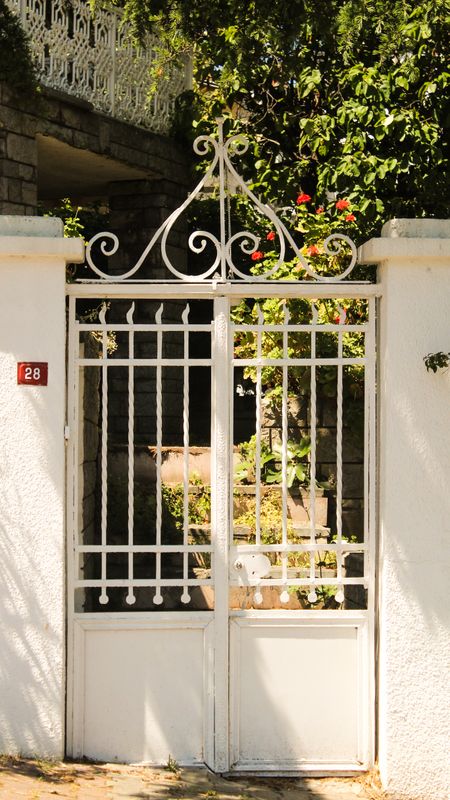

Open garden gate - Enter His Gates

Thankfulness Is Worship’s Front Door

This is the lesson the way it was preached on Sunday morning - near word for word. The “uh”s and the starts-over are taken out; the sentences are left the way they were said. Bible verses are printed exactly as they read in the King James. Anything marked GOING DEEPER was NOT preached on Sunday morning - it is extra study for anyone who wants to dig further.

Well, it is good to see each of you in our services this morning . . . and we are going to talk this morning about how important it is to be THANKFUL. I want to start with a verse that shows us just how important being thankful to God actually is.

“Because that, when they knew God, they glorified him not as God, neither were thankful; but became vain in their imaginations, and their foolish heart was darkened.” - Romans 1:21 (KJV)

Now it is interesting to note that one of the very first things Jesus named, when a people drifted away or turned their back on God . . . was how that people became UNTHANKFUL. We have all heard about that house built upon the sand in Matthew chapter seven - well, the idea here this morning is that thankfulness is pretty much the FOUNDATION that is holding our lives together. Our life is either built upon the sand - we understand the metaphor there - or our house is built upon the rock. A house built upon the sand will collapse when things get stormy . . . a house built upon the rock will stand. And if we are thankful to God in our lives, well, it goes a long, long way in strengthening the very foundation of our lives.

Notice the One Hundredth Psalm, verses one through five.

“Make a joyful noise unto the LORD, all ye lands. Serve the LORD with gladness: come before his presence with singing. Know ye that the LORD he is God: it is he that hath made us, and not we ourselves; we are his people, and the sheep of his pasture. Enter into his gates with thanksgiving, and into his courts with praise: be thankful unto him, and bless his name. For the LORD is good; his mercy is everlasting; and his truth endureth to all generations.” - Psalm 100:1-5 (KJV)

Now we see five verses that we just read, and there are SEVEN commandments in these five verses . . . and right smack dab in the middle of those commandments is the commandment to enter into His gates. How? With THANKSGIVING. So the one point of our lesson this morning is this:

Thanksgiving is the way into the front door of all worship.

The point there is that we cannot worship with an unthankful heart.

The Gate Is What Comes First

Now you will notice here in the scripture that the gate is what comes FIRST. Look at verse four.

“Enter into his gates with thanksgiving, and into his courts with praise: be thankful unto him, and bless his name.” - Psalm 100:4 (KJV)

Enter into His gates - not empty-handed. This sets up a picture of the way they worshipped back yonder in the Old Testament. The Jews went to the temple, and the first thing they encountered was the GATE. Well, when we come to worship God on Sundays and Wednesdays, what is the first thing we encounter after we get out of the parking lot? It is the front door. So I want you to picture the gate as pretty much the same thing as our front door - and they entered the gate of the Old Testament temple not empty-handed, but carrying thanksgiving.

And when we walk through the door of this church house, do we walk in empty-handed? Typically we are carrying our Bibles with us when we walk through that door. So that is a picture I want you to put in your head: the Old Testament saints went through the gates of the temple carrying thanksgiving . . . just like we walk through that back door, hopefully carrying our Bibles. And after we walk through that door carrying our Bibles, where is the next place we go? We carry our Bible into the auditorium, where we offer worship to God - where we praise God as opposed to praising one another. In the Old Testament they did it the same way every single time, and they did not deviate from it, just like we do. In order to get into the auditorium to offer worship, you have to go through the door.

Well, the idea is that the worshipper is supposed to carry something into the worship service. He is supposed to carry a thankful HEART . . . and he is supposed to carry an attitude of praise. You see, thanksgiving is equal to a thank offering - or at least it was, back in the Old Testament temple worshiping days. It was a gift to tell God, “Thank you, God.” And that is the idea behind the phrase, “enter into his gates with thanksgiving.” Do not come empty-handed. Do not come to this church house with a blank mind - “Well, what has God ever done for me? What in the world do I have to be thankful for?” When you go through that door, go through it with an attitude that you have already begun to count your blessings . . . “I am coming here to worship a God who has already blessed me this way, and this way, and this way, and this way.”

If we enter this church house with that attitude, I guarantee you our worship will go a great deal better . . . our worship will be a great deal more pleasing to God than if we come through those doors not carrying thanksgiving, but carrying a LIST of stuff that we want God to give us. You see the difference in attitude? Come through the gates of the house of worship carrying a thankful attitude - not just a wish list.

Notice the Order

Now I want you to notice the order here. Let’s look at verses seventeen, eighteen, and nineteen of the One Hundred Sixteenth Psalm.

“I will offer to thee the sacrifice of thanksgiving, and will call upon the name of the LORD. I will pay my vows unto the LORD now in the presence of all his people, In the courts of the LORD’s house, in the midst of thee, O Jerusalem. Praise ye the LORD.” - Psalm 116:17-19 (KJV)

You will notice the way that is worded - he OFFERS thanksgiving. And once again, the idea of thanksgiving is a thank offering. You know, we pass the plate and you put a dollar or whatever it is in the offering plate, and we always think, “Well, that is the offering.” But in the days of the Old Testament they actually brought SACRIFICES . . . and the first sacrifice they gave was an offering that represented their thankfulness to God. So picture that. And notice the order: “I will offer to thee the sacrifice of thanksgiving, and will call upon the name of the LORD.” I am going to tell You how thankful I am before I even start praying. I am going to tell You how thankful I am before I start pointing to my wish list.

So I simply want to reinforce the concept here that before one request was ever made to God in prayer, the worshipper entered into the door of a house of worship with an attitude - in this case, with a literal offering of thankfulness - and THEN he went into the auditorium to offer praise unto God.

GOING DEEPER · THE WORD BEHIND “THANKSGIVING”

Not preached on Sunday morning - extra study.

The word the psalmist uses for “thanksgiving” in verse four is the Hebrew word for the THANK OFFERING. It is the same word the Law uses for the offering a worshipper carried up the hill in his own two hands - a gift that said one thing and one thing only, “Thank You for what You have already done.” And the little heading above the psalm - “A Psalm of praise” - reads in the Hebrew “a psalm for the thank offering.” So when we read “enter into his gates with thanksgiving,” we are not reading about a feeling . . . we are reading about something carried through the door.

“Let us come before his presence with thanksgiving, and make a joyful noise unto him with psalms.” - Psalm 95:2 (KJV)

The Back Door to the Want List

Now, most of our praying - and I am just being honest, I am looking at it from my own perspective - most of our praying comes through what I am going to call the BACK door . . . straight to the want list. What I mean by that is that we skip the front part, the thanksgiving part. Notice Philippians chapter four and verse six, and we are going to go back to the Eighty-ninth Psalm in just a second, so you might want to put a finger in the Psalms.

“Be careful (full of worry) for nothing; but in every thing by prayer and supplication with thanksgiving let your requests be made known unto God.” - Philippians 4:6 (KJV)

Be careful for nothing - now that means do not be full of worry, do not be anxious about anything. And the thing that is intended to take that anxious attitude away is this: “but in every thing by prayer and supplication WITH THANKSGIVING” - thanksgiving for what we have already been blessed with - “let your requests be made known unto God.”

I always try to come up with examples that are everyday relatable. We do not do horseback rides anymore, but we all know what that means and we see it on TV all the time. Well, picture my want list to God in prayer being carried on the back of a horse . . . and what do you think that horse is? The horse is the attitude of THANKFULNESS. If thankfulness is not there, my wish list to God has nothing to carry it. Can you think of it that way?

Here is another way. If you spend any time over in Russellville you are going to get stopped at the train tracks - and what is typically at the front of the train? The ENGINE. Well, thankfulness should typically be at the front of our prayers. And what is at the back end of a train? The caboose. Oftentimes we get the two reversed and we want our wish list to pull everything . . . and if we have time, and if we are having a good day, “Oh, well, thank you, God, for my good day.” Does that mean we are not supposed to be thankful when our day is not good? Last time I checked, the Bible says that all things work together for good to them that love God, to them who are the called according to His purpose - now, there are some conditions in there, and I am doing that from memory, but that is close. The idea is that if we have a good day, well, yes, God has a hand in that . . . but if we have a bad day, God also has a hand in that. You remember the song - I am not going to go there - but it makes a valid point: the God on the mountain is the same God that is in the battle.

God’s Front Porch

We live in a rural community - say “rural” three times, that is one of the most difficult words there is to say - and if you go to a neighbor’s house you go up on the porch and say, “Hey, how you doing?” You have some little small talk, and THEN you get down to what you really went over there to visit with your neighbor about. Nobody who expects to get what they are needing just jumps up on the front porch, throws the door of the neighbor’s house open, goes inside, and says, “Kenneth, now this is what I want you to do.” That is just not the way it is done. If we ever did something like that, it would show that I did not have a whole lot of respect for Kenneth . . . I was not concerned about being courteous, and this is Kenneth’s house, and I am not honoring him at all - I am just barging in there making demands.

GOING DEEPER · RESPECT SHOWS UP AT THE DOOR

Not preached on Sunday morning - extra study.

Respect for God does not wait until we have found our seat - it shows up right at the door. Psalm 89:7 - “God is greatly to be feared in the assembly of the saints, and to be had in reverence of all them that are about him.” The fear of the LORD we stood on last Sunday morning - that deep respect for who God is - is the very thing that makes a man stop at the porch and say hello before he asks for a single thing.

Notice the One Hundredth Psalm again, verse four. Enter into His gates with WHAT? Thanksgiving, and into His courts with praise - be thankful unto Him, and bless His name. Well, the idea of our example about barging in the front door and making demands is this: verse four is describing God’s FRONT PORCH. And thanksgiving is the greeting we are taught here to give to God out on the front porch, before we ever enter the door of His church house.

Now, is that the way we approach worship? Let’s put it this way. Do we walk through that door back there with a Bible in our hand, intent on worshiping and praising God? Or am I going to leave my Bible out in the car and bring a magazine in - I am going to go through that door intent on looking at this magazine while that preacher gets up there and goes on and on and on? You see the difference? Do we enter into His courts with thanksgiving . . . or do we enter into His courts empty-handed, carrying something we value in the flesh and leaving what is valuable to God on the outside? How in the world do we expect to worship if we enter into church with that kind of attitude?

I just want to throw a cautionary note out here. I am not talking about the possible loss of our salvation, people. I am talking about God’s saved, born-again children. It is possible for a child of God to have an attitude of thankfulness for everything God has done for them . . . or it is possible for that same child of God to ignore everything God has done for them and simply live a selfish life in terms of this world. Such a child will not lose their salvation - but they will lose all the BLESSINGS that God desires to give them.

Back when I was growing up, I liked TV probably a little bit too much when I was younger. And I remember on the rare occasions when company did come to see us, the first thing Daddy did, while they were still out in the yard before they ever got in the house, was turn the TV off. Well, what was that for? It was a show of respect - this person has come to visit, and I am not going to spoil our visit by watching television and ignoring the visitor. So when we come through that door and settle down here in the auditorium to worship God, are we like watching television in our mind? Are we thinking about all the stuff that is going on out in the world and ignoring whose house this is? I have got a news flash for you . . . God can read our minds, folks. You may fool the preacher, you may fool the person sitting next to you, but no man is able to fool God.

Something else I have noticed at our house - the kids come over, and the first thing the kids do is sometimes one thing and sometimes another. They hit the door and the first thing they say is, “Where is Granny? Where is Granny? I want to give her a hug.” Oh, that is a good thing, right? But sometimes they go through the door and the first thing they say is, “Where are the cookies? Where are the cookies? Where are the cookies?” And they put Granny’s hug in second place. Well, my point is that oftentimes we do the same thing with God. We come to church looking for COOKIES, when the first thing we should do when we come to church is hug God’s neck and thank Him for what He has done for us.

GOING DEEPER · FOR THE ONE WHO CAME IN HURTING

Not preached on Sunday morning - extra study.

This is not a rule that says God will not hear a prayer that skipped the porch. Peter, sinking in the water, did not stop to say thank you first - he cried out, and he got no lecture on manners. Matthew 14:30 - “But when he saw the wind boisterous, he was afraid; and beginning to sink, he cried, saying, Lord, save me.” The gate of thanksgiving is the pattern for our daily walk . . . it is not a lock on the door for the one who is desperate.

So when was the last time we went to God in prayer and did not ask Him for anything . . . when the only purpose for our prayer was to say, “Thank You, God”? When is the last time we prayed that kind of prayer? Once again, thanksgiving is the way into the front door of all worship - we cannot worship without thanksgiving.

We Are Thankful Because of What We Know

Now, another thing that is interesting . . . why are we thankful? In regard to our relationship to God, and the things we are talking about here, we are thankful because of what we KNOW. Look first at verse three of the One Hundredth Psalm.

“Know ye that the LORD he is God: it is he that hath made us, and not we ourselves; we are his people, and the sheep of his pasture.” - Psalm 100:3 (KJV)

Know ye three things. Now, has someone ever done something really good for you, really nice to you, and you benefited, but you did not know who that person was? You did not know who to thank. Or perhaps you were just so busy with life you did not even notice anybody doing anything good - you just trudged on through life. Well, you never singled anybody out to thank them because you were ignorant of what they had done for you. That is the stage I want to set here, and that is the point I want us to realize. If we are unthankful to God, there could be several reasons - we could just be rebellious, mean, whatever, selfish - and that is one lesson. But what I am talking about this morning is this: if we are unthankful to God, is it perhaps because we are IGNORANT of what God has done for us? We do not know that God has paid off the mortgage. We do not know that God has done this, this, or this. If we knew who it was, we would single them out and thank them. The purpose of the lesson this morning is so that we will know what God has done, and perhaps that knowledge will move us toward a thankful heart.

Thanksgiving is basically a CONCLUSION, if you will - a conclusion based upon things we have been made aware of in our lives. You cannot thank that neighbor for something he did while you were away if you are unaware of what your neighbor did for you. There are three facts that should draw us toward being thankful, and all three are mentioned here in verse three.

Fact one: the LORD, He is God. God is the one who spoke all things into existence. God is the one who has the power - literally the power of life and of death. Don’t you think it is appropriate to be thankful to that God?

“I am the LORD, and there is none else, there is no God beside me: I girded thee, though thou hast not known me:” - Isaiah 45:5 (KJV)

I have done good things for you, and you do not have a clue who I am . . . well, that is on us. The point is there is no one else for us to thank.

Fact two: God made us on purpose. “It is he that hath made us, and not we ourselves.” He made us on purpose, in His own image. Well, what do you mean by the image of God? There are three that bear record in heaven - the Father, the Son, and the Holy Ghost - and we are made in God’s image. We have a mind, we have a body, and we have a spirit. We think with our mind, we feel with our body, and our spirit is the part that has life. We could chase that further, but we are going to stop there. And the Bible tells us that God created the earth to be inhabited - inhabited by who? To give US a home.

“So God created man in his own image, in the image of God created he him; male and female created he them.” - Genesis 1:27 (KJV)

Don’t you think God deserves a thank-you for making us - for giving us a place to live?

Fact three: we belong to Him. We are the sheep of His pasture. Now this is kind of against our culture - we do not know a whole lot about shepherds and sheep - but basically a shepherd is the individual who literally takes care of the sheep. Sheep are not like a bunch of cows. Sheep, I have read, are about the dumbest animals on the earth . . . just dumb as a box of rocks. Well, the shepherd takes care of those sheep, and that is what the shepherd does. And the PASTURE is the field where the shepherd feeds the sheep.

So let’s transition from an agricultural scene to a spiritual scene. Jesus is the Great Shepherd. We are those dumb sheep. And where does Jesus feed us spiritually? Does the New Testament church pop into anybody’s mind? That is the pasture . . . that is the field - the area where the Shepherd, Jesus Christ, feeds us as His sheep. So you might wonder, “Well, what is the purpose of the church?” If you want to spend your life hungry, okay, then spend that life as a child of God OUTSIDE of the church - because the church is where the feed is.

A thankful heart is aware of all three of these facts: the LORD is God . . . He has made us, and we did not make ourselves . . . and we are His people and the sheep of His pasture. We possess a thankful heart because we are aware of what God has done for us. Now, if you are aware of what God has done for you and you just do not care, well, that is a whole different kettle of fish, and we are not going to go there this morning. But if you are a saved, born-again child of God and you are made aware of just some of what God has done for you, then you cannot help but develop a thankful attitude toward God.

GOING DEEPER · WHO BOUGHT THE GROCERIES

Not preached on Sunday morning - extra study.

Think about a child at the supper table. That child did not buy the groceries . . . did not cook the meal . . . and did not build the table it is sitting at. Nothing on that table is a result of anything he did. But a child who has been raised right - raised to respect God and to respect his mama and daddy - says “thank you” anyway. Not because he feels like it on that particular night, but because he knows where the supper actually came from. It was a GIFT. The thanks we offer comes from what we know about the kindness and the mercy of God.

And the sheep have more to be thankful for than just the pasture. They have the Shepherd - because of how the Shepherd laid down His life for the sheep. John 10:11 - “I am the good shepherd: the good shepherd giveth his life for the sheep.” And everything a sheep needs comes from the Shepherd. Psalm 23:1-2 - “The LORD is my shepherd; I shall not want. He maketh me to lie down in green pastures: he leadeth me beside the still waters.” We can always look past our circumstance to the circumstance of the cross.

Thankfulness Does Not Depend on the Weather

Let’s look at verse five.

“For the LORD is good; his mercy is everlasting; and his truth endureth to all generations.” - Psalm 100:5 (KJV)

I have seen this so many times I have lost count. Everything is going good, we are on the mountaintop, and, “Oh, I am thankful to God” . . . but that thankfulness evaporates when we are no longer on the mountaintop and we are down in the valley. Thankfulness is not dependent upon circumstances. The God we love, serve, and are thankful to on the mountaintop is the exact same God who is in charge of everything when we are down in the valley. God’s purpose is not to keep us on the mountaintop - God’s purpose is to teach us, to mold us, to shape us into what we need to be. Sometimes we need that mountaintop experience, but we also need those valley experiences.

I am thinking of a sculptor, or a whittler. I want to whittle this stick of wood and make a certain shape, and I cannot shape that wood without cutting something OFF. We cannot be shaped into the Christians God desires us to be without ever having something cut off of our lives. So feelings come and feelings go . . . but God’s goodness, mercy, and truth are always strong, and they are always available to us. Is our thank-you something that is built upon how our week has gone - or is our thank-you built upon who God is, as the One who is holding our particular week?

The Homework

I have asked our musicians to come forward as we prepare for an invitational hymn, and I am going to give you a homework assignment. I am putting before you the idea that every prayer you offer this week, you offer that prayer through the gate of thanksgiving.

Now, I am going to go through the prayer . . . and I want you to recall to your mind what you are thankful for. Pick THREE things. And not just general stuff - “I am glad to be an American,” or whatever - but, boy, I dodged the bullet on that one. Anybody ever been there? Well, who do you think nudged you over so that bullet did not hit you? I am speaking metaphorically. What about that person - “Preacher, I just could not have done that without so-and-so”? That is a blessing from God, and that is something we should be thankful for. What about when circumstances just kind of start falling in around us, and, “Man, I never expected that to work out” . . . but you know, it did? Duh. These are things we should be thankful for.

GOING DEEPER · THREE THINGS, NAMED PLAINLY

Not preached on Sunday morning - extra study.

When we said to name three things before we ask for one, we meant specific things, not general ones. Name the MERCY God extended to us this week - the one we know for certain we did not deserve. Name the PERSON who helped us, who was a blessing to us this week. And name the PROVISION we received - the help that came in just when it was needed. “I could not have made it through the winter with that hole in my roof.” That kind of thing.

And here is what we will find out, if we do this assignment. The worshipper who comes in through the gate of thanksgiving is a person who is already worshiping by the time he gets to the courts . . . and half of what he came in to complain about looks entirely different from inside the house of worship. So which door have we been coming in - the front door or the back door?

And one other little caveat. I do not know how y’all do at mealtime, but what we should all do when we sit down and put our feet under the table is pray out loud - thank God for the meal, and thank Him for His blessings. If you do not do that, I strongly encourage you to begin doing it. And for those who have little children - where in the world do you think they are going to learn how to pray if we do not teach them? If Mom and Daddy never pray in front of them, how are they ever going to learn to pray, or what to pray for? It would not hurt a single thing for your children at the supper table to hear Daddy pray out loud, “God, thank You for the food, and thank You for that neighbor who really helped me get out of that mine. I do not know what I would have done without their help.” There is nothing wrong with that. Nothing to be ashamed of . . . and that is not being Pentecostalish.

Have you ever been upset because somebody came up to you and said, “Thank you for what you did”? Has it ever rubbed you the wrong way? Well, have you ever been a little upset because somebody OWED you a thank-you and it never came? Do we really want to offend God like that? I would a lot rather God be glad that I thanked Him than a little bit put out with me because I did not thank Him. “Oh, well, I am thankful, but I am too ashamed to say it out loud where other people can hear.” We need to pray about these things.

What "In Jesus' Name" Actually Means

Not a password we add at the end . . . it is the ground we have been standing on the whole time.

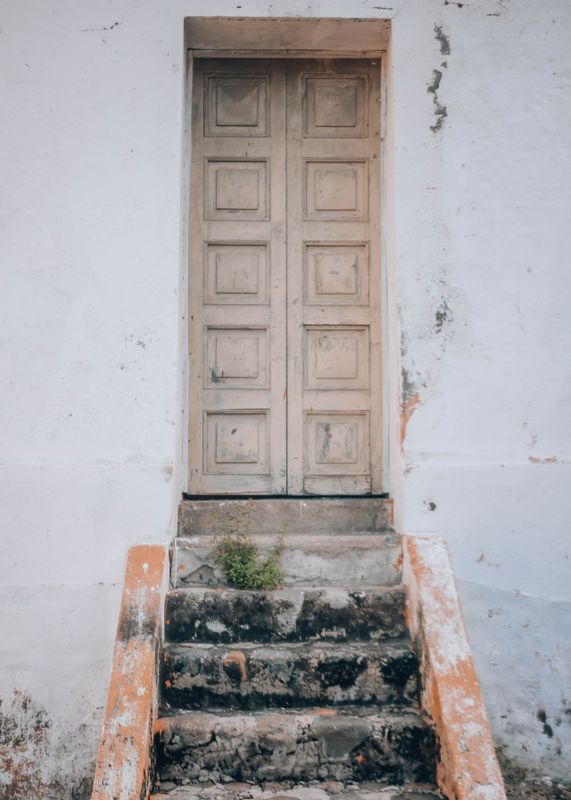
An old wooden door - What In Jesus Name Actually Means

A note on the Scripture in this study: every verse is printed WHOLE. The words set in ordinary type are the ones this lesson leans on and emphasizes . . . the words in italics are the rest of the verse, printed so that nothing is ever handed to you as a fragment with the remainder missing.

Nearly every prayer any of us has ever prayed out loud ended the same way. In Jesus' name, amen.

And I would guess that most of us have never really stopped to ask what this actually means... It has become the way we signal that we are finished – sort of like hanging up the phone.

But the Lord did not give us those words as a sign-off… He gave them as the whole ground of the asking . . . and if a man gets this one right – then it will CHANGE the way he comes to God for the rest of his life.

WHERE THE PROMISE COMES FROM

He said it in the upper room – the night before He died – and He said it more than once:

John 14:13 — “And whatsoever ye shall ask in my name, that will I do, that the Father may be glorified in the Son.”
John 14:14 — “If ye shall ask any thing in my name, I will do it.”
John 16:23 — “And in that day ye shall ask me nothing. Verily, verily, I say unto you, Whatsoever ye shall ask the Father in my name, he will give it you.”
John 16:24 — “Hitherto have ye asked nothing in my name: ask, and ye shall receive, that your joy may be full.”

Hitherto have ye asked nothing in my name. Understand what He is telling them . . . those men had been praying their WHOLE lives – they were Jews – they knew the psalms – they prayed at set hours and had ever since they were old enough to know what prayer was… And Jesus says – up to right now – you have never asked anything IN MY NAME...

So – something new was about to open up... Something was about to open up – that was not available to Moses or David or any prophet who ever lived . . . and it opened AT THE CROSS...

FIRST — WHAT IT IS NOT

Let us clear the road – because there is a bad use of this concept – that has hurt a lot of people.

Praying in Jesus’ name – is not “a formula”. Those words are not a code that unlocks the vault . . . if they were – then the promise would be running on the words themselves – and a man could get anything he wanted by remembering to say the magic at the end . . . nobody who has prayed for ten years believes that . . . because we have all said the words over things we did not get.

And it is not a blank check. Whatsoever ye shall ask does SOUND like a blank check – right up until you read the rest of the sentence that He put it in – and we are going to do exactly that when we get to Part Seven . . . because that is going to be the whole subject in that part…

And notice – what we see in John 14:13 – He tells us what the asking IS FOR – that the Father may be glorified in the Son… That is not a blank check . . . that is a check with a purpose written on the memo line.

SECOND — WHAT A NAME MEANT

In the Bible – a name is not a label . . . a name is the man – it referred to his character – his authority – everything he is – and everything he is good for.

So – to arrive ‘in a man's name’ – is to come to that place with HIS standing instead of your own . . . a deputy comes in the name of the county . . . a boy sent to the store in his daddy's name – can charge it to his daddy's account – and the store is not looking at the boy at all… The store is looking at whose name is on the account.

And that is exactly what we are talking about… The name signed on the check decides ‘which account’ it draws on.

Now think about what that means when we pray… I am not asking God to look at me and decide whether I have been good enough this week… I am asking on another Man's account . . . and that account has never been overdrawn… Not I my own name -but in Jesus’ name I pray…

✍️ AUTHOR'S NOTE

This concept is actually an EYE OPENER… The idea is that if we sign a check for everything we buy – it is not going to be very long – before we run out of money and have to start doing without until we work for some more… but if a rich man signs the check – we will never run out of money – we will never have to do without… The idea here about prayer – is that when we get past the mistaken notion – that our prayers depend upon US – and finally realize that God is the rich man signing the check – it is then that we can stop trying to work and earn more ‘prayer credits’ – and simply depend upon Jesus… — C.T.

THIRD — THIS IS WHY WE CAN COME AT ALL

Now put it together with what the writer of Hebrews says – because he is talking about the same thing from the other side.

Hebrews 4:14 — “Seeing then that we have a great high priest, that is passed into the heavens, Jesus the Son of God, let us hold fast our profession.”
Hebrews 4:15 — “For we have not an high priest which cannot be touched with the feeling of our infirmities; but was in all points tempted like as we are, yet without sin.”
Hebrews 4:16 — “Let us therefore come boldly unto the throne of grace, that we may obtain mercy, and find grace to help in time of need.”

Let us therefore come boldly. Therefore – on account of the High Priest just named . . . the boldness is not ours and it never was . . . it is borrowed, and it is borrowed from Him.

And He is not a High Priest who cannot understand... BUT He was tempted in all points like we are… He knows what it is to be tired . . . He knows what is like to be hungry… He knows what is like to be lied about… He knows what it is like to have His friends go to sleep on Him – the one night He needed them to stay awake.

Now here is the part that ought to steady a man when he does not feel like praying:

Hebrews 7:25 — “Wherefore he is able also to save them to the uttermost that come unto God by him, seeing he ever liveth to make intercession for them.”
Romans 8:34 — “Who is he that condemneth? It is Christ that died, yea rather, that is risen again, who is even at the right hand of God, who also maketh intercession for us.”

He ever liveth to make intercession. Right now, while you are reading this, He is praying . . . that is what He is doing . . . and when we pray in His name – we are not starting something up – we are joining something that has been going on without a break since He sat down.

And Paul settles the traffic pattern in one verse:

1 Timothy 2:5 — “For there is one God, and one mediator between God and men, the man Christ Jesus;”

There is ONE. Not one among several . . . BUT one mediator – and this ONE MEDIATOR has a name – and that is the name in which we come to God in prayer...

📖 FROM THE PULPIT

I am sorry sir – I can’t let you in the room – only family can visit… but I am his pastor – and I am allowed to enter – not because I am a good person – but because of who I represent… As an Engineer – I worked at many factories – and I always had a badge which allowed me to get into the plant… When I walked up to the gate – it was not my education that allowed me to enter – it was the badge…

Likewise – when I offer a prayer to God – He does not hear that prayer because of how good I am – or because of how long I have been saved – or because I am a preacher – the only reason He hears it – is because of whose name it is attached to…

In the name of Jesus – says that I am depending upon a Man who raised HIMSELF from the dead – literally the sinless Son of God – who took my place in death… We pray in the name of a Man – who died over 2000 years ago – but that same Man claimed victory over death – and those who believe IN HIM – will one day experience that same victory over death… — C.T.

SO WHAT DOES IT MEAN TO PRAY IN HIS NAME?

Three things . . . and not one of them has to do with the last four words we say before amen.

One . . . it means I am not asking God to look at ME.

He is not going back over my week to see whether I did good enough to deserve an answer… If that were the deal – not a single one of us would ever get a thing... I am asking on somebody else's good name . . . and His name has never one time been turned down.

Two . . . it means I have to ask for the kind of thing HE would ask for.

Suppose a mother sends her son to the store and tells him – you tell the man at the store that your mother sent you for a loaf of bread... And when the boy gets to the store – he asks for a candy bar instead of a loaf of bread . . . and says that his mother has sent him.

Now he DID use her name . . . but he did not use it for what she sent him after... That is not asking in his mother's name – that is using his mother's name to get what HE wanted.

Three . . . it means I quit trying to get in some other way.

There is one door, and Jesus said so Himself:

John 10:9 — “I am the door: by me if any man enter in, he shall be saved, and shall go in and out, and find pasture.”

A man does not need a second door – when the first one is standing wide open.

Simple truth: In Jesus' name is not how a prayer ends . . . it is WHY a prayer gets heard to begin with...

NOW LET ME GUARD THIS

I am not saying that we should quit saying the words . . . we SHOULD say them… They are a good thing to say out loud every time – and they remind us who we are counting on.

What I am saying is this – do not lean on the saying of them.

Think about it this way. Two men pray.

The first man never says the words at the end . . . but the whole time he is praying – he knows ‘good and well’ that he has no business being there at all – except that Jesus died for him.

The second man says the words just right . . . but down underneath – he is really figuring that God ought to hear him – because he has been pretty good lately.

The first man prayed in Jesus' name. The second man did not . . . and saying the words did not make it so.

The name – is not a stamp that we put on the bottom of the letter . . . it is the ground we were standing on the whole time we were talking.

BEFORE YOU LEAVE

Hitherto have ye asked nothing in my name . . . that door had never been open before, and it cost Him His life to open it.

So - when you arrive tonight in prayer – at God’s throne of grace… come boldly – not because of anything about you – but because there is a Man at the right hand of God who ever liveth to make intercession – and He told you to use His name.

The mail is in the box, the rope is on the rock, and the name on the account is His.

TRY IT THIS WEEK

Say “in the name of Jesus” at the front of our prayer this week instead of the end...

Start our prayer with it – Father, I am coming to you in the name of Jesus Christ – and then ask _____. . . see if putting Jesus’ name first might change what we find ourselves asking for.

And when we ask for something, hold it up beside that name for a second and see whether it fits . . . that is not a test to make us scared to ask . . . it is the very question which Part Seven that comes next is built on.


NEXT — Part Seven: Asking According to His Will. He said ask what ye will. John said if we ask according to his will . . . those two verses have troubled more praying people than any other pair in the Bible . . . and they belong together.

Wednesday, October 7, 2026

The Word of Life — The Deep Study (1 John 1:1-4)

Dardanelle Missionary Baptist Church — Dardanelle, Arkansas

Pastor Chuck Trusty — Wednesday evening service, October 7, 2026 I, II & III John · Unit 1 Deep Study · 1 John 1:1-4

► Watch this lesson on video (40:06)


A fence post set in the ground - The Word of Life, The Deep Study

This is the lesson the way it was preached on Wednesday night - near word for word. The "uh"s and the starts-over are taken out; the sentences are left the way they were said. Bible verses are printed exactly as they read in the King James. Anything marked GOING DEEPER was NOT preached on Wednesday night - it is extra study for anyone who wants to dig further.

THE WHOLE LAST LESSON IN ONE SENTENCE

Our scriptures this evening will be 1 John chapter 1, Luke chapter 24, Jude chapter 1, John chapter 15, and then Second Peter chapter 1.

Tonight we're going to go over 1 John 1-4 a little bit slower, a little bit more in depth than we covered these verses last time we talked about them.

If you missed our last lesson on First John, don't worry about it. And you may not have missed it. You may have been here and you may be thinking, "Man, I don't remember a thing in the world that preacher taught in that lesson." No problem. I'm going to give you the whole thing in one sentence. And I know Andy's thinking, well, if you can condense it into one sentence tonight, why couldn't you condense it into one sentence when you preached it?

Well, John had his hands, his physical hands, on Jesus Christ, and he wrote this in a letter so that you and I could have the same type of relationship with Jesus that he had.

Now, it was significant that he put his hands on Jesus, because - and we'll touch on this a little bit later - there was an error circulating in the churches of Ephesus that Jesus really didn't come in the flesh. And that's as far as I'll take that. But that's why it's significant. John's saying, "I saw Him. I heard Him. I studied His features. And I actually touched Him." That was to oppose the false doctrine that was prevalent at the time, leading some people astray.

EPHESUS AND THE LAST EYEWITNESS

Now Ephesus, where the letter of First John was written - at the time that it was written, Ephesus was one of the biggest; it was very crowded, and - well, this just popped into my mind - it was soaked with religion.

If you can kind of picture that: the temple of Diana, that was one of the seven wonders of the world. And every idea that you can imagine was for sale on the streets of this particular city. That was the setting when this letter of First John was written. That's what life was like.

And the apostle John was literally the last human being - remember, he was the last of the twelve apostles - he was the last human being that was an eyewitness to the ministry of Jesus Christ.

Again, I mentioned this a second ago. You remember that there were teachers going out, leaving the churches there in Ephesus, and they were teaching that Jesus only seemed to have a real body. There was some reasoning behind that philosophy, but we'll touch on that later. And we watched in our last lesson on these scriptures how John answered that error: "I touched Jesus." He said, "I saw Him, I heard Him, and I studied His life." And that was to oppose this false doctrine.

Well, tonight we're going to do basically the same thing, except we're going to go a little bit deeper, because we're going to look at the grammar that the Apostle John used - the words that he chose. We're going to see how these words did exactly the same thing - give exactly the same testimony - that I saw Him, I heard Him, I studied His life, and I touched Him. The grammar that he used, the words that he chose to write, inspired by the Holy Spirit, is going to do the same thing that his testimony of what he saw and touched did.

1 John 1:1–4 — “That which was from the beginning, which we have heard, which we have seen with our eyes, which we have looked upon, and our hands have handled, of the Word of life; (For the life was manifested, and we have seen it, and bear witness, and shew unto you that eternal life, which was with the Father, and was manifested unto us;) That which we have seen and heard declare we unto you, that ye also may have fellowship with us: and truly our fellowship is with the Father, and with his Son Jesus Christ. And these things write we unto you, that your joy may be full.”

Now He's given us the purpose of the letter. These things we write unto you so that your joy might be full.

Remember, there's the purpose - the point to the lesson. We've kind of got in the habit of repeating it three times. The purpose of this evening's lesson is to show that John is not decorating some philosophy. He's building a relationship. He's showing you and me how to build a relationship with God. And every word that he uses in these first four verses is doing a particular job in this construction.

Now we know that the Bible is God's word, and I just want to point out: nothing in God's word is by chance or random. The words that the Apostle John used, the words that Paul used, the words that Matthew used, were not just given to chance. They were used on purpose. The Holy Spirit specifically laid on their heart: use this word, use that word, use this other word. And He did this a number of different ways - their experiences in life. They came from different backgrounds, had different levels of education, different kinds of experiences, and God rolled all of that up together and made sure that they wrote exactly what He wanted them to write.

THE SHAPE OF THE SENTENCE

Now, before we look at the words I'm talking about here - the words that are building this relationship that John had with God, and the relationship that he hopes that you and I have with God - let's look back at verses one and two and ask ourselves: do we recognize what the Apostle John is doing in these first two verses?

If we're looking for words that are going to be beneficial in helping us build our relationship with God, there should be a main action word. You remember from - well, I don't know if it's grade school anymore - but you remember what a verb is in English? It's a word that shows action. What is the main verb in verses one and two? Let's read them right quick and see if you can recognize it.

Hint: it ain't there.

That which was from the beginning, which we have heard, which we have seen with our eyes, which we have looked upon, and our hands have handled, of the Word of life; for the life was manifested, and we have seen it, and bear witness, and shew unto you that eternal life, which was with the Father, and was manifested unto us.

Now, I put this together like John is a witness in a courtroom. So the terminology that I'm going to use in the remainder of the lesson is kind of directed toward that example. John is an eyewitness, like in a courtroom. He's an eyewitness of the physical body of Jesus Christ. That's why I emphasized the fact that he was the last eyewitness. If you're going to court and you want a reliable eyewitness, John is the one that you want - and he's the last eyewitness that's remained alive.

So John spends verses one and two gathering up everything that he heard, saw, looked upon, and touched. But you see, he's building the moment. He's building anticipation. He still hasn't told us what he's doing with all this evidence. Why are you telling us what you saw, heard, touched? Well, he doesn't tell us that until verse three. He says, "That which we have seen and heard declare we unto you."

Now John delays this explanation on purpose, because again, he's building anticipation. He wants us to understand the importance and the significance of the testimony he's given before we ever find out the direction that this evidence is pointing. If you were in the courtroom listening to his testimony, and he goes through, "Well, this is what we've seen, heard, touched," and everything - by the time he gets down to verse three and says, "This is what we're going to declare unto you," you're starting to get anxious. You're saying, "Okay, I understand what you saw, what you heard, what you touched - but now get to the point." That's the attitude that he's building here. The evidence comes first. And what the evidence points to - what all this means - he purposefully waited a little bit later to explain that.

GOING DEEPER · ETERNITY COMES FIRST
Not preached on Wednesday night — extra study.

Notice what John puts first. This letter does not start out "John the apostle, to the churches" - there's no greeting and no title. The first words put down by his pen are "that which was from the BEGINNING." Whatever a man puts first in his sentence, he puts there on purpose. So John puts eternity in front of everything else - exactly the same way he opened his Gospel: John 1:1 — "In the beginning was the Word, and the Word was with God, and the Word was God." The One John touched did not begin being God when John touched Him. He existed before all things - and then He came within arm's length. Watch the distance close in John's four verbs: heard - seen - looked upon - handled. That is the Incarnation (God come in the flesh) in one sentence. And we close that same distance today: Romans 10:17 — "So then faith cometh by hearing, and hearing by the word of God." We hear the Word from a distance; sitting under the preaching of it brings us closer; believing what we hear brings us closer still; and repenting - putting that belief into practice - brings us as close to God as we can get.

THE MAP: EVIDENCE, FELLOWSHIP, JOY

Now I'm going to read these verses again. I'm going to paraphrase them just a little bit. My attempt here is to make it be heard closer to the way the words come across in the Greek. So listen, and see if you can determine the direction that this passage is going. (This is Pastor Chuck's paraphrase - not the King James.)

"That which was from the beginning, which we heard, which we saw with our own eyes, which we gazed upon and which our hands have handled, concerning the Word of life - what we have seen and heard, we're reporting to you, so that you too may have fellowship with us. And indeed, our fellowship is with the Father, with His Son, Jesus Christ. And these things we write, so that your joy might stand filled full."

And the word full - we'll get to that in just a minute. It doesn't just mean it's full today and empty tomorrow.

There's four verbs that he uses in his testimony: heard, saw, gazed, handled. And then there's a statement of fellowship, followed by a statement of his purpose. Now, the evidence comes first. The fellowship which this evidence is intended to produce is what comes next. And joy is the final destination. Now, this is like a map of the opening of the letter of First John.

And the whole point: if we have faith in the testimony of the apostle John, then we can experience the same attitude in our heart that he experienced, having actually heard, seen, and touched. If our faith is weak, then the testimony of the Apostle John kind of doesn't mean much - because we really don't believe it. It's not real to us.

That's the whole point of the testimony of an eyewitness and relying on it. To rely on the testimony of an eyewitness means that we have confidence in that eyewitness, and that what that eyewitness says is real. It sort of almost puts us in the circumstance that the witness is describing - and that's the idea here. John is doing this so that the relationship that he has with the God that he actually touched and saw and heard - so that we might have that same type of relationship.

DECLARE WE UNTO YOU - THE CHAIN OF FELLOWSHIP

1 John 1:3 — “That which we have seen and heard declare we unto you, that ye also may have fellowship with us: and truly our fellowship is with the Father, and with his Son Jesus Christ.”

Now this phrase here, "declare we unto you" - that's the kind of talk that we would expect to hear in a courtroom. You've watched enough Perry Mason to realize: when a witness takes the stand, he doesn't get up there and say, "Well, this is what I think." It's not speculation. It's: what did you see? No opinion - just the facts.

And then John traces the fellowship that he has with God. See how exactly he phrases that: "that ye also may have fellowship with us: and truly our fellowship is with the Father, and with his Son Jesus Christ." Now this fellowship is with God, with His Son Jesus, with John, and with one another - and that kind of makes up a chain. I'm going to refer to that as the chain of fellowship.

You see, this chain of fellowship is where the eyewitness testimony is supposed to lead. That's what the eyewitness testimony is intended to produce: "that ye also may have fellowship with us" - with the apostles, the remaining eyewitnesses, even though there's only one left, John. "And our fellowship is with the Father" - referring to God. And our fellowship is also with God's Son, Jesus Christ. So you have an unbroken chain of fellowship.

If we believe in our heart that this eyewitness is telling the truth, then the effect of hearing that eyewitness will be that the relationship that we have with Jesus and with God will be the same type of relationship that John - who actually touched Jesus - had with Jesus and with God.

And the last word of the whole passage that we just read is the purpose of everything that he wrote: so that your joy may be full.

THREE WORDS: HANDLED

Now we're going to look at three specific words this evening. And with every one of these words, we're going to ask: I wonder why the Apostle John picked that particular word?

The first word we're going to look at is "handled." Why did John use this particular word? In our language there's like a dozen different words that pretty much mean the same thing. We can just pick any one of them and it's no big deal - the context of a conversation will allow the listener to understand what we're talking about. Well, the Bible didn't leave anything to chance.

The word here is pronounced psay-lah-FAH-oh, and it's not the ordinary word that's typically used for touching. It's the feeling-after kind of touch. Now, what I mean by that: it's like if the lights were all out and we were feeling around on the wall to find the light switch. It's that kind of feeling.

And it's not used here by accident, because it's the exact same word that Jesus used on Easter when He showed Himself to His disciples. That takes us to Luke 24:39. Notice the word "handle" when we get here. It's not just touch. It's touch - making sure that what is there is what you think it is.

Luke 24:39 — “Behold my hands and my feet, that it is I myself: handle me, and see; for a spirit hath not flesh and bones, as ye see me have.”

Now Jesus is saying, "Make sure that it's really Me." And John was actually in the room here when Jesus said it. In fact - now, we don't know - but John's hands may have actually been those hands that reached out and handled Him, touched Him, to make sure that He was who He claimed to be. And sixty years later, the same hand that reached out and made sure that it really was Jesus wrote down the exact same word that Jesus had used.

So think about what that does to the claim that Jesus had no real physical body. John doesn't write a lengthy paper trying to argue his point. He uses one verb against this whole philosophy.

And once again, if you'll notice where that word is used: I've got here in my notes that the word he used pretty much has Easter right in the middle of it. For there to be a resurrection, there had to be a physical body. And after Jesus was resurrected, He said, "Touch Me and make sure that I'm who I claim to be." So again, this is John's method to oppose the false doctrine that Jesus really didn't have a physical body - that He only seemed like He had a physical body.

THREE WORDS: FELLOWSHIP

Now, the second word we're going to look at is fellowship. And this is pretty interesting. There's quite a bit that I learned from this word fellowship.

In the original, it's pronounced koy-no-NEE-ah, and we used it in a previous lesson to describe partners who own something together. Well, tonight we're going to go just a little bit further in the definition. The root word from which this word fellowship comes is pronounced KOY-noss, and it means common. It's talking about something that is held in common - jointly owned, jointly lived in. It's like an apartment that is shared by two different people: each one responsible for half the rent, both names on the title, kind of thing.

Now Jude uses the root of this word fellowship.

Jude 1:3 — “Beloved, when I gave all diligence to write unto you of the common salvation, it was needful for me to write unto you, and exhort you that ye should earnestly contend for the faith which was once delivered unto the saints.”

"The common salvation" - that's the root word, and it means something shared. The common salvation - the one salvation that all of us hold together. That's what Jude's talking about.

So when John says "our fellowship is with the Father," he's talking about something that belongs to God - the life that is in God. And he's talking about how the life that is found in God is now held in common with everyone who is in that chain of fellowship - with everyone who is a believer in Christ.

So "fellowship" as it is used here in this passage is not talking about the coffee time that we have after Sunday school. It's actually referring to co-ownership - co-ownership in the one thing that matters the most.

Now obviously, the one thing that matters the most, first of all, is the salvation of our soul - because if we're not saved, nothing else matters. After we have been saved, what is the one thing that matters the most? Our fellowship with the God that saved our soul. Not to keep us saved, not to keep us from becoming lost - but the relationship that we will have in God forever and forever and forever. Will we be a close friend with God in heaven, or will our friendship be a little more distant? Will we live in the city with direct access to God in heaven, or will we be on the other side of the walls, outside the city, kind of thing?

GOING DEEPER · INSIDE THE CITY - AND OUTSIDE IT
Not preached on Wednesday night — extra study.

Some readers have been taught that everyone outside the heavenly city is lost. Look closely at the language. Revelation 21:24 — "And the nations of them which are saved shall walk in the light of it: and the kings of the earth do bring their glory and honour into it." Saved people, walking in the city's light. Revelation 22:14 — "Blessed are they that do his commandments, that they may have right to the tree of life, and may enter in through the gates into the city." The right to enter is tied to doing His commandments. The Bride is inside because she made herself ready: Revelation 19:7-8 — "Let us be glad and rejoice, and give honour to him: for the marriage of the Lamb is come, and his wife hath made herself ready. And to her was granted that she should be arrayed in fine linen, clean and white: for the fine linen is the righteousness of saints." And a child of God who lived careless - like Demas, who "loved this present world" (2 Timothy 4:10) - is still saved: 1 Corinthians 3:15 — "If any man's work shall be burned, he shall suffer loss: but he himself shall be saved; yet so as by fire." That does not mean that we stop being saved - but it means we stop minding our heavenly Father, and we lose the closeness that could have been ours.

GOING DEEPER · THE FAMILY WORD OF THE EARLY CHURCH
Not preached on Wednesday night — extra study.

KOY-noss - "common" - was the family word of the early church. Jude's "common salvation" is the koinos salvation: the one salvation that we all hold together. When the early believers used this word, they were not describing a meal after service; they were describing what they jointly owned - the very life of God - and a family that holds that title together.

THREE WORDS: FULL

Well, the third word we're going to talk about is the word "full." It's pronounced pep-lay-ro-MEN-ay. And this is the finished-and-still-standing form of the word for "fill." Now, by finished and still standing, I mean something that got filled - a cup, a bucket, a vessel - that got filled up at some time in the past, and it's still full right now in the present.

I thought about a post hole that's been filled with concrete. That post hole gets filled with concrete how many times? Just once. When it gets filled up with concrete, that concrete doesn't go anywhere. It doesn't disappear. It never drains out. Well, that's the idea here. He's saying your joy is not going to run out later: "I'm telling you this so that your joy may stay completely full."

John 15:11 — “These things have I spoken unto you, that my joy might remain in you, and that your joy might be full.”

This is a quote from the Gospel of John. And it's the exact same word that the Apostle John used in his letter, First John. And once again, he heard this word that Jesus used at the last supper, the night before His crucifixion. And about sixty years after the crucifixion, John remembers, and he uses this same word. He's pretty much quoting Jesus. Jesus is saying, "I've told you these things, and the purpose for which I've told you is so that your joy might be full, and so that My joy might remain in you."

And what the apostle John is saying over here in the letter of First John - he's giving us this eyewitness testimony that Jesus was in fact here in a physical body. And everything in the letter has been written for the purpose that we can experience and keep the same level of joy that the Apostle John had.

But again, it's all kind of pointless if we don't really believe the eyewitness testimony. Then we're wasting our time if we think we're ever going to receive this type of joy.

GOING DEEPER · A CUP GOD TOPS OFF
Not preached on Wednesday night — extra study.

The same kind of promise shows up in other places - a cup God intends to fill and keep full. Psalm 23:5 — "Thou preparest a table before me in the presence of mine enemies: thou anointest my head with oil; my cup runneth over." And on the mountain: Matthew 5:6 — "Blessed are they which do hunger and thirst after righteousness: for they shall be filled." The idea being that we will be filled as long as we remain hungry. A caution for careful readers: these are different words in the original - it is the same kind of promise, not the same word as "full" in 1 John 1:4.

THE HARD VERSES - AND WHY THEY ARE THERE

The word "full" is pretty much going to determine how we read verses in First John that we look at and think, "Hmm, that's a little harsh."

I'm not going to go into detail - we'll single out these verses in later lessons. I just want to kind of skim the top right now. There are some difficult sayings in the book of First John. He says, "Now I've written this so that your joy may be full." Well, so why did you tell us in First John 3:6 -

1 John 3:6 — “Whosoever abideth in him sinneth not: whosoever sinneth hath not seen him, neither known him.”

Well, my goodness, I sin every day. What's that saying? And we'll talk about this later.

1 John 3:15 — “Whosoever hateth his brother is a murderer: and ye know that no murderer hath eternal life abiding in him.”

Now wait a minute - I really don't like so-and-so very much. And if we're not careful, we'll read verses like this and we'll walk away a little bit unsure. We'll walk away filled with doubt instead of walking away being confident.

John tells us exactly why he wrote the whole letter, and these difficult verses are in that same letter, and they fall under the same reasoning. Notice First John 5:13:

1 John 5:13 — “These things have I written unto you that believe on the name of the Son of God; that ye may know that ye have eternal life, and that ye may believe on the name of the Son of God.”

He didn't put these difficult verses in here to cause us to doubt. He put these things in here so that we may know without a doubt that we have eternal life. So there is something more to these difficult scriptures than what we see right on the surface. But the thing that we should be aware of for every verse - even those verses that we don't understand yet, but we will understand them - is that the purpose of the book is so that our joy will be full, so it'll remain full, and so that we will no longer have any doubts about our salvation. So that's the promise that is hidden in the book of First John.

UNDER PRESSURE: WHO IS LORD?

Now, they were under a little bit of pressure back during the day of the Caesars. You know how political correctness is kind of the thing today, and if we are not politically correct, then we stand to suffer the consequences, as it were. Well, one of the social pressures that people were under in the days of John, when he wrote this book, was that everybody was being pressured for Caesar's official title to be "Lord and God."

There's a phrase in Latin, Dominus et Deus - that was the title of Caesar in that day, and it was becoming more and more popular to put this title on Caesar. Well now John is kind of caught between a rock and a hard place, because his Lord and God is not Caesar, but Jesus Christ. To say that Caesar was Lord and God was to pretty much be in agreement with these naysayers that had said Jesus really didn't come in the flesh.

It's kind of like being tested. Now, has anybody here ever been - you go to work and the boss says, "You're going to have to be here every Sunday to work, or I'll find somebody else that'll fill your position." Or for the younger people, a coach: "We're going to have practice on Sunday mornings and Wednesday night, and if you're not here for practice, I'm going to fill your position with somebody else." And a very common example: "If everybody else is doing it, and you don't do it too, I'm not going to let you play with us. I'm not going to let you sit at our table." This popularity thing is really on steroids for younger people.

Well, what I'm getting at: this is an example of someone else wanting to be the Lord of our life. Now Caesar had the title God and Lord, and he wanted to use that title to be a dictator, with nobody questioning - that was back in the government. Well, the people we live with on a day-to-day basis - our friends, our bosses at work - they're not claiming to be Caesar. But if they make these kinds of demands on us, then what they are demanding is that we replace Jesus as our Lord and God, and let them be our Lord and God, because they are attempting to control the direction of our lives.

Well, do we like the idea of being a star player on the team more than we like the idea of pleasing God? Well, if we do, we'll suffer the consequences.

GOING DEEPER · WHEN THE TEMPLE WAS GONE - AND THE FOUR ERRORS
Not preached on Wednesday night — extra study.

Two things from the study that did not get preached. FIRST - the letter was written somewhere between AD 85 and 95, and by then the Temple in Jerusalem had been in rubble for fifteen to twenty-five years. For over a thousand years the Temple was where a man went to meet God. So where does a man go now? John answers in verse one: to the One John put his hands on. John 2:19 — "Jesus answered and said unto them, Destroy this temple, and in three days I will raise it up." John 2:21 — "But he spake of the temple of his body." The building is gone, but the meeting place is a Person. SECOND - the teachers who went out made four claims: that Christ never came in the flesh; that they knew God without keeping His commandments; that they had no sin; and that they loved God while they hated their brother. That is not four random mistakes - that is a pattern, and John answers each one as the letter goes along.

FAITH THAT DOES NOT RIDE ON CIRCUMSTANCES

As we're about ready to finish: I've noticed a lot of people in my life - if everything is going good, oh, they're on cloud nine. They're just happy to be associated with Jesus, and they claim to have faith, and everything's fine and dandy. But when the train jumps the track - when they have a flat, when they don't get that raise, whatever - they don't really feel that way anymore. In other words, their faith is dependent upon circumstances. No, no, no. If our faith is dependent upon circumstances, we will never grow in the faith.

Now you see, God literally put Himself in the flesh of a human man. Now that's the incarnate Christ - you've heard that expression. Well, why did God literally take on the form of a human man? He took on the form of a human so that He could suffer death for all men. If He had not been a man Himself, He could not have suffered for us.

2 Peter 1:16 — “For we have not followed cunningly devised fables, when we made known unto you the power and coming of our Lord Jesus Christ, but were eyewitnesses of his majesty.”

There's that courtroom word again - eyewitnesses. So if we believe the testimony of the witness, we can have the exact same fellowship with God as the Apostle John did. If - "Well, I'm not quite so sure about that" - then we're not going to have the same type of fellowship.

FELLOWSHIP IS THE POINT

Well, I'll just leave you with this. You remember the song "God on the Mountain"? Well, the God on the mountain is also the God in the valley.

And the idea is that fellowship is the point. Fellowship is the point of the whole thing. "Well, preacher, I thought you said it was so our joy would be full." Well, duh. We cannot have joy if we do not have fellowship. You go home to Mama, and if Mama's out of sorts, there ain't no joy going to be experienced there.

Marital ups and downs, I suppose, are kind of a common thing. But I learned a long time ago - first of all, I'm not perfect. I realize that my wife is not perfect. I think she is really, really close. But the point is: I don't care if I don't get my way about a particular thing. Now, we're not talking about anything in the Ten Commandments. We're just talking about the things of life. I have learned it is not worth upsetting the apple cart just to get my way. It's just not worth it. So I don't care what it is - if I really would rather have the red one, and she's going to get upset if we get the red one, whatever she says goes. Because I value peace in my house. I value fellowship in my house more than I value anything else.

The other side of that coin - this is the way it is with my spiritual life, with God. I'm just as normal as anybody else. I've got my will - what I want, and the way that I wish it would go. But nothing - and I've learned this - nothing is worth more than joy and sweet fellowship with God. Yeah, I can get my way. I can do what I want - but at a cost. It's just not worth it.

So the most important thing: one, the salvation of our soul. Secondly, after we're saved, what's the most important thing? The fellowship that we have with the God that saved us.

Are you in fellowship with God? Do you want to be in fellowship with God? Do you want that fellowship to be stronger and better? Please consider that as we stand and sing.

GOING DEEPER · FOR THE TABLE AT HOME
Not preached on Wednesday night — extra study.

Three questions for a family or a class: 1) FULL JOY IS THE DESTINATION. Knowing that is where the letter is headed, how does it change the way we read the hard verses that are coming? Have we been reading First John as a threatening letter or a joy-filling one? 2) COMMON - JOINTLY OWNED. Shared life, not just social time. How is that different from what most folks mean by "fellowship"? 3) DECLARE WE UNTO YOU. That is witness language. What is the difference between an eyewitness report and a man's opinion about God - and why does it matter on the days believing is hard?


The Word of Life • The Deep Study — 1 John 1:1–4 © Chuck Trusty Bible Study Series

Monday, October 5, 2026

How to Read the Bible — Lesson 6: Read a Verse's Neighbors

HOW TO READ THE BIBLE — a short course from Dardanelle Missionary Baptist Church • Pastor Chuck Trusty • Lesson 6 of 13 • a new lesson every two weeks


A row of neighboring houses along a street — a verse has neighbors

Last Time

Last lesson you took Luke 9:23 home:

"And he said to them all, If any man will come after me, let him deny himself, and take up his cross daily, and follow me." — Luke 9:23

The heavy phrase was "take up his cross." It sounds like dying — but you had the tool: when a verse is hard, let a plain word beside it explain the deep. The plain words sat right there in the same verse — "follow me," and "daily." So the great cross is carried by following, one ordinary day at a time — a daily walk behind Him, not a hero's leap. That was your step. Now, one more tool.

The Verse

"Judge not, that ye be not judged." — Matthew 7:1

The Question

Here is a verse the whole world knows — even people who never open a Bible. It is thrown down like the end of every argument: "Judge not!" — never correct anyone, never say anything is wrong, mind your own business. Is that what the Lord meant? There is one sure way to find out: read its neighbors.

The Tool — walked together

First, ask your questions. WHO? The Lord Jesus is speaking — and this is a command, so who is it spoken to? Step back to the start of the sermon: "he opened his mouth, and taught them" (Matthew 5:2) — His disciples and the crowd, plain people, not judges in a courtroom. WHAT? A command: judge not. WHEN? and WHERE? The verse itself does not say — two empty boxes. But step back again and the neighbors fill them: on a mountain (Matthew 5:1), early in His teaching. WHY? The verse gives its own reason: "that ye be not judged" — judge, and you will be judged by the same measure.

Before we name the new tool, run the ones you already carry. Read the whole verse: short as it is, its last words give the reason — "that ye be not judged." Every command has an address: you have found who it is spoken to — plain disciples, not courtroom judges. Let the Bible define its own words: there is a sharp word here — hypocrite, one verse on — and we will draw it up below. And let the clear explain the deep? No dark phrase here needs a plain verse set beside it — that tool rests this time. What this verse needs is its neighbors. Which is exactly the new tool.

Two of our boxes were empty, and the verses around the verse filled them. That is the whole tool. TOOL #6: a verse has neighbors — read the ones just before and just after. A verse pulled out of its neighborhood can be made to say almost anything. Here is a plain case: lift three words out of Psalm 14:1 and the Bible seems to say, "There is no God." But read the neighbors — the whole verse — and it says the opposite: "The fool hath said in his heart, There is no God." The neighbors flip it clean around. Read a verse at home, among its own, and it says what God meant.

So let us do it here. Read straight on, past verse 1:

"And why beholdest thou the mote that is in thy brother's eye, but considerest not the beam that is in thine own eye? ... Thou hypocrite, first cast out the beam out of thine own eye; and then shalt thou see clearly to cast out the mote out of thy brother's eye." — Matthew 7:3, 5

Now the verse comes clear. "Judge not" is not a rule against judging at all — it is a rule about HOW to judge. The Lord does not say, "never see your brother's fault"; He says, do not sit over it while a beam is in your own eye. That beam is what makes you unfit — you cannot see straight to help. So take the beam out first, and "then" — only then — "shalt thou see clearly to cast out the mote out of thy brother's eye." A clear eye is a fit eye. The rest of the Book says the very same: "ye which are spiritual, restore such an one in the spirit of meekness; considering thyself" (Galatians 6:1). Not leave him — restore him; gently, and watching your own heart. The neighbors did not weaken the verse; they aimed it.

ONE WORD

The word the Lord uses is sharp: HYPOCRITE. In the language the New Testament was written in, a hypocrite was a stage-actor — a man who put on a mask and played a part that was not his own. That is the picture. The hypocrite judge is acting: he plays the righteous man while hiding a beam behind the mask. "Judge not" reaches up and pulls that mask off — it forbids the play-acting, looking clean while you hide your own sin. Take the mask off first, and you will see clearly enough to help.

Try It This Week

Here is your verse. Read it — then read its next-door neighbor, the very next verse:

"If ye love me, keep my commandments." — John 14:15

Bring your questions, and read the whole verse: love Him, and it shows in keeping His commandments. Now read the neighbor, verse 16:

"And I will pray the Father, and he shall give you another Comforter, that he may abide with you for ever." — John 14:16

See what the neighbor adds? You are not left to keep His commandments on your own strength. The very next breath promises the Comforter — the Spirit of God — to abide with you for ever. Love shows in obedience — and it is not a load you carry alone.

Your Toolbox So Far

1. Start with the questions — WHO, WHAT, WHEN, WHERE, WHY.   2. Read the whole verse — all the way to its last word.   3. Every command has an address — ask who it was spoken to.   4. Let the Bible define its own words — the Book is its own dictionary.   5. Clear explains complex — let a plain verse light up a deep one.   6. A verse has neighbors — read the ones just before and just after.


Next lesson, in two weeks: the Bible agrees with itself — when one page quotes another, and the two lock together like a key in a lock.

‹ Lesson 5 — Let the Clear Explain the Deep  •  The Course Index — all lessons

Sunday, October 4, 2026

The Apprentice Paper — Proverbs 9:10, the Front-Door Key

Dardanelle Missionary Baptist Church — Dardanelle, Arkansas

Pastor Chuck Trusty — Sunday evening service, October 4, 2026 Route 66 · Track 2, Book 01 of 66 · Proverbs 9:10

► Watch this lesson on video (34:28)


A key hanging on a nail on a workshop wall - The Apprentice Paper

This morning we stood on the bottom step of the Great Staircase - the fear of the LORD - and we looked at it from four different directions . . . Proverbs, Job, Ecclesiastes, and the Song of Solomon. That was kind of the front porch. And that is the way we are going to travel this road - every several weeks we will have a Sunday morning lesson that names the next group of books we are going to look at, and then on Sunday evenings we will take a lesson out of each one of those books, one book at a time . . . sixty-six books, one KEY verse for each one.

So Route 66 pulls out of the driveway for real this afternoon - and the first book on the road is PROVERBS. And the key verse in Proverbs is one we already read this morning.

“The fear of the LORD is the beginning of wisdom: and the knowledge of the holy is understanding.” - Proverbs 9:10 (KJV)

Now this afternoon that very same verse is going to do a different JOB - we are going to look at it from a different angle. This morning we stood on it like a step . . . the bottom step. But this afternoon we are going to use it like a KEY - because this one verse is the key to the front door of the book of Proverbs, and I want to show us why not one single proverb in the whole book is going to work in the life of a person who does not fear the LORD.

The Apprentice Paper

Does anybody here know what the word APPRENTICE means? Maybe a few of us do - but for Claire and Wyatt and the younger ones . . . a long time ago, when somebody was growing up and wanted to learn a trade - say he wanted to be a blacksmith, or a carpenter, or a plumber - he did not just pick up the tools and start doing the job. He went to a man who already KNEW that trade, and he signed a piece of paper.

And that paper said, basically - “Okay, I will come to work for you . . . I will LISTEN to you, I will do it your way, and I will let you teach me.”

Now how hard is it for us to listen to people? The whole time I was being raised I was told, over and over - “Chuck, you will never live long enough to draw Social Security - you always have to do it your OWN way.” Well, that is just human nature . . . but I have lived long enough to draw Social Security - so thank you, Uncle Mark.

Until that young man signed the apprentice paper, he was just a fellow standing around the shop - learning the language, watching what was going on, and never learning the trade. It is kind of like signing up for a football team, or one of those kickboxing or judo classes - before you can take the class, you have to tell the coach, “I will do what you say . . . I will pay attention to what you teach me.”

And that is what the fear of the LORD is - it is when we tell God, “You are the TEACHER, I am the learner, and I will do it YOUR way instead of my way.” And King Solomon puts that apprentice paper right at the FRONT DOOR of the book of Proverbs - because nobody learns wisdom from God until they sign it . . . until they agree to listen, and agree to let God teach them.

The fear of the LORD is the apprentice paper we sign at the front door of Proverbs.

The Key on the Nail by the Door

Now here is what Proverbs is - it is God’s handbook for ordering every corner of our daily life. And this is just a personal note from your preacher . . . after we have been saved and properly baptized, if there was ONE book I would tell us to read, it would be the book of Proverbs - because Proverbs explains every part of life. It tells us what kind of words we should use, how we ought to behave at work and what our attitude toward work should be, how to handle our money and what our attitude toward money should be, our friends, our temper (controlling our anger), our character - and all of it is built around one thing . . . the reverent fear of the LORD.

Now notice WHERE God hung the key. Right up front, right by the front door - Proverbs opens with it:

“The fear of the LORD is the beginning of knowledge: but fools despise wisdom and instruction.” - Proverbs 1:7 (KJV)

And then Solomon hangs that same key up AGAIN in chapter nine, verse ten - right before all the short little sayings begin. Chapters one through nine are sort of like the front porch . . . and then we get into chapter ten, and that is where the WORKSHOP begins - one saying after another after another after another, all those little sayings Proverbs is known for.

Does anybody here have a workshop, or a detached garage, with all kinds of tools scattered around in it? If you are like me, I know I have one of those tools - I just have no idea where it is. But everything in that shop - the saws, the welder, all the good tools we keep in out of the rain - we get to every one of them by using that ONE key. And that is what Proverbs is . . . it is the workshop that sits behind chapters nine and ten. And Solomon did not hide the key under the floor mat - he hung it on a nail right by the door, where even the smallest child could find it.

God put the key on the door on PURPOSE. Because a man who walks into that workshop without the fear of the LORD is going to pick up all the sayings from chapter ten onward - and he is going to MISUSE them. It would be like somebody walking into my woodworking shop and saying, “I am going to start running these tools” - when he has never touched one before and does not know how to use them . . . it is not going to be long before he cuts himself.

And that is the idea here - if we take up Proverbs without a proper fear of the LORD, we will not know how to use those sayings, and we will wind up WOUNDING our own lives. The proverbs on money - instead of teaching us how to handle money, they will teach us how to be greedy. The proverbs on the tongue - we will misapply those and just think we are clever. Without the fear of the LORD, Proverbs is a book with a bunch of catchy sayings in it . . . but if we DO have the fear of the LORD, then Proverbs turns into a wise man’s LIFE. One way, it is just a book with some neat stuff in it - and the other way, this is actually my life, and this is actually your life.

Four Words in One Verse

There are four words in Proverbs 9:10 that I want us to look at.

The first word is FEAR. In the original language it sounds something like yir-AH - and it is the same word Moses used at the foot of Mount Sinai when the mountain was smoking and all the people down below were shaking. It carries AWE in it . . . it carries REVERENCE.

Now the fear of the LORD itself lasts forever - and there are scriptures that back that up. But OUR grip on the fear of the LORD does not last forever - it can be lost. That does not mean we stop being saved . . . it means we stop MINDING our heavenly Father. If we have proper respect for our father, we will mind him even when he is not there watching us - but if we have little respect for our parents, then as soon as his back is turned, we start doing what we want to do. That is the idea here. Consider Lot, and Sodom and Gomorrah . . . consider the church at Ephesus - they started out good, but they wound up leaving their first love. That is why Moses told the people that God had come “that his fear may be before your faces” - God wants us to KEEP the fear of the LORD out in front of us, and that tells us it is possible to let it slip out of our hands.

“Happy is the man that feareth alway (all the time - continually): but he that hardeneth his heart shall fall into mischief.” - Proverbs 28:14 (KJV)

That tells us the fear of the LORD is something we have to KEEP . . . to hold on to - and the man who lets it go is the man whose heart gets HARD.

“The fear of the LORD is clean, enduring for ever: the judgments of the LORD are true and righteous altogether.” - Psalm 19:9 (KJV)

Now that does not mean, “I fear God properly today, so I will fear God forever.” It means the fear, the love, the respect, and the awe of God will be in existence FOREVER - but if I fear God today, I can drift away from what I ought to be and not fear Him the way I ought to fear Him tomorrow. So let us not misunderstand or misapply a scripture like this one.

The second word is BEGINNING - the first, the chief, the principal part. And it is the very idea that opens the whole Bible:

“In the beginning God created the heaven and the earth.” - Genesis 1:1 (KJV)

Wisdom has a beginning the same way that creation has a beginning - and NOTHING stands in front of the beginning of creation. It is like that very first Lego on the tower we build . . . there is no wisdom out in front of the fear of the LORD any more than there is some other kind of world out in front of Genesis chapter one. It is just not there. Wisdom cannot exist without the fear of the LORD.

The third word is WISDOM - and this word gives us the idea of a CRAFTSMAN. We talked about the apprentice, and the apprentice is tied to a trade, a craft we practice in our lives to earn a living. Well, wisdom is related to that. Notice how God uses the word in Exodus:

“And I have filled him with the spirit of God, in wisdom, and in understanding, and in knowledge, and in all manner of workmanship,” - Exodus 31:3 (KJV)

That is Bezaleel - the man God filled with wisdom so he could build the tabernacle, and work in gold, and silver, and brass. So wisdom in the Bible is not just what a man knows in his HEAD . . . it is what his hands, and the time he has in his life, can DO with what he knows in his head. Knowing something is not the same as doing it - knowing what God wants us to do is not the same as actually DOING it. Wisdom is craftsmanship - the skill to do something, applied not to a job but to our LIVES.

The fourth word is THE HOLY. That word is the way the Hebrews, back in that day, bowed to a God who was too big to describe with just one word - and it is the way Isaiah heard it:

“And one cried unto another, and said, Holy, holy, holy, is the LORD of hosts: the whole earth is full of his glory.” - Isaiah 6:3 (KJV)

Holy - three times over. Now understanding does not come from knowing holy THINGS . . . it does not come from walking inside a holy building. Understanding comes from knowing a holy God PERSONALLY - that is where we get understanding.

So if we put those four words back together and hear the verse fresh, what we have is this - the reverent fear of the LORD is the foundation and the chief part of wisdom . . . and to know the Holy One personally, THAT is understanding.

The fear of the LORD is the apprentice paper we sign at the front door of Proverbs - before we ever walk in to its teaching.

Bought the Tools, or Signed the Paper?

Now wisdom in Proverbs is like an occupation - and every occupation is learned the same way . . . as an apprentice, under a master who already knows how. It is very much like going to college. I did not know how to be an engineer until I went to college and learned engineering.

Some people think they can become a craftsman just by going out and buying all the right tools. But we do not become a plumber by buying plumber’s tools - we do not become an engineer by buying a calculator. Nobody ever became a master plumber or a master electrician by going out and buying the right tools. To master a trade, we have to bind ourselves to someone who is a MASTER of that craft - we have to show up early, we have to watch how the boss does things, and we have to take CORRECTION without quitting.

Now that last one is something I have seen extremely often - in the workplace, and even at church, in spiritual things . . . taking correction the right way - without getting disappointed and quitting, without getting down on ourselves - “well, I should have known better.”

The first thing that popped into my mind was a kindergartner who does not know the difference between a little “d” and a little “b” - the only difference is which direction the little curvy part goes. Now should a kindergartner already know how not to mix up a “d” and a “b”? Of course not - they are still LEARNING.

I can remember this one personally. I remember being taught how to write my name - Charles. The C looked like a letter. The H was obviously a letter. Now I was just a little old kid - an A, yes, an R . . . but the L was just a straight line, and I remember asking my teacher why I had to draw a line in the middle of my name - because that is what it looked like to me. Well - “I should have known better, I am just going to quit school and drop out and be all discouraged” - no.

Folks, when we are corrected of God - and you little ones, when you are in school and you miss a problem and get corrected - that is how we LEARN. If we already knew everything up front, the way a lot of people think they do, there would be no need for school. Taking correction is one of the ways we humble ourselves before God - and the attitude we have toward correction is going to decide whether we have a happy life . . . or a life full of potholes.

The apprentice does the small jobs the right way - oftentimes for YEARS. Not getting it right is simply HUMAN . . . that is not failure. Not LISTENING is failure. Not wanting to get it right - insisting on doing it our own way - THAT is failure. And Jesus said it this way:

“. . . Well done, thou good and faithful servant: thou hast been faithful over a few things, I will make thee ruler over many things . . .” - Matthew 25:21 (KJV)

Now I want us to hear Proverbs CORRECTLY - from the right side of the shop door. Thirty-one chapters of a Master Craftsman’s instructions - on money, on temper, on friendship, on laziness, on how to use our tongue, on the bottle (alcohol and drugs), on the marriage bed . . . and the apprentice paper, the agreement we sign at the front of the workshop, is Proverbs 9:10 - the fear of the LORD.

A man who will not give proper reverence to the Master can hang around the shop his whole life - he can hang around CHURCH his whole life - and learn nothing except the vocabulary. He can get really good at talking the talk and never learn how to walk the walk. And that is the difference between a man who can QUOTE Proverbs and a man who can LIVE Proverbs . . . one of them has bought the tools - but the other one has actually SIGNED THE PAPER. “I will listen - and I will let You correct me.”

The Homework - and the Shop Door Is Open

So here is our homework, if you will. There are thirty-one chapters in Proverbs - so read one chapter of Proverbs every day. And when a verse we read touches on a place we know is a weakness in us, write that weakness down - and try to make it go away before the sun sets.

“If any of you lack wisdom, let him ask of God, that giveth to all men liberally, and upbraideth not (does not scold us, does not throw it back in our face); and it shall be given him.” - James 1:5 (KJV)

The door to the shop is OPEN . . . and the Master Craftsman is still taking on apprentices. But I will tell you up front - and I have seen this - the first grader who quits school the first time he misses a problem is a student who will never move past the first-grade lessons. He is going to be stuck in the first grade until he learns how to accept correction.

The only way we would not need correction is if we were already perfect to begin with - and is anybody here perfect? No . . . then we ALL need correction, to move us closer to what God wants us to be.

So let me say it one more time - if we are saved, we are secure in our salvation . . . and if we have been properly baptized, and there was one book in the whole Bible I would encourage us to read at least part of every single day of our lives, it would be Proverbs - because Proverbs is the key that unlocks the meaning of a Christian LIFE.

The fear of the LORD is the apprentice paper we sign at the front door of Proverbs.

Scripture Used

Proverbs 9:10 · Proverbs 1:7 · Proverbs 28:14 · Psalm 19:9 · Genesis 1:1 · Exodus 31:3 · Isaiah 6:3 · Matthew 25:21 · James 1:5 (all KJV)


Every lesson is kept on the Lessons page.