Dardanelle Missionary Baptist Church — Dardanelle, Arkansas
Bro. Ken — Wednesday evening service, September 2, 2026 Daniel 11:30-45 · Ezekiel 37–39 · Genesis 10:2-5
► Watch this lesson on video (37:10)
Bro. Ken brought the lesson this Wednesday evening. What follows is his lesson written up from the recording — his order, his words, and the places where he offered a thing as his own reading are marked as his.
What the Lesson Was About
Bro. Ken worked straight through the last half of Daniel chapter 11, verse by verse, and tied it back to Ezekiel 37, 38 and 39 — with the whole evening hanging on one phrase in verse 30 that most folks read past without stopping: the ships of Chittim.
He opened by saying he hates to think about doom and gloom, and then said plainly that this is not doom and gloom — “we should anticipate that with much longing . . . the time we will go and be with the Lord, and His coming back.” That set the tone for everything after it. He talked about the flood the church had all seen on the news that week, and about how a wall of water can take out a five-story building, two bridges and a dam, and no man can stand in front of it. Mankind is puny. We can build an atomic bomb, we can build a hydrogen bomb, we can make a big show — but nothing we make is going to compare with the power of God when the Lord Jesus Christ turns His wrath loose in the seven vials. He read that against the Lord’s own words, “And except those days should be shortened, there should no flesh be saved: but for the elect’s sake those days shall be shortened” (Matthew 24:22), and asked the question flat out: what flesh? His answer, offered as his own reading and not as settled doctrine, is the flesh living on the earth under the wrath of God at the end time — and the elect for whose sake the days are shortened is the remnant of Israel driven into the Negev.
Ezekiel — The Bones Live, But They Have No Breath
From there he went to Ezekiel 37 and the valley of dry bones, where God tells the prophet plainly, “these bones are the whole house of Israel” (Ezekiel 37:11). Ken’s reading of it is that the bones came together and stood up as an exceeding great army by physical means — the act of the United Nations in 1948, and then in 1967 an army strong enough to retake Jerusalem — and that the nation stands today with a mighty army and no spiritual life in it. Physical life in the sinew, he said, but no breath. That comes on the day of atonement, when “they shall look upon me whom they have pierced” (Zechariah 12:10) and the whole nation is born in a day.
He allowed here, the way he usually does, that there are men who know a great deal more Scripture than he does who think all seven of the feasts of Leviticus will yet be kept, and he does not — he thinks what remains is the feast of tabernacles, and said he would come back to Zechariah to make that case.
Then Ezekiel 38, and the prophecy against Gog. Ken pressed hard on the wording: Gog is not the chief prince of Magog. “Set thy face against Gog, the land of Magog, the chief prince of Meshech and Tubal” (Ezekiel 38:2). Where are Meshech and Tubal? Western Turkey — Asia Minor, where the seven churches of Asia stood, and where Pergamos was, which is where the seat of Satan was, and the seat of Satan is given to the antichrist. And it is God who moves him: “I will turn thee back, and put hooks into thy jaws, and I will bring thee forth” (Ezekiel 38:4). He read on into chapter 39 — “I will smite thy bow out of thy left hand” (Ezekiel 39:3) — and marked Ezekiel 39:14 to come back to next time.
The Clock
Back in Daniel 11, Ken laid out how he understands the timing. The antichrist is the king of the north. The king of the south pushes at him, the king of the north finally overruns the king of the south and pushes him into the Negev. The division of the Greek empire into four pieces is where the kingdom of the north and the kingdom of the south come from in the first place. He comes down, he goes back, and when he comes the second time God puts the hooks in his jaws and drags him down. He will have no choice.
His count, if a man could ever set his clock at the right moment: 1,335 days to the end of the seventieth week (Daniel 12:12), the abomination set up on the temple mount, then 1,290 days (Daniel 12:11), then Israel pushed into the Negev with 1,260 days left — forty-two months, three and a half years — which is the span of the seven trumpets, and the same span the Gentiles tread Jerusalem underfoot.
He said the honest thing about all of it in the middle of the count: “I don’t know how I’m going to get out of that if I don’t die. I’m either going to live through that or I’m going to die.” And then that he has believed since he was twenty-five years old that he will see it happen.
Exploits — And Who Sides With Him
Reading verses 31 and 32 — “And arms shall stand on his part, and they shall pollute the sanctuary of strength, and shall take away the daily sacrifice, and they shall place the abomination that maketh desolate. And such as do wickedly against the covenant shall he corrupt by flatteries: but the people that do know their God shall be strong, and do exploits” — Ken took exploits in its plain sense: heroic acts. When that thing is set in a fixed position where it ought not be, some of the Jews will fight it. Others, the ones that forsake the covenant, will side with him and be drawn in by flatteries — and the word, he said, carries the sense of special treatment.
He turned that on the room without softening it. We know exactly how flatteries work, he said. Vote the right way and we keep what we have; vote the wrong way and we are cast aside. He left the application where he found it — “I’ll leave it to you what to decide to do. But we don’t need to vote the wrong way” — and then went after the price we are willing to pay: it bothers him greatly that a nation will walk away from what is right over thirty or forty or fifty cents on a gallon of gasoline.
Verses 33 through 35 he read as the furnace: they shall fall by the sword, by flame, by captivity and by spoil; they shall be holpen with a little help; and some of them of understanding shall fall to try them and to purge them and to make them white. That is what fire does. And he pointed to the early church for the pattern — the more they were killed, the more they were persecuted, the more they stood fast, and their persecutors were flabbergasted.
Which brought him to the part of the evening that had the least to do with Daniel and the most to do with the people in the pews. When we get under dire straits and turn to God, we can stick it out. If we trust our own faith and our own words, down we go. He said God knew before He ever spoke the earth into existence that we would be sitting in this house in Dardanelle, Arkansas, on the second day of September, 2026 — He knows what happens in the morning, and we do not. “What I got to do is trust Him.” And then, on whether he would rather be taken early or stay: either is all right, “because what Jesus will do, He will give us the strength to go through what we need to go through, if we avail ourself of His strength.”
He put his own praying into it, and this was the sharpest thing he said all evening. He used to pray get me out of this. Now he prays, “Lord, how long is this going to last? Help me endure. Help me get past — not get me out.” If we know the time, we will know how long it is going to last, and we will not be scared to death when things start coming undone. He was honest about which man in him wants which prayer: if he lets the flesh man overrule, he will run like a scared jack rabbit and bail out so fast you would not know what happened.
Verses 36 Through 45 — Where He Ends Up
The king does according to his will, exalts himself above every god, speaks marvellous things against the God of gods, honours the God of forces with gold and silver and precious stones, and divides the land for gain. At the time of the end the king of the south pushes at him and he comes like a whirlwind. Edom, Moab and the chief of the children of Ammon escape out of his hand — which is modern Jordan, Ken said, and he bypasses it going south. Egypt does not escape. The Libyans and the Ethiopians are at his steps, protecting his flanks.
And then verse 44: “But tidings out of the east and out of the north shall trouble him.” Ken has heard people say the antichrist turns north to tear up Russia and China. But look where he is standing. He is in Egypt. What is north of Egypt? The Mediterranean. Not Russia, not China. And straight east of Egypt is the nation of Israel, bottled up in the Negev. North is the sea — and the ships of Chittim.
The Ships of Chittim
Here is where he spent the most time, and where he clearly most wanted the church to think.
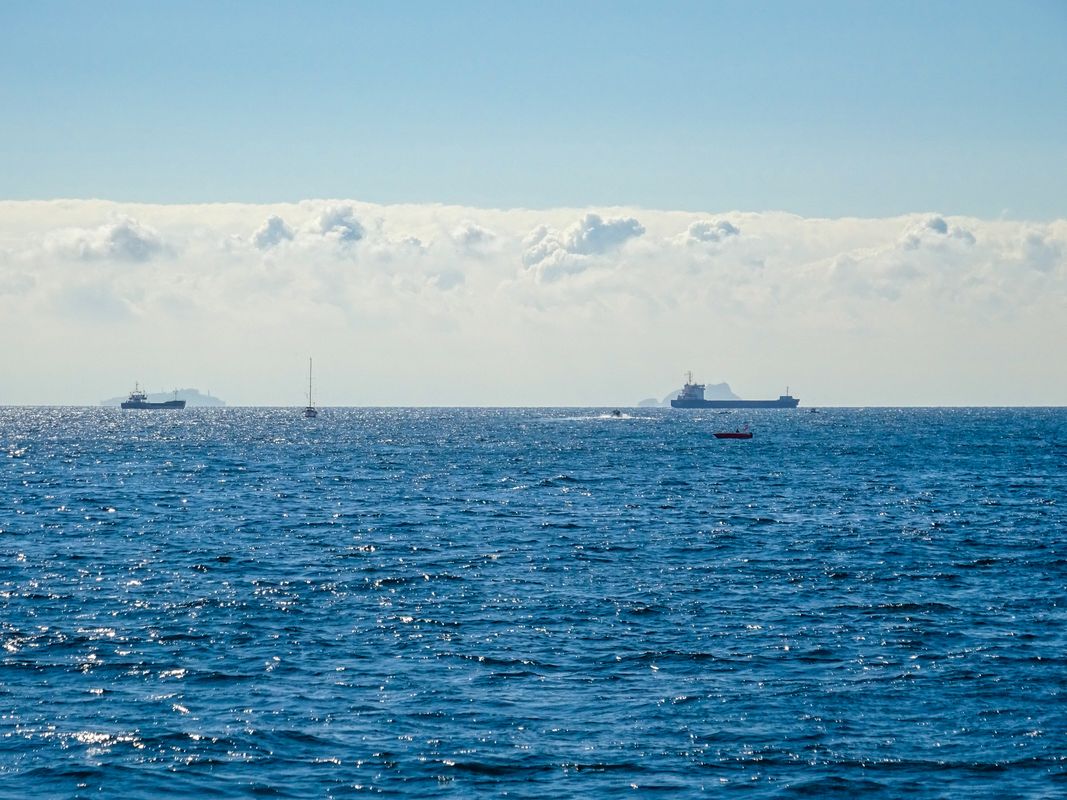
“For the ships of Chittim shall come against him: therefore he shall be grieved, and return, and have indignation against the holy covenant . . .” (Daniel 11:30). Ken traced the word — spelled with a C or a K, an old word hardly used, denoting Cyprus, the general meaning being an islander, i.e. Greeks or Romans on the shores opposite. And he made no secret of not knowing which it is. Is it a group of ships out of Cyprus, which has a treaty with Israel? Is it the Greeks or the Romans? Or, as he put it, is it “a flotilla of American warships that finally got their act together and sent some warships into the Mediterranean”? He did not say. What he said was that whatever it is, it grieves the antichrist, and that the antichrist’s answer to being grieved is indignation against the holy covenant.
What is the holy covenant? Ken believes with all his heart it is the covenant — the one God made with Abraham, that in thee shall all families of the earth be blessed (Genesis 12:3), and confirmed at the cross. It was made long before, but it was not confirmed until the death of the testator. God could have backed out, and He would not have; God held Himself to His own standard, and when Jesus Christ died the covenant stood confirmed forever.
Then he asked the question that the whole lesson had been building toward, and asked it about the man’s character rather than his politics: who made that covenant? God did. So why would any nation set itself against it? “Bless your heart. He doesn’t serve the God that we serve.”
For the source of the word itself he went back to Genesis 10 and read the table of nations: “The sons of Japheth; Gomer, and Magog, and Madai, and Javan, and Tubal, and Meshech, and Tiras. And the sons of Gomer; Ashkenaz, and Riphath, and Togarmah. And the sons of Javan; Elishah, and Tarshish, Kittim, and Dodanim. By these were the isles of the Gentiles divided in their lands . . .” (Genesis 10:2–5). There is Chittim, and there are the isles of the Gentiles — and Japheth went north and east, and most of the Gentiles alive today, if not all of them, came out of Japheth.
Where He Plants His Palace
Verse 45: “And he shall plant the tabernacles of his palace between the seas in the glorious holy mountain; yet he shall come to his end, and none shall help him.”
He is not setting up a temple, Ken said. He is setting up a command post on Mount Moriah — whether the stronghold is the Dome of the Rock or a statue standing there or some combination of the two, he does not know. But between the seas is between the Mediterranean and the Dead Sea, and he tries to run his war from up there, and he comes to his end, and nobody helps him.
Why can nobody help him? Because God is going to destroy him. Ken went to Revelation 19:11 and the white horse, and the armies of heaven coming out with Him to make war on them that dwell on the earth — the ones of Revelation 6:16 crying for the mountains to hide them from the face of Him that sitteth on the throne, and from the wrath of the Lamb. He put that in the vials, and his own view is that the pull-back to Mount Moriah happens between the sixth and the seventh. He marked the fifth seal to go with it, where the souls under the altar cry “How long, O Lord” (Revelation 6:10) and are told to rest yet for a little season — and then the seventh trumpet, where the angel swears “that there should be time no longer” (Revelation 10:6). Judgment is not delayed past that.
He is coming back to Ezekiel 39:14 next time.
The Close
He ended nowhere near Daniel.
“Let’s pray our country does not turn his back on Israel.” I will bless them that bless thee, and curse him that curseth thee (Genesis 12:3). He said he wants to be on the side that loves Israel, because that is God’s side — they are the apple of God’s eye, they are God’s chosen people, and He will come and fight for them as when He fought in the day of battle (Zechariah 14:3). He named the error he was pushing against without dressing it up: if a man preaches that Israel has been replaced by the church, he needs to go back to the Bible, and study, and pray, because he is not preaching the truth from the Bible.
And then he turned it on the lost man sitting there, and the last three minutes of the lesson are worth reading exactly as they came.
He said he used to tell the Lord, this is Wednesday — I’m going to play Thursday and Friday and Saturday, and I’ll serve You Sunday. It won’t happen. “I can’t do anything about yesterday, and I may not have tomorrow. What I have is right now. That’s all we have is right now. The only time you could do anything with the Lord, for the Lord, about the Lord, is right now.” He may not have 8:30 that night, when he was planning to be at home eating beans and taters.
“Well, preacher, I’m going to get right with God tomorrow.” Do you know whether or not you’re going to have tomorrow?
“Preacher, I know I’m lost. I’m going to get saved tomorrow, or next week.” Do you know you’re going to have tomorrow, or next week? And if you’re not willing to do it today — what is going to change to make you willing to do it tomorrow?
“Even if you do survive — if the Holy Spirit’s dealing with you at all, right now is the time to take advantage of that.”
He gave the invitation on number 399.
Scripture Used
Daniel 11:30–45 · Daniel 12:11–12 · Ezekiel 37:10–11 · Ezekiel 38:2, 4 · Ezekiel 39:1–3, 14 · Genesis 10:2–5 · Genesis 12:3 · Matthew 24:22 · Zechariah 12:10 · Zechariah 14:3 · Revelation 6:9–11, 16 · Revelation 10:6 · Revelation 19:11 (all KJV)

No comments:
Post a Comment